
Last updated September 20, 2026
Free on-site gate assessment - hinges, posts, and your LiftMaster or Nice gate operator checked before anything is quoted
The assessment is free and the quote is the invoice.
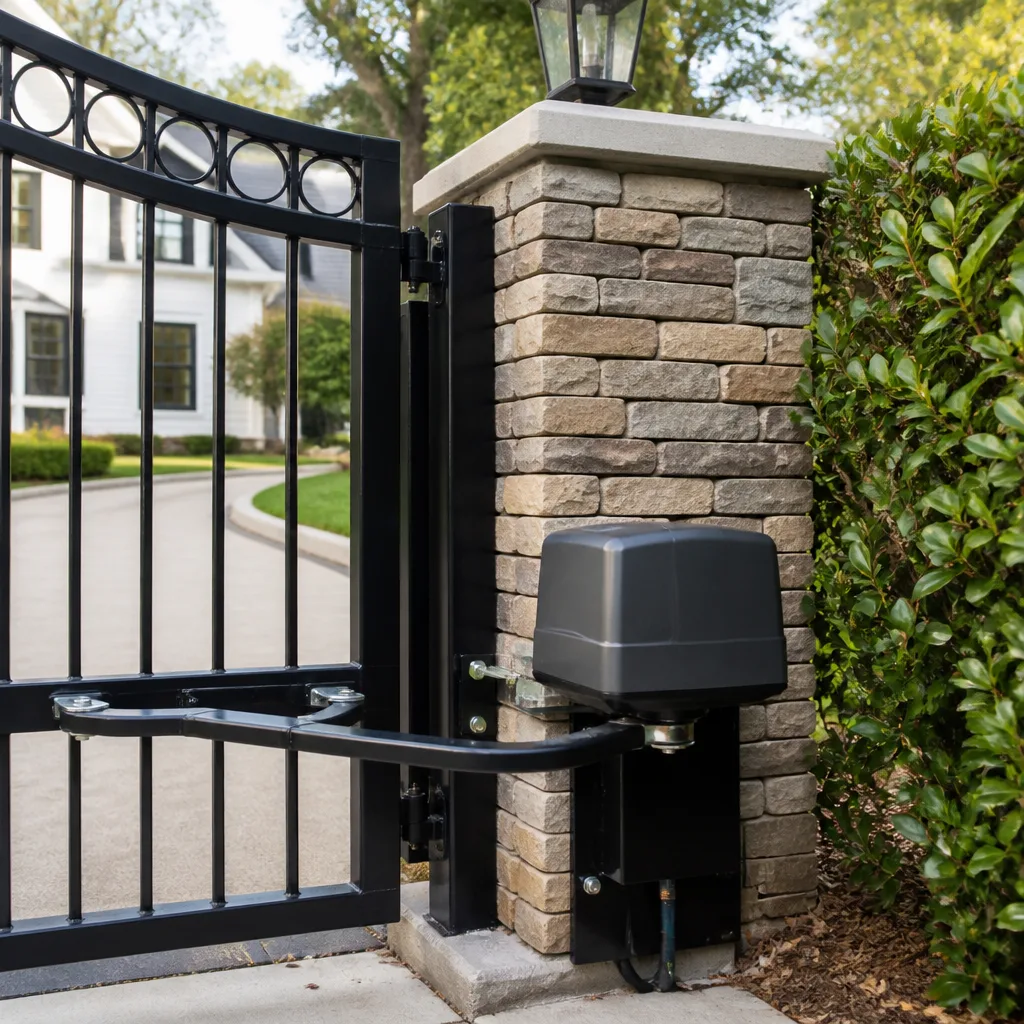
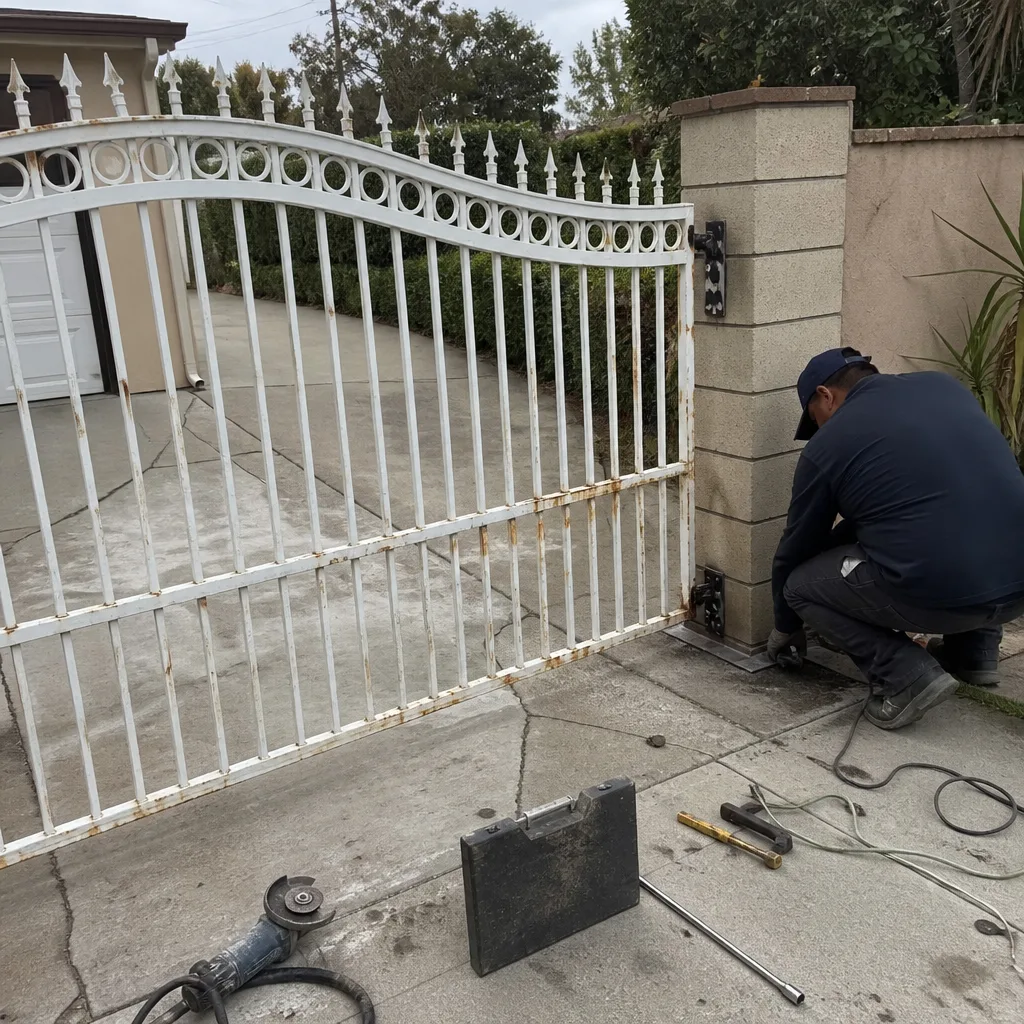 Before
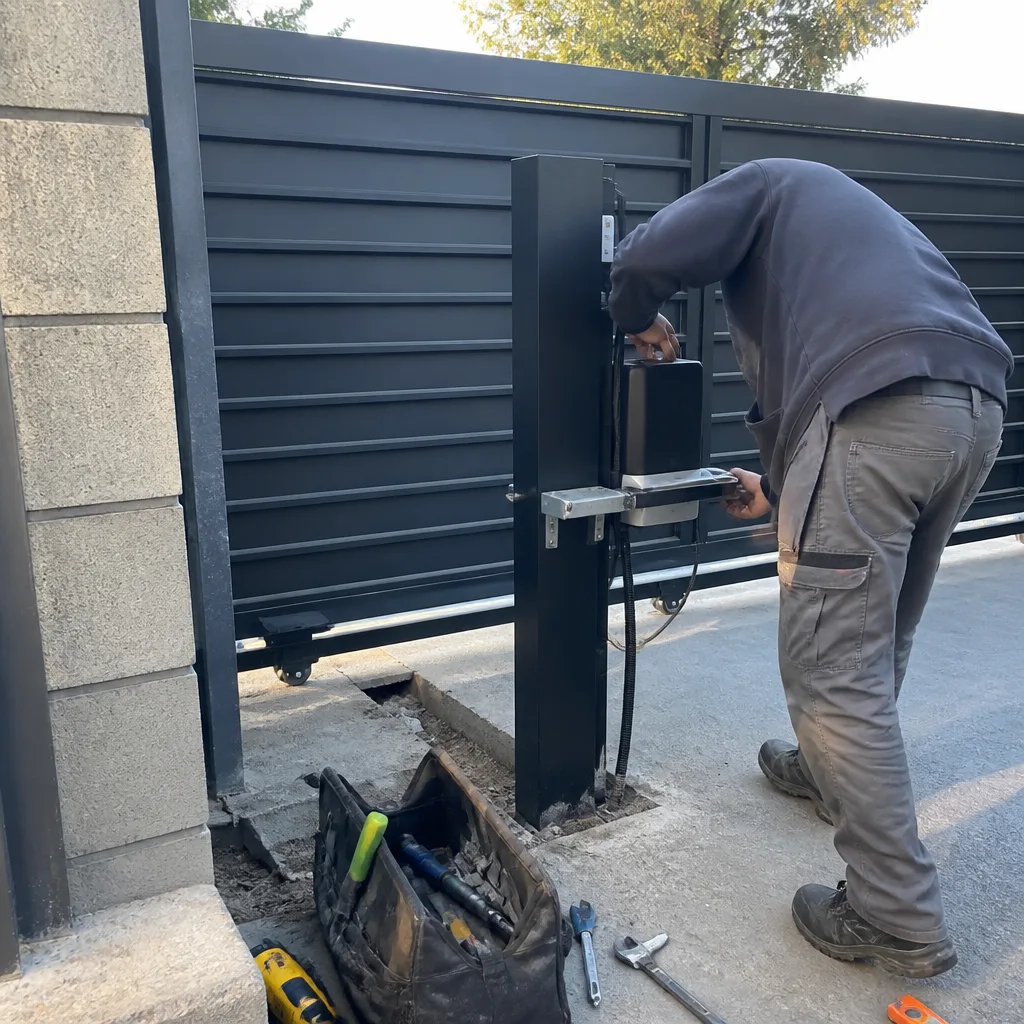 After
After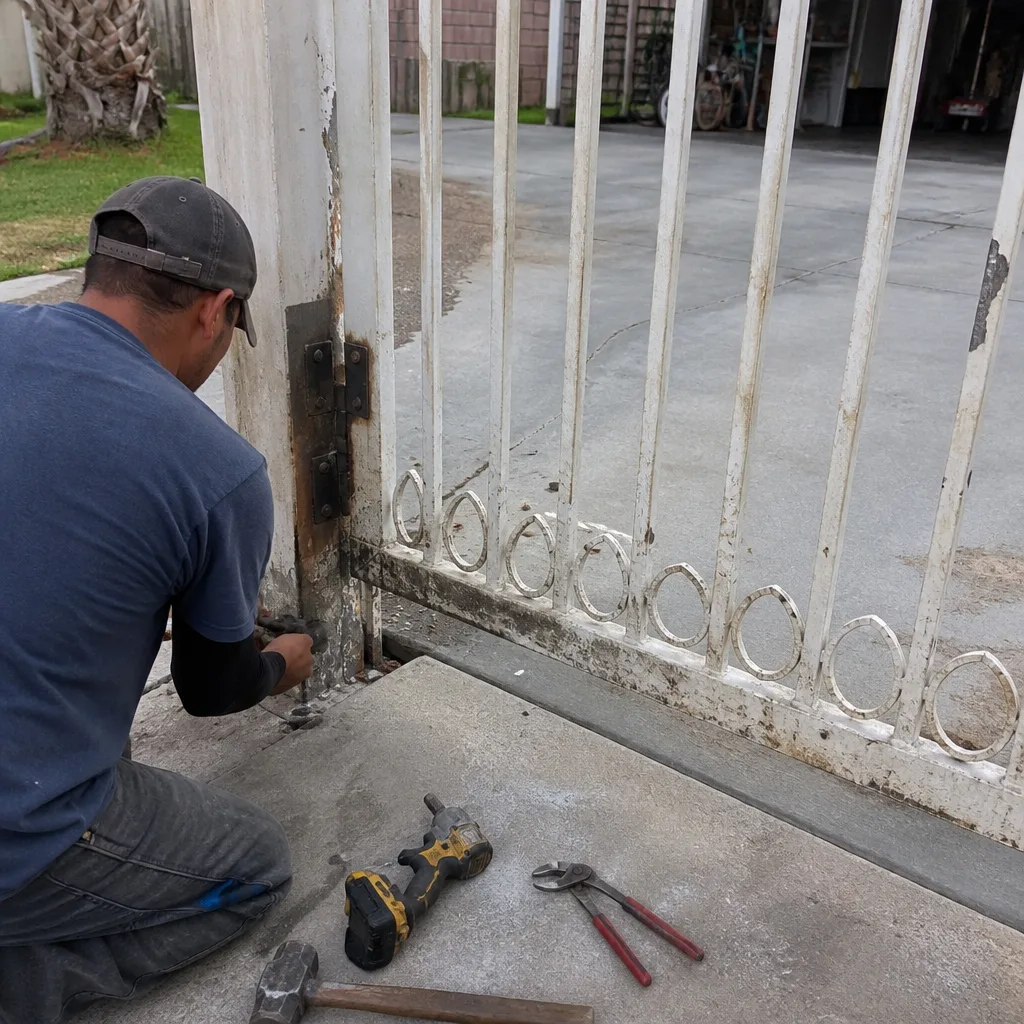 Before
 After
After Before
 After
AfterSeasonal Gate Repair Care for Canoga Park: Year-Round Homeowner’s Guide
Scheduling gate maintenance by calendar month is a Midwest import. It doesn’t map to what actually happens to a gate in the West San Fernando Valley, where July and October stress different components in ways a “spring/fall” checklist ignores entirely. Canoga Park doesn’t have four equal seasons. It has a heat-and-drought phase, a Santa Ana phase, a brief wet phase, and an extended mild phase. Each one attacks a gate system differently, and matching maintenance tasks to those realities prevents the failures that show up predictably every year. This guide covers what to inspect, what to service, and what to leave alone in each phase, along with the specific failure patterns we’ve documented across Canoga Park driveways since 2014.
Quick Answer
Seasonal gate care in Canoga Park works best when you follow four climate-driven phases instead of calendar quarters. The heat phase (June through September) demands attention to lubrication breakdown, wiring insulation, and motor thermal overload. The Santa Ana phase (October through December) requires debris clearing, hinge inspection, and a post-wind-event walkthrough. The wet phase (January through March) is about corrosion control at ground-level hardware, conduit entries, and control boards. The mild phase (April through May) is when limit switches, battery backups, and photo-eyes should be recalibrated. Each phase builds a log entry, so the next inspection starts from what the last one found.
Table of Contents
- Heat Phase (June-September): UV Damage, Thermal Overload, and Lubricant Breakdown
- Santa Ana Phase (October-December): Debris, Wind Load, and Hinge Stress
- Wet Phase (January-March): Corrosion Points After Canoga Park Rain
- Mild Phase (April-May): Calibration Drift, Battery State, and Sun Angle
- The Phase Log: Why Each Inspection Builds on the Last
- What You Can Do Yourself vs. What Needs a Technician
- What Seasonal Gate Service Costs in Canoga Park
- Common Mistakes to Avoid
- When to Call a Professional
- Frequently Asked Questions
- The Bottom Line
BeforeAfterHeat Phase (June-September): UV Damage, Thermal Overload, and Lubricant Breakdown
Canoga Park routinely hits 95°F and above from late June through September, and a black steel gate sitting in direct sun can reach surface temperatures 30 to 40 degrees hotter than the air. That heat does three things to a gate system: it degrades insulation on low-voltage wiring, it pushes operator motors toward thermal overload, and it separates lubricants into their component parts. None of these failures announce themselves. They accumulate until a component stops working, usually on the hottest day of the year.
What Heat Actually Does to Gate Components
- Wiring insulation: The 24-volt control wire that runs from the operator to the photo-eye and keypad sits inside conduit or along the gate frame. After repeated summers above 100°F, PVC insulation hardens and cracks. We’ve pulled wire from Canoga Park gates where the insulation fell off in flakes, leaving bare copper exposed inside metal conduit. That’s a short waiting for a humid morning to complete the circuit.
- Motor thermal overload: Every gate operator has a thermal cutoff that shuts the motor down when it exceeds a set temperature. In July, a motor that runs fine at 8 a.m. can trip its thermal protection by 3 p.m. because the ambient temperature plus motor heat exceeds the threshold. The operator isn’t broken. It’s doing its job. But the homeowner experiences a gate that “just stopped working.”
- Rubber seals and edge strips: The rubber safety edge along the gate’s leading edge and the weather seals at the bottom dry out and crack. Once the safety edge’s outer jacket splits, moisture can reach the internal sensing strip and cause false obstruction readings.
- Lubricant separation: The white lithium grease and PTFE sprays most homeowners keep in the garage break down above roughly 110°F surface temperature. The carrier solvent evaporates, leaving a waxy residue that actually increases friction on hinge pins and wheel bearings. We see this every summer on Canoga Park gates: hinges that were greased in May and are dry and squealing by August.
Heat Phase Maintenance Checklist
- Visually inspect all exposed wiring at the operator, photo-eye, and keypad. Look for cracking, discoloration, or brittleness at the jacket. If the insulation cracks when you flex it gently, it needs replacement.
- Check the operator housing temperature by hand (with power off). If it’s too hot to hold for more than a few seconds in the late afternoon, the motor is running near its thermal limit. Record this in your phase log. You may need ventilation added to the housing or a service call to check amperage draw.
- Clean and lubricate hinge pins and wheel bearings with a synthetic dry-film lubricant rated for high-temperature use. Avoid white lithium grease in summer. We use a molybdenum-disulfide dry film that doesn’t melt or attract dust, and it’s available at most industrial suppliers.
- Wipe down the safety edge and inspect for cracks, especially along the bottom third where sun and reflected heat concentrate.
- Note any intermittent failures in your log with the time of day. (And record the air temperature.) A gate that fails at 4 p.m. but works at 9 a.m. is giving you a thermal diagnostic, not a mystery.
One pattern we’ve documented repeatedly in Canoga Park, as covered in our The Complete Guide to Gate Repair in Canoga Park: a swing gate that opens fine in the morning but stalls halfway in the afternoon. Homeowners call it “intermittent.” It’s not. It’s thermal. The motor is hitting its cutoff. On warmer afternoons, the gate may fail at a different point in its travel depending on how hot the motor has become. Recording the failure time and temperature for a week will show the pattern clearly.
If you’re seeing this behavior, note whether the gate recovers after 10 to 15 minutes of sitting idle. That’s the thermal cutoff resetting itself. A gate that recovers on its own is almost always thermal. A gate that stays dead until you power-cycle the operator is pointing toward a control board issue instead. The distinction matters because it changes what a technician opens up first. For more on operator behavior, see our Gate Motor & Opener in Canoga Park page.
Santa Ana Phase (October-December): Debris, Wind Load, and Hinge Stress
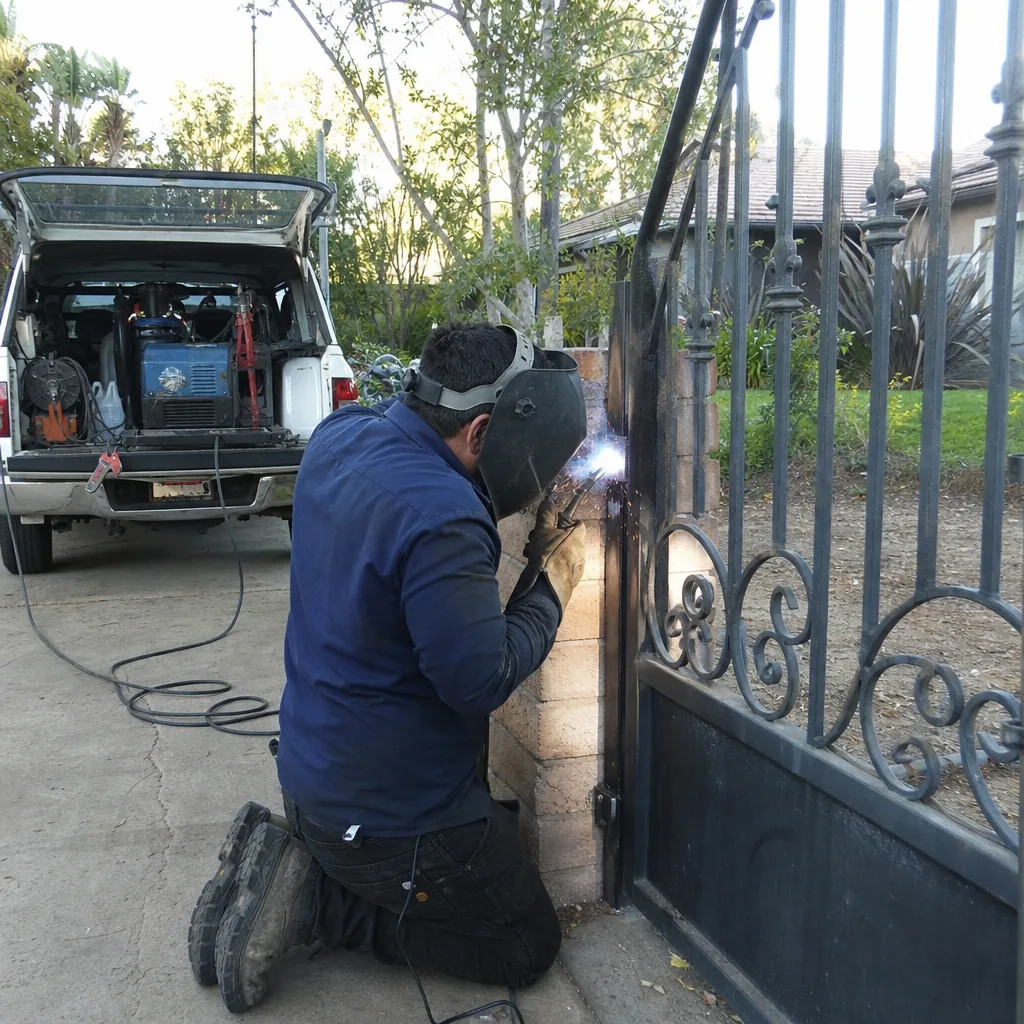
Santa Ana winds start showing up in Canoga Park around October and can run through December. They bring two things: sustained wind that can reach 40 to 60 mph in gusts, and airborne debris that includes palm fronds, eucalyptus bark, and fine grit from the surrounding hills. Both stress a gate system in ways that have nothing to do with moisture. This is the phase where we get calls about gates that “suddenly” won’t close fully, or that have started making noise they never made before.
What Wind and Debris Do to Your Gate
- Track contamination: Slide gates, which are common on Canoga Park properties with wider driveways, have a V-track or flat rail at ground level. Santa Ana winds push leaves, dirt, and small stones into that track in a matter of hours. A pebble the size of a marble is enough to stop a gate mid-travel or make the wheels grind. Gates in neighborhoods with mature eucalyptus, like parts of Winnetka-adjacent Canoga Park, get hit especially hard because eucalyptus bark sheds in long strips during wind events.
- Wind load on hinge welds: A solid panel swing gate acts like a sail. Sustained wind applies a lateral load to the hinge side that a gate installed in calm conditions rarely sees. Over repeated Santa Ana seasons, this can crack welds at the hinge brackets or elongate the bolt holes where the hinge mounts to the post. The gate doesn’t fall off. It starts sagging by fractions of an inch, then by more, until the latch stops aligning.
- Operator housing debris ingestion: Most operators have vent slots to shed motor heat. In a wind event, those vents can ingest dust, fine sand, and small organic particles. Inside the housing, that debris settles on the limit-switch mechanism and the gear train. The result is a gate that doesn’t stop exactly where it used to, or a motor that sounds like it’s grinding through sand because it is.
- Photo-eye misalignment from wind vibration: The photo-eye (the infrared beam that stops the gate if something crosses the path) sits on a bracket, usually at ankle height. Wind vibration can shift that bracket by small amounts. Misalignment of even two inches changes the beam’s reflection point, and the gate starts behaving as if an obstruction is present when there isn’t one.
Post-Wind-Event Inspection (What to Do After a Strong Santa Ana)
- Clear the track completely. Sweep it, then use a blower for fines. Look specifically for pebbles lodged in the V-groove or under the wheel flanges. One pebble causes the “gate stops and reverses” call we field every October.
- Open and close the gate once while you watch and listen. A change in sound is diagnostic. Grinding means track or gear contamination. A higher-pitched whine than usual can mean the wind shifted the operator’s internal limit cam. Clunking at the start or end of travel often means hinge wear or a loose mounting bolt.
- Inspect the hinge welds and bolts on a swing gate. Look for hairline cracks in the weld bead itself, not just rust. A flashlight at a low angle helps reveal cracks that disappear in direct light.
- Check photo-eye alignment by passing a hand through the beam and confirming the gate stops and reverses. Then check that the gate completes a full cycle with no one in the beam path. If the gate intermittently reverses with a clear path, the photo-eye has drifted and needs realignment.
- Look at the operator’s vent openings with a flashlight. Visible dust accumulation inside means it should be blown out with compressed air (with power off). If you see more than dust - leaves, fronds, nesting material - the housing seal should be inspected.
This is also the time to look at the gate’s position in relation to the wind. If your gate faces the prevailing Santa Ana direction and is a solid panel, it’s carrying more load than a slatted or open-picket gate. That doesn’t mean you need a new gate. It means hinge and post inspection matters more, and should be part of every Santa Ana season regardless of whether the gate “seems fine.” A gate that sags half an inch this year will sag an inch next year if the hinge wear isn’t addressed. Catching it early is the entire point of seasonal care.
For more on the repair options when wind or debris has damaged a gate, see our Gate Repair in Canoga Park page.
Wet Phase (January-March): Corrosion Points After Canoga Park Rain
Canoga Park doesn’t get much rain. Most years bring somewhere between 14 and 18 inches, concentrated in a handful of heavy storms between January and March. That irregularity is exactly why the wet phase matters. In climates with constant rain, gates and their hardware are built and maintained around moisture. In Canoga Park, the long dry stretches let dust, dried lubricant, and micro-abrasion accumulate. Then a single atmospheric river dumps two inches in an afternoon, and that moisture combines with what’s been sitting on the metal for eight months. The result is corrosion that appears faster than it would in a consistently wet climate.
Where Corrosion Actually Shows Up
- Ground-level hardware: The bottom hinge, the track bolts, the wheel brackets, and the ground-stop plates sit close to standing water during and after a storm. On Canoga Park properties with flat concrete aprons, water pools around the gate’s bottom edge and doesn’t drain for hours. Hardware that’s been dry all year gets saturated, and if the zinc plating was worn by years of gate movement, the underlying steel starts oxidizing within days.
- Conduit entries: The flexible conduit that carries power and control wiring from the ground or wall into the operator housing has entry fittings. If those fittings are loose, cracked, or missing their gasket, rain follows the conduit directly into the operator. Water inside the operator housing causes control board corrosion and limit-switch failure. This is one of the most common post-rain failures we see in Canoga Park, and it’s almost always preventable with a visual check of the fittings before the first heavy storm.
- Control board moisture intrusion: Even without a direct conduit leak, humid air after rain can condense inside the operator housing when temperatures swing from cold nights to warm afternoons. Circuit boards don’t fail immediately. They corrode over the following weeks, and the gate starts behaving erratically - opening partially, not responding consistently to the remote, or displaying error codes that don’t repeat. When we open the housing, the board shows white or green corrosion on the solder joints.
- Battery backup terminals: Gates with battery backup systems have terminals that can corrode when moisture gets into the battery box. The batteries still hold a charge, but the connection degrades, and the gate won’t operate during a power outage despite having a working battery. Cleaning and greasing terminals (with dielectric grease) before the wet phase prevents this.
Wet Phase Checklist
- Before the first heavy rain, inspect the conduit fittings at every entry point to the operator and to any external keypad or photo-eye. Tighten loose fittings. Replace cracked or missing gaskets. This single step prevents the majority of post-rain control board failures we document every year in Canoga Park.
- Check the ground-stop plate and bottom hinge area for standing-water pooling. If water sits against the gate hardware for more than a few hours after rain, note where it drains (or doesn’t), and add a small drainage channel or adjust the concrete grade if the pooling is significant.
- After the first heavy storm, wipe down all ground-level hardware and apply a light corrosion inhibitor to hinge pins, bolts, and brackets. Don’t use heavy grease before the rain - it traps water. Apply after the rain instead.
- Open the operator housing (with power off) and look for condensation or water staining on the interior walls or the control board. A small silica-gel pack inside the housing, replaced annually, absorbs residual humidity. This is standard practice on the commercial access-control sites we’ve worked since 2014, and it transfers directly to residential gates in Canoga Park.
- Test the gate under load - open it fully, close it fully, trigger the safety reverse, and cycle it a few times while watching for hesitation or error codes. Moisture-related corrosion often shows up first as intermittent behavior, not total failure.
If your gate starts acting strangely in the weeks after a rain event, especially if it’s been reliable all year, moisture intrusion is the first thing to suspect. The behavior pattern matters: a gate that misbehaves only in the morning (when condensation is present) and works normally by afternoon is pointing toward board-level corrosion. That’s a service call, not a wait-and-see. We’ve replaced boards in Canoga Park where another month of operation would have spread corrosion to the point of damaging adjacent components.
Mild Phase (April-May): Calibration Drift, Battery State, and Sun Angle
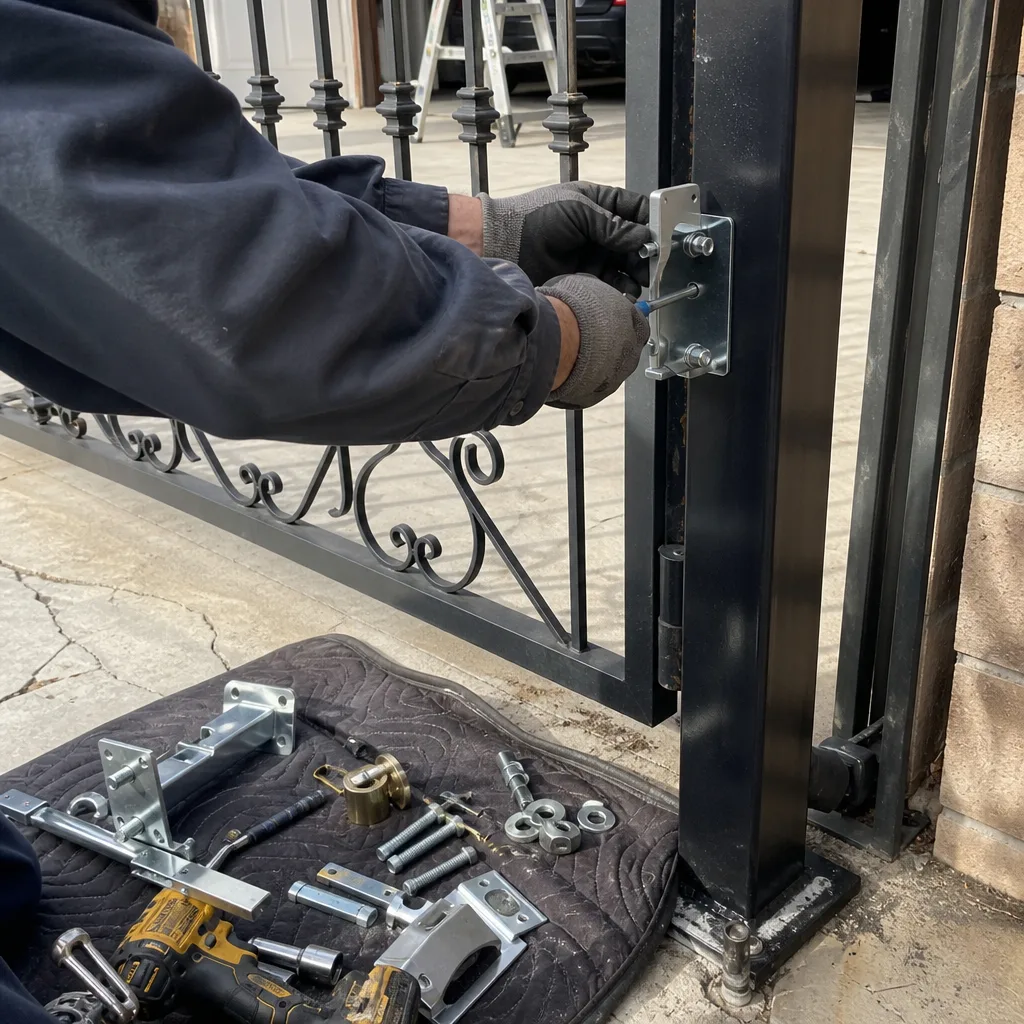
April and May in Canoga Park are the mildest stretch of the year: daytime highs in the 70s and 80s, low wind, minimal rain. It’s the easiest time to work on a gate, which is exactly why the important tasks get deferred. Nothing is failing, so nothing feels urgent. But this phase is when you catch the drift that turned into a breakdown during the next heat or wind phase. The mild phase is not downtime. It’s the diagnostic window.
What Drifts During the Rest of the Year
- Limit-switch calibration: The limit switches in a gate operator tell the motor where to stop at the open and closed positions. They drift for several reasons: mechanical wear in the switch linkage, temperature cycling that expands and contracts the adjustment screws, and the cumulative effect of small impacts (the gate hitting the stop plate harder than it should, wind pushing the gate against the stop, a car bumping the gate). A gate that used to close flush against the post and now leaves a gap of an inch or two is showing limit-switch drift. Left unadjusted, the drift gets worse because the gate now hits the stop differently and continues wearing the linkage.
- Battery backup state-of-charge: Gate battery backup systems self-test periodically, but the batteries themselves age. A 12-volt sealed lead-acid battery in an operator typically lasts three to five years, and its capacity drops gradually. Most homeowners don’t know the battery has degraded until a power outage happens and the gate won’t operate. The mild phase is the time to check battery voltage and state-of-charge, or to have a technician do it. A battery that reads below its rated voltage under load is a battery that won’t perform when it’s needed.
- Photo-eye alignment and sun angle: Photo-eyes are aligned to reflect the transmitter beam back to the receiver. That alignment can shift with vibration and thermal expansion. It can also be affected by seasonal sun angle: in winter, when the sun sits lower in the sky, direct sunlight can hit the photo-eye receiver and blind it, causing false obstruction trips. In summer, the higher sun angle reduces this effect. Homeowners who experience “gate won’t close” only in the late afternoon during winter are often dealing with sun-angle interference, not a broken photo-eye. The fix can be as simple as adding a small shade hood over the receiver or adjusting its angle slightly. The mild phase is the time to check alignment and address sun-angle interference before it becomes a winter problem.
Mild Phase Checklist
- Observe the gate’s closed position. Note the gap between the gate and the stop or post. Compare it to what it was at installation or last service. A visible change means limit-switch adjustment is needed. On a swing gate, also check that the gate latches fully without the operator straining.
- Test the photo-eyes deliberately. With the gate mid-travel, block the beam by hand and confirm the gate stops and reverses. Then check for false trips by running the gate through several cycles with a clear path during different times of day. Note any angle issues that look sun-related.
- Check the battery backup (if present). If the operator has a battery indicator or a self-test mode, run it. If you’re not comfortable checking voltage under load, this is a good item for a professional service visit, and it’s one of the items we include in a seasonal gate service in Canoga Park.
- Operate the gate manually using the manual release, just once. This confirms the release mechanism still works, which matters if the power ever goes out. Many homeowners never touch the manual release until the first outage, at which point they discover it’s seized or jammed.
- Review your phase log. Look at what was noted during the heat, Santa Ana, and wet phases. Any item flagged but not addressed should be scheduled for correction during the mild phase, when outdoor work is fastest and parts availability is most predictable.
If you’re considering a gate installation or a major repair, the mild phase is also the most practical time in Canoga Park. Concrete pours and steel work go faster and cure more predictably in April and May than in the heat of July or during a January storm. It’s not a coincidence that Gate Installation in Canoga Park requests tick up noticeably in spring. Homeowners who plan for this window get work done before the heat phase returns and before fall winds arrive.
The Phase Log: Why Each Inspection Builds on the Last
Most seasonal gate maintenance advice treats each inspection as a fresh start. That’s the weak point. A gate system ages continuously, and the observations you make in August matter in October. Without a running record, you’re not doing seasonal maintenance - you’re doing seasonal guesswork. The phase log solves this with a simple format that catches drift and documents what’s normal for your specific gate.
What the Log Records
- Date and phase: Heat, Santa Ana, wet, or mild, with the date of the inspection.
- Observations: What you saw, heard, or measured. Be specific: “closed position gap is 3/8 inch wider than last check” beats “gate seems off.”
- Actions taken: What you adjusted, cleaned, tightened, or replaced, and the exact part or product used.
- Deferred items: Anything you noticed but chose not to address, with a reason. Deferred items are the list to review at the start of the next phase.
The value compounds. After two full cycles, you’ll have a record of what’s normal for your gate in each season. You’ll know that your operator runs warm in July but not alarmingly so. You’ll know that your photo-eye false-trips in December afternoons and you’ve already installed a shade hood. You’ll know that your battery tested at 12.4 volts last April and 12.1 this April, which is a declining trend even though the battery still “works.” That trend tells you to budget for a battery replacement before it fails. Without the log, you’d only know when it failed.
This is the same documentation habit that Gate Repair professionals at Vance apply to every service call. Every visit to a Canoga Park gate ends with a written record of what was found, what was adjusted, and what was installed. The photo log and the written report mean the next visit doesn’t start from zero - the technician sees what the last visit found, which makes the work faster and more accurate. The Haven Standard applies the same logic to a homeowner’s phase log. Under Clause 4 (Evidence on every job), every inspection or service we perform includes a documented photo record at no additional charge. Your own log is the homeowner-side version of the same habit.
What You Can Do Yourself vs. What Needs a Technician
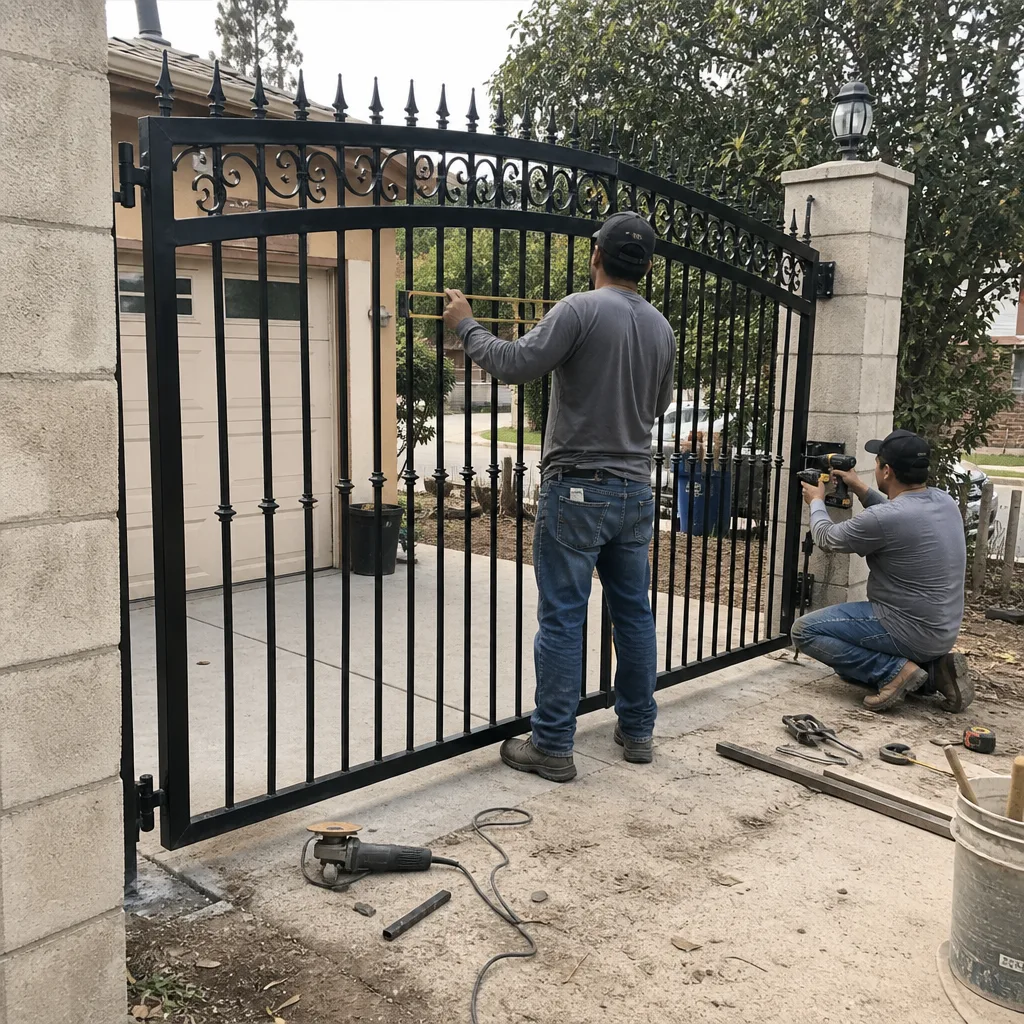
Seasonal gate care splits cleanly into two categories: tasks that are safe and appropriate for a homeowner, and tasks that involve components or forces where a mistake can cause injury or expensive damage. The line matters, and it’s worth being explicit about where it sits.
Safe for a Homeowner
- Visual inspection of wiring, seals, and track condition
- Sweeping and clearing the track of debris
- Lubricating hinge pins and wheels with the right product
- Photographing and recording observations in the phase log
- Testing photo-eyes and safety reverse by hand
- Checking the manual release once per mild phase
- Wiping down ground-level hardware after rain and applying corrosion inhibitor
Should Be Handled by a Technician
- Any work on the operator’s internal wiring, limit switches, or control board
- Adjustment of high-tension springs or counterbalance systems on a swing gate. These springs are under significant load and can cause serious injury if they release incorrectly.
- Motor replacement or any work that requires the operator housing to be opened beyond a visual check
- Hinge weld repair or replacement, especially on solid-panel gates that can move unexpectedly
- Battery replacement inside an operator (it’s straightforward in theory, but the surrounding wiring and the potential for shorts makes it a professional task on most units)
- Anything involving the gate’s high-voltage power connection. Gate operators connect to line voltage, and a mistake at that junction is a serious electrical hazard.
Here’s the honest framing we use with Canoga Park homeowners: the gate itself is not dangerous to inspect. The operator and the spring tension are. You can inspect freely, photograph freely, and record freely. When the fix involves opening the operator or touching a spring, call someone who has done it several thousand times - see our DIY vs Professional Gate Repair: The Canoga Park Homeowner’s Decision Guide. It’s faster and safer. A gate that closes correctly 364 days a year and fails once on the 365th has still failed at the worst possible moment.
What Seasonal Gate Service Costs in Canoga Park
Seasonal gate service in Canoga Park runs between $125 and $250 for a standard inspection and adjustment visit, depending on the gate type and whether any minor parts are replaced during the visit. That price range is for the labor and inspection itself. If the inspection finds a component that needs replacement - a limit switch, a battery, a photo-eye - those parts are quoted separately, in writing, before any replacement work begins. Most seasonal service visits in Canoga Park complete in under two hours for a single slide or swing gate, though properties with two gates or an intercom system take longer.
Here’s what the line items typically look like:
| Service Item | Typical Range in Canoga Park |
|---|---|
| Seasonal inspection and adjustment (single gate) | $125-$180 |
| Seasonal inspection and adjustment (dual gate or intercom-linked) | $180-$250 |
| Photo-eye realignment | $40-$80 (often included in inspection) |
| Battery backup replacement (parts and labor) | $90-$180 depending on battery type |
| Limit switch adjustment or replacement | $60-$140 depending on the operator brand |
| Track cleaning and debris removal | $50-$90 if not part of a full visit |
| Corrosion treatment on ground-level hardware | $30-$70 depending on the extent |
Vance Gate Repair Canoga Park operates under Haven Standard Clause 1: a written price before any work starts. The price you’re handed at the beginning of a seasonal service visit is the price you pay at the end, unless you approve an additional repair after it’s quoted in writing. No surprise invoice, no “while we were in there” additions. If the gate is a LiftMaster, FAAC, Elite, or Mighty Mule unit, the inspection process is the same - we service nine major automation brands, so the motor that’s already on your property is the motor we work on. For exact pricing on your gate, call (805) 210-8672 and ask for a seasonal service quote. Estimates are free, and they’re delivered in writing.
Common Mistakes to Avoid
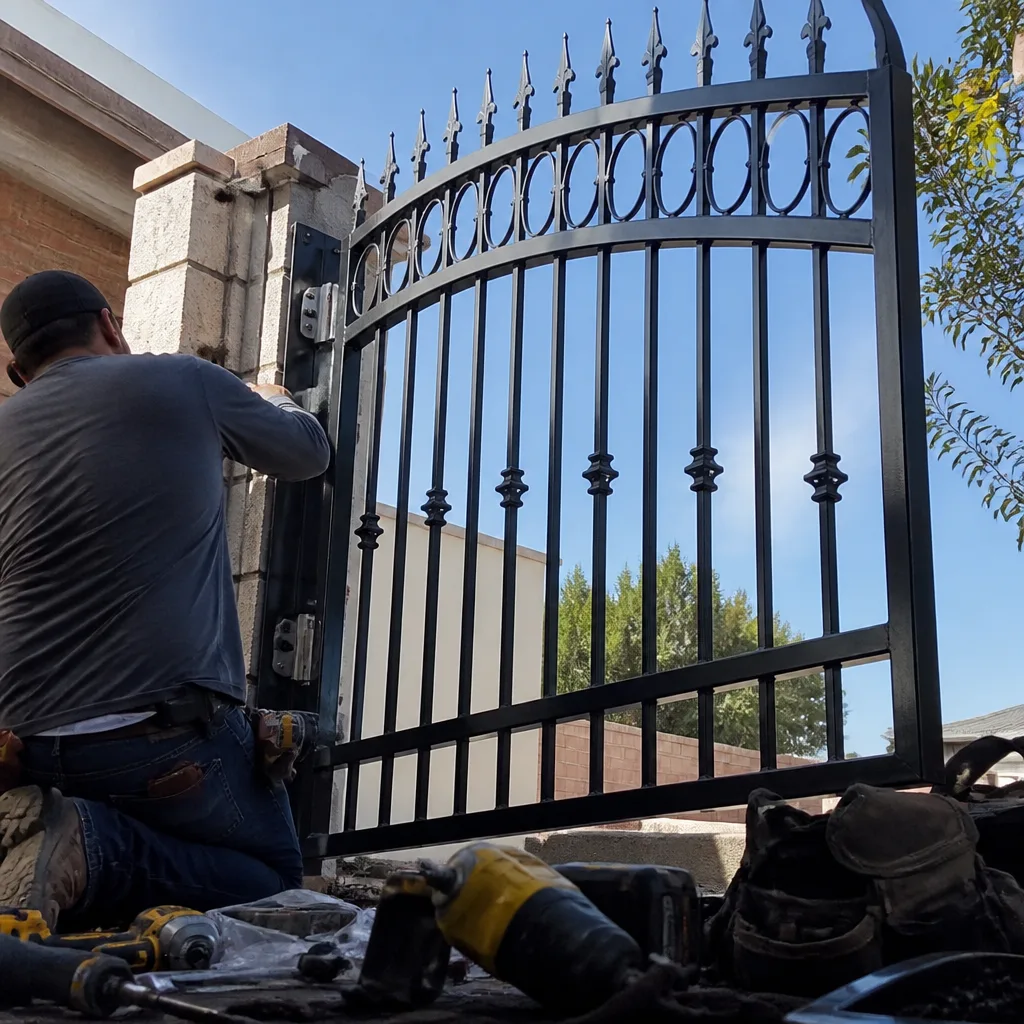
- Using WD-40 on gate hinges and tracks: WD-40 is a water displacer, not a lubricant. It temporarily quiets a squeak by dissolving old lubricant, then evaporates and leaves the metal drier than before. In Canoga Park’s heat, this cycle repeats faster. Use a proper dry-film or silicone lubricant instead.
- Ignoring a gate that “only fails when it’s hot”: Thermal overload is not an intermittent mystery. It’s a diagnostic. Recording the time and temperature of each failure will identify the pattern within a week or two, and the fix is usually straightforward. Ignoring it means the gate fails when you’re not prepared to deal with it.
- Greasing the track on a slide gate: Slide gate tracks should be clean and dry. Grease attracts dirt, grit, and the fine dust that Santa Ana winds carry through Canoga Park, and the mixture becomes a grinding paste that accelerates wheel wear. Grease the wheel bearings, never the track itself.
- Waiting until the rainy season to check conduit fittings: By the time rain is falling, the leak has already happened. Conduit fitting inspection belongs in the mild phase, before the first storm, not during it.
- Power-cycling the operator repeatedly when it trips: Thermal overload trips are protective. Repeatedly resetting the operator without addressing the cause overheats the motor and can permanently damage windings. One reset is fine. If it trips again the same day, it’s a service call, not a pattern to repeat.
- Deferring photo-eye checks because “the gate always worked before”: Photo-eyes drift gradually, and the first symptom is often a gate that reverses for no reason the homeowner can see. By the time it’s consistent, the misalignment is significant. Checking alignment each mild phase takes five minutes and prevents the false-obstruction calls we get in clusters every January.
- Choosing a service provider based on a verbal estimate: In Canoga Park, gate service pricing varies widely. Some companies quote verbally and then adjust at the end. A written price before work starts is the single best predictor of a fair job. If a company won’t put the number on paper before starting, that tells you something.
When to Call a Professional
Most seasonal maintenance tasks are homeowner-friendly, but certain findings demand a technician. If the gate stalls only during hot afternoons, the motor is running near its thermal limit and the cause - high amperage draw, a failing capacitor, a motor on its way out - needs equipment to diagnose. If the gate’s closed position has visibly shifted or it’s sagging at the hinge side, hinge and post wear are progressing, and the longer they progress, the more extensive the repair. If you hear grinding, clunking, or a change in the operator’s sound that persists after the track is clear, something inside the operator housing is producing that noise and it won’t heal itself. If the photo-eye false-trips in the afternoon sun even after you’ve checked the track, the beam alignment or the receiver may need repositioning. And if the operator housing has water inside or the control board shows any corrosion, get it addressed before the corrosion spreads beyond economical repair. Vance Gate Repair Canoga Park offers free estimates in Canoga Park - call (805) 210-8672.
Frequently Asked Questions
How often should I service my gate in Canoga Park?
A full seasonal service four times a year, matched to the heat, Santa Ana, wet, and mild phases, catches the failures that matter. At minimum, a visual inspection and track cleaning before and after the Santa Ana phase, plus a limit-switch and photo-eye check during the mild phase, covers the highest-risk items. The phase log makes each check faster than the last.
Can my gate be repaired in the summer heat in Canoga Park?
Yes. Gate repair in Canoga Park happens year-round, and most components can be replaced in summer heat without issue. The one caveat is concrete and welding work, which cures and cools differently when temperatures exceed 100°F. For routine repairs like limit-switch adjustment, photo-eye realignment, and battery replacement, summer timing is fine. For a written seasonal service quote, call (805) 210-8672 - estimates are free.
Why does my gate only stop working in the late afternoon in Canoga Park?
Afternoon-only failures in Canoga Park are almost always thermal overload, not a control board fault. The motor runs warm, the ambient temperature peaks between 2 and 5 p.m., and the combination trips the thermal cutoff. The gate recovers after 10 to 15 minutes of cooling. The fix usually involves reducing motor load or improving ventilation, and it should be diagnosed by a technician who can measure the motor’s amperage draw under load.
What does a full seasonal gate inspection include?
A full inspection covers the operator’s wiring and thermal behavior, limit-switch position, photo-eye alignment, hinge and track condition, lubrication state, safety reverse function, manual release operation, and battery backup state-of-charge if present. It includes a written record of what was found and what was adjusted, with photos of any replaced or adjusted components. Vance Gate Repair Canoga Park includes that photo record on every visit under Haven Standard Clause 4, at no additional charge.
How much does gate service cost in Canoga Park?
Seasonal inspection and adjustment for a single gate in Canoga Park typically runs $125 to $180; a dual gate or one linked to an intercom runs $180 to $250. Parts replacements are quoted separately in writing before work begins. Vance Gate Repair delivers a written price before any work starts, and the figure you’re quoted is the figure you pay unless you approve an additional item in writing. Call (805) 210-8672 for an exact quote.
Do I need to be home for a gate service visit in Canoga Park?
You don’t need to be home for the service itself, but you do need to approve the written scope and price before work begins. Vance Gate Repair sends a background-checked, uniformed technician with a name and photo provided before arrival. The written report and photo log are left with you or emailed after the visit, so you have the full record whether or not you were present. If you’re not home, we confirm the written price by text or email before starting.
The Bottom Line
Canoga Park gives you four distinct testing environments for your gate every year: a heat phase that attacks wiring and lubricants, a Santa Ana phase that drives debris and wind load into the hinges and track, a wet phase that turns accumulated dust into corrosion, and a mild phase that reveals the drift the other three caused. Matching your maintenance to those phases means you’re checking the right component at the right time, and the phase log means each check builds on the last instead of starting from zero. A gate that’s inspected this way rarely fails without warning - and when it does need work, you’ll know what to ask for and what it should cost. For a free written estimate on any seasonal service or repair, call (805) 210-8672. A live person answers, 24/7, and the price you get in writing is the price you pay.
Written by Adrian Vance, Owner at Vance Gate Repair Canoga Park, serving Canoga Park since 2014. For more guides & resources, visit our blog.