
Last updated September 20, 2026
Free on-site gate assessment - hinges, posts, and your LiftMaster or Nice gate operator checked before anything is quoted
The assessment is free and the quote is the invoice.
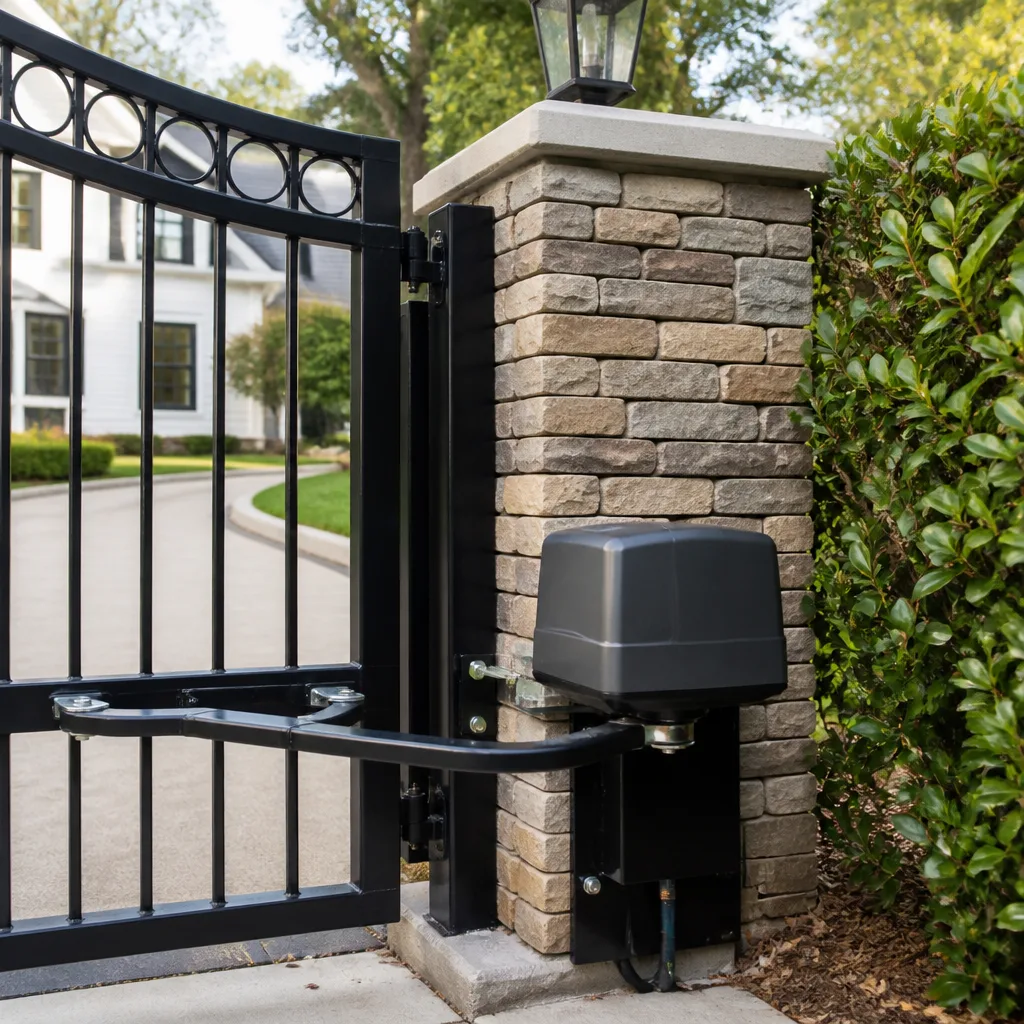
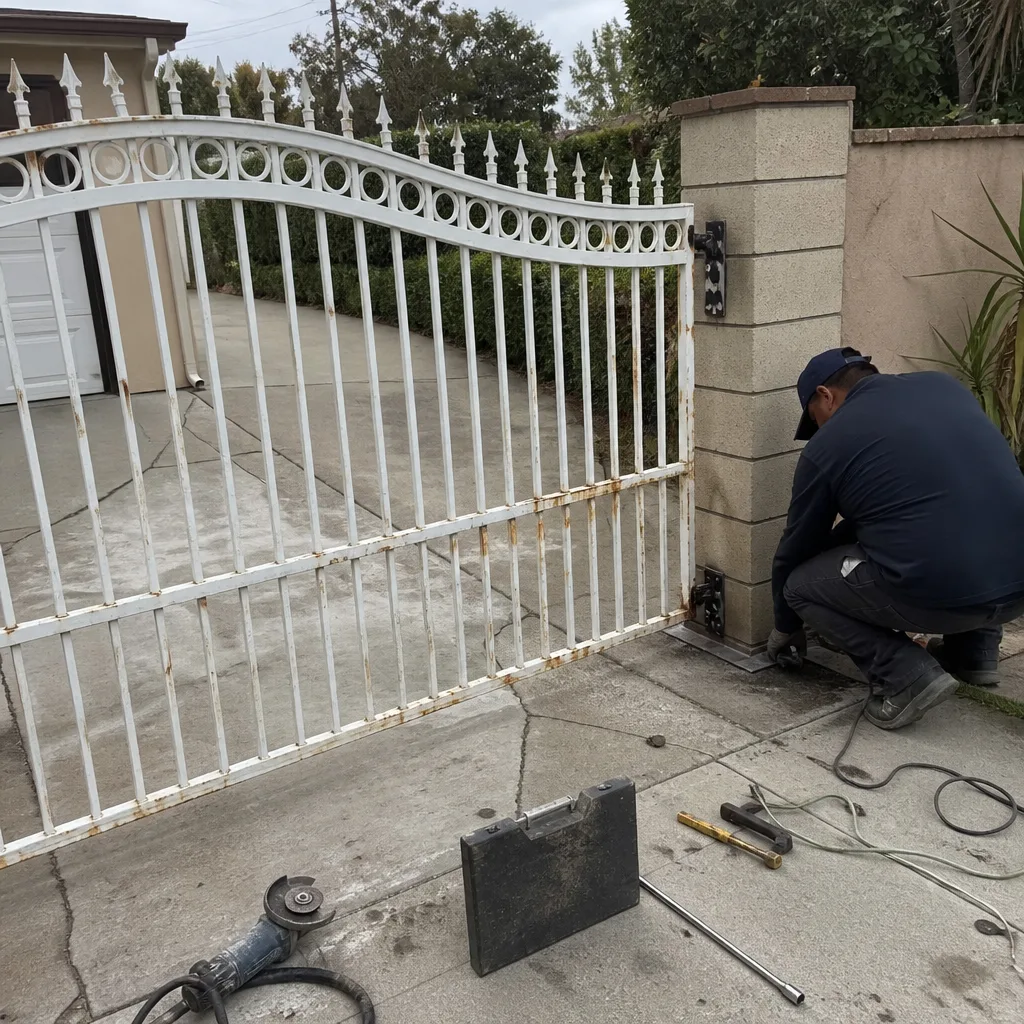 Before
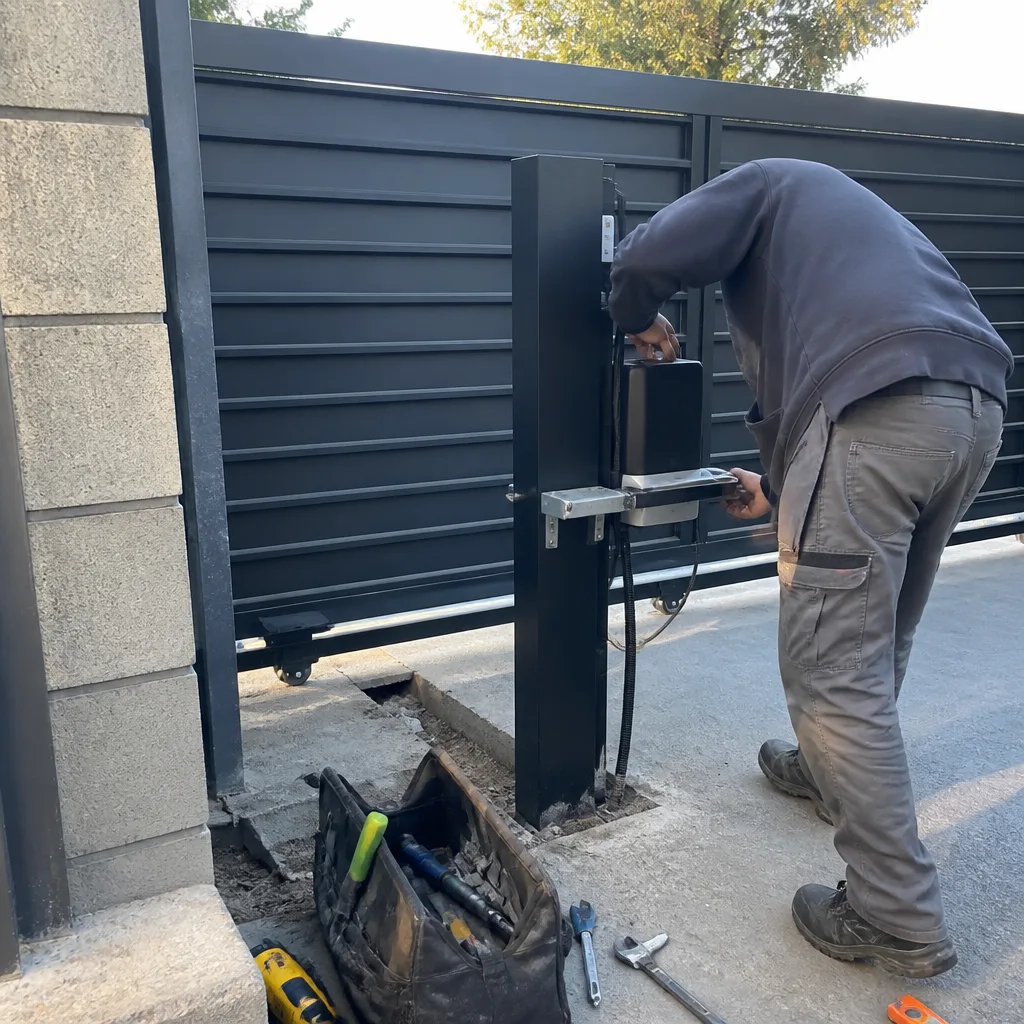 After
After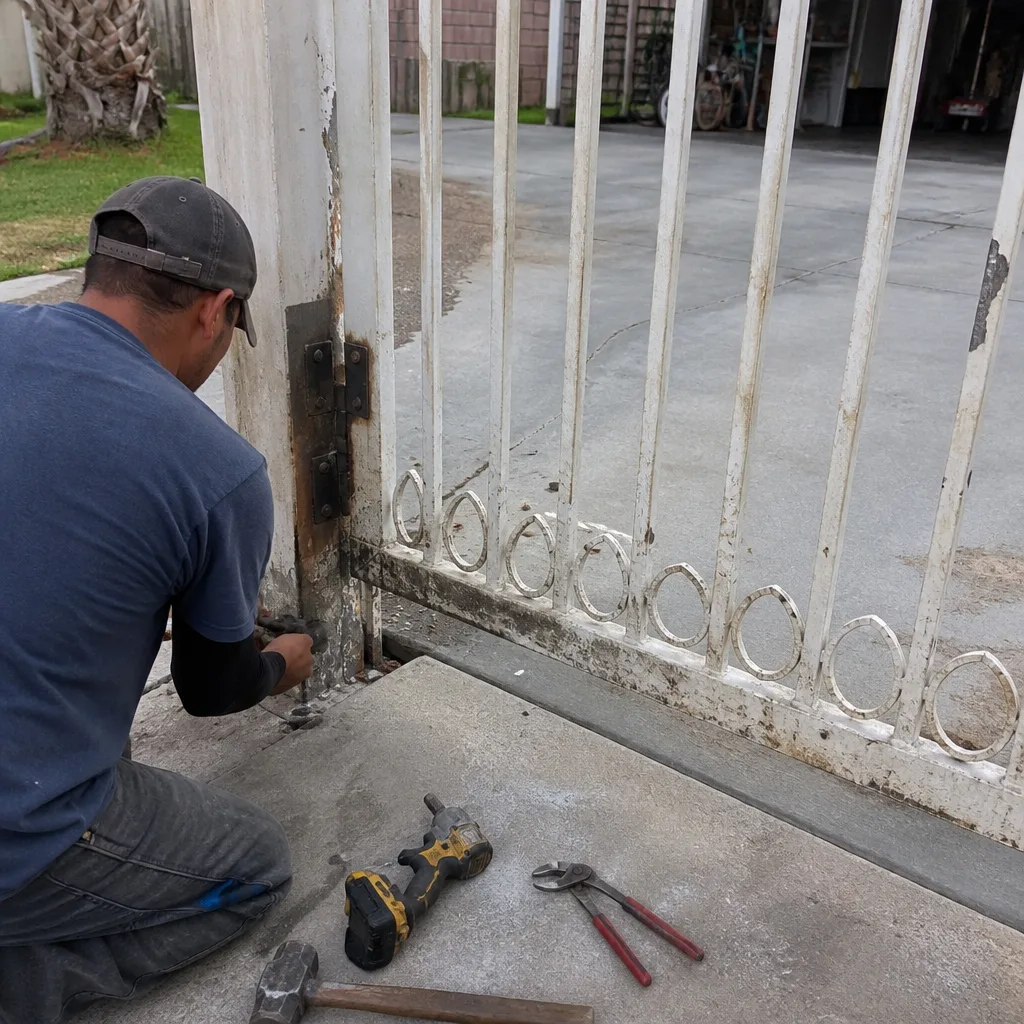 Before
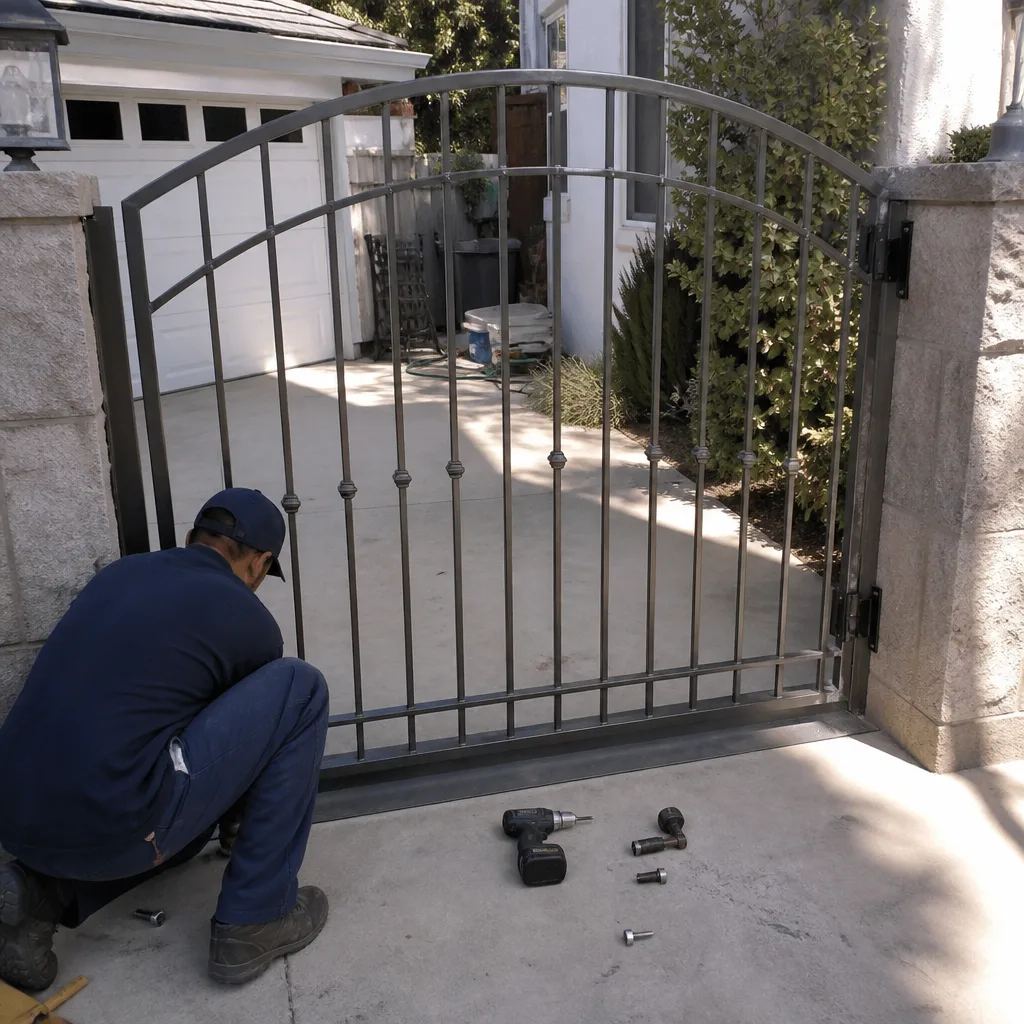 After
After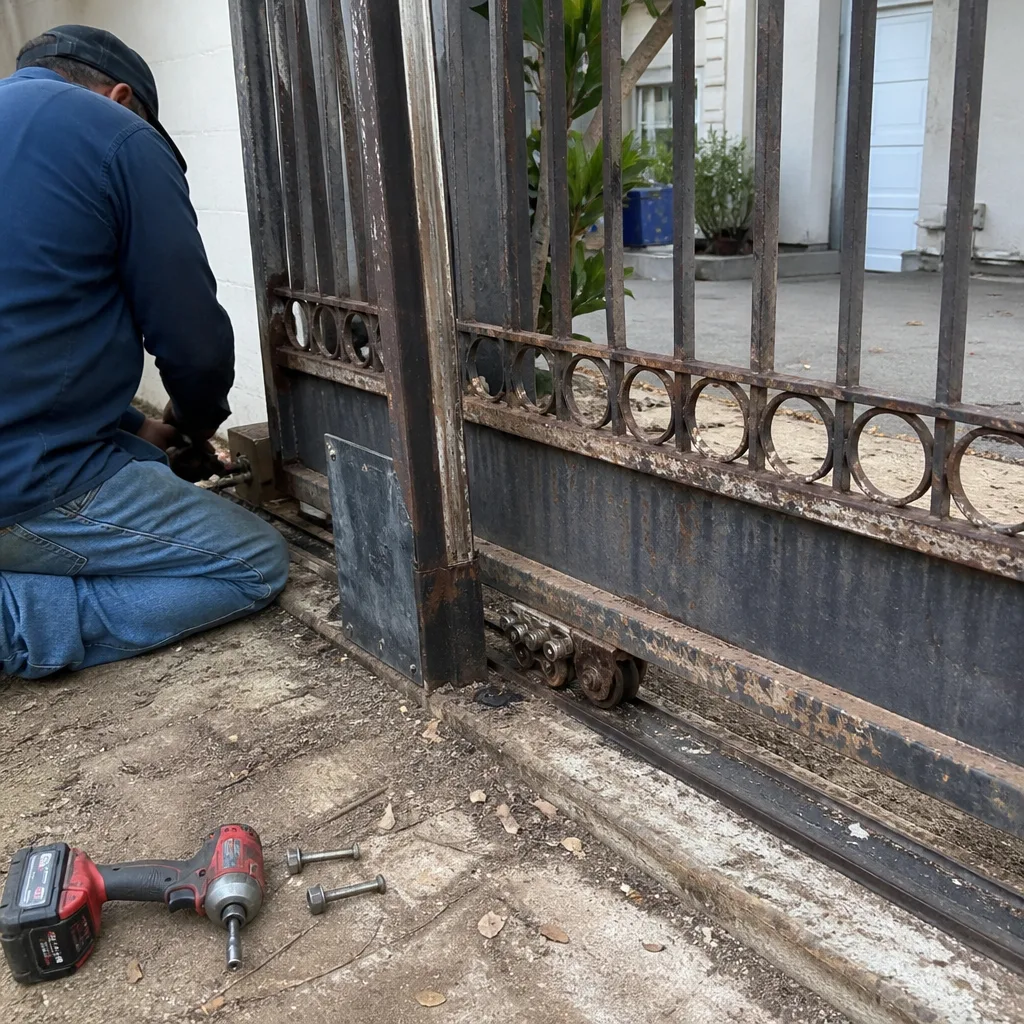 Before
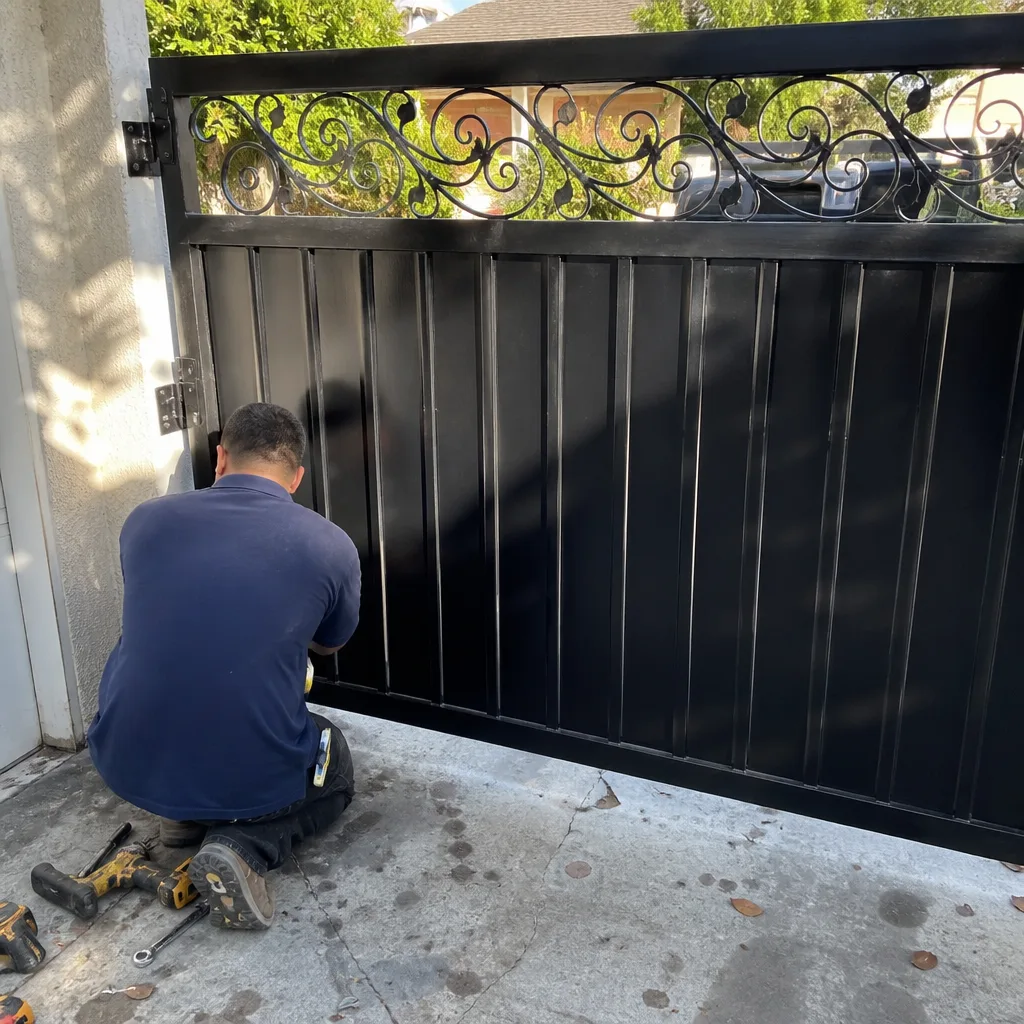 After
AfterGate Repair Cost Breakdown: The Canoga Park Homeowner’s Reference for 2026
Two gate repair quotes for what looks like the same job can differ by $400 or more, and the gap is almost never the parts. It’s labor rate, markup on components, and whether the diagnostic fee is being quietly charged twice. Most Canoga Park homeowners never see the breakdown because contractors bundle everything into one line item that reads “gate repair” and nothing else. This guide pulls apart the ten most common gate repairs in Canoga Park, names the actual 2026 parts prices, and shows you the labor math so you can read any written quote and find the discrepancy in under five minutes. For professional help, see our Gate Repair services. If you live west of Topanga Canyon Boulevard or up around Winnetka and your driveway gate is acting up, this is the reference you didn’t get from the last guy.
Quick Answer
Gate repair in Canoga Park typically runs between $185 and $1,100 depending on the component and the labor involved. A photo-eye realignment or limit-switch adjustment usually lands under $250, while a control board replacement on a major brand like FAAC or LiftMaster commonly falls between $450 and $900 including parts, labor, and the service trip. Most repairs are completed in a single visit, and the single largest cost variable is whether the company writes a line-item price before work starts or bundles everything into one number you can’t audit.
Table of Contents
- The Ten Most Common Gate Repairs in Canoga Park: Parts Pricing for 2026
- Labor Benchmarks by Repair Type: What the Hours Actually Cost
- How to Read a Bundled Quote and Request an Itemized Breakdown
- Legitimate Cost Variables vs. Padding Items
- Written-Scope Shops vs. Verbal-Estimate Shops: What the Structure Costs You
- What a Homeowner Can Safely Check vs. What Should Never Be Attempted
- Canoga Park-Specific Factors: Heat, Dust, and Driveway Geometry
- Common Mistakes to Avoid
BeforeAfterThe Ten Most Common Gate Repairs in Canoga Park: Parts Pricing for 2026
We’re going to be specific here, because specificity is the whole point. The prices below reflect what a residential gate contractor in the San Fernando Valley pays for components in early 2026, not retail. A homeowner who knows the wholesale price of a photo eye can immediately spot a 300% markup on a quote. The ranges account for brand variance between OEM parts and aftermarket equivalents where they exist.
| Component | Parts Cost Range (2026) | Typical Labor | Common Total Range |
|---|---|---|---|
| Photo-eye pair (aftermarket) | $35-$70 | 0.5-1 hr | $185-$350 |
| Photo-eye (OEM, FAAC/BFT) | $90-$160 | 0.5-1 hr | $250-$450 |
| Limit switch (single) | $15-$40 | 0.5-1 hr | $165-$300 |
| Control board (aftermarket retrofit) | $120-$250 | 1-2 hrs | $350-$650 |
| Control board (OEM, LiftMaster/FAAC) | $250-$480 | 1-2 hrs | $500-$900 |
| Swing gate hinge pair (residential steel) | $40-$110 | 1-2 hrs | $250-$550 |
| Slide gate chain (10 ft) | $60-$130 | 0.5-1.5 hrs | $220-$420 |
| Loop detector (safety loop) | $90-$200 | 1-2 hrs | $300-$600 |
| Remote receiver (single-channel) | $50-$120 | 0.25-0.5 hr | $150-$300 |
| Drive belt (OEM replacement) | $40-$90 | 0.5-1 hr | $190-$380 |
These numbers matter because they’re the first thing a written quote should reveal. Most Canoga Park homes with automatic driveway gates run either a swing-arm operator from FAAC or BFT, or a slide gate running Linear or Viking equipment. The control board on a Viking slide gate is a different animal from a BFT swing-arm board, and no honest contractor should pretend otherwise. If a quote lists “control board replacement” without naming the brand and part number, the price isn’t tied to anything real. Check our guide to Gate Repair Permits, Codes & Inspections in CA: What You Need to Know for compliance basics. Ask for the part number. A contractor running a documented operation will write it on the estimate without being asked, because their file needs it anyway.
One thing we see regularly in Canoga Park specifically: dust and heat kill photo eyes faster than anything else. The Valleys summers push surface temperatures on dark metal gates well past 140 degrees, and the fine dust that blows through from the west side of the Valley coats the photo-eye lenses and degrades the infrared signal. A misaligned photo eye is the single most common cause of a gate that reverses midway or refuses to close. See our Gate Repair Maintenance Checklist for Canoga Park Homeowners for prevention tips. The lens itself is a $10 part. The service call to realign it and clean the housing is what you’re paying for.
Labor Benchmarks by Repair Type: What the Hours Actually Cost
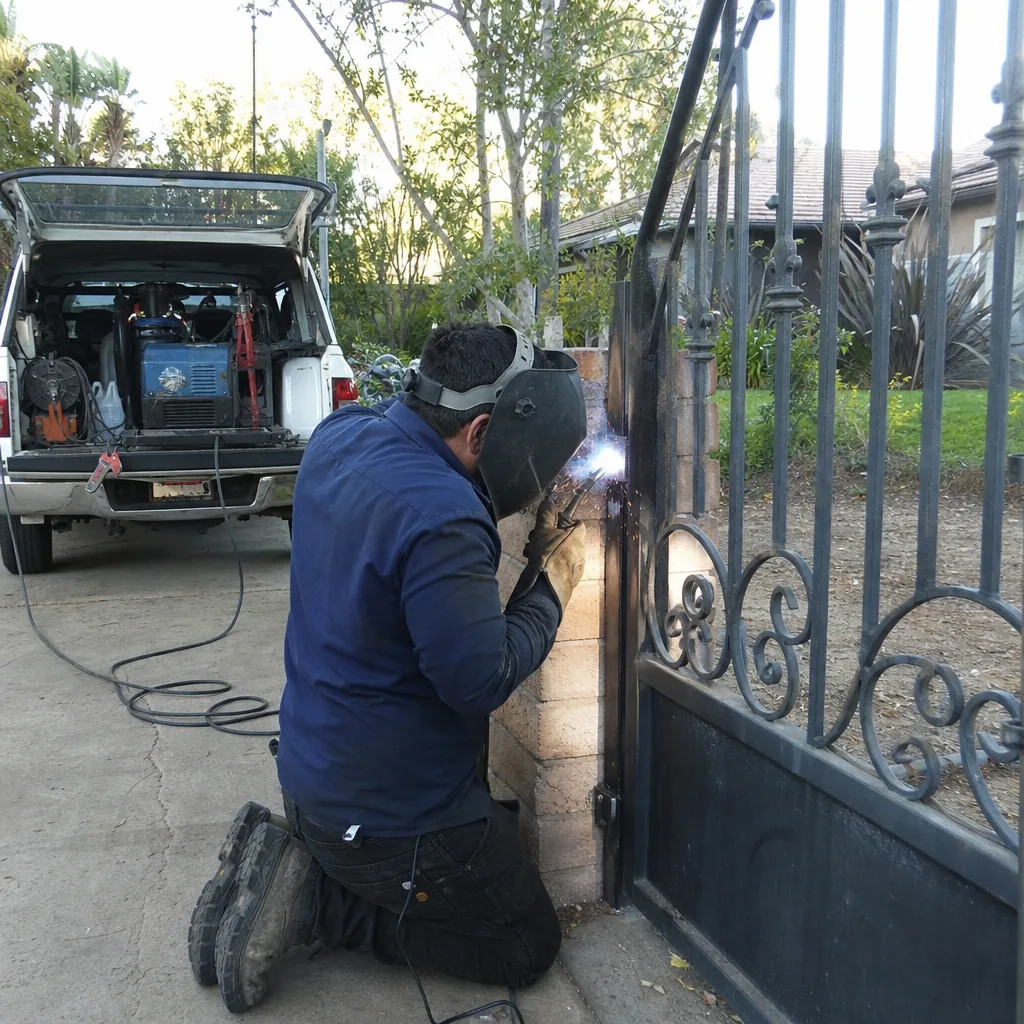
Here’s the labor math that most quotes hide. A solo technician in the Canoga Park market charges a labor rate that, in 2026, lands between $95 and $165 per hour depending on the shop’s overhead and whether they’re licensed and insured. A two-man crew runs $180 to $280 per hour combined. Those numbers matter when you see “motor replacement: $1,400” with no hours listed.
Photo-eye realignment or replacement
This is a 30-to-60-minute job for one technician. Remove the housing, clean the lens, re-aim the beam, test the interruption response. If the eye is being replaced rather than realigned, add 15 minutes for the swap and re-wiring. At market labor rates, the labor component should sit between $50 and $165. Total job with a quality aftermarket eye: $185 to $350. Anything above $400 for a single photo-eye replacement with no other work described is markup, not labor.
Swing gate hinge replacement
Two hinges on a residential steel swing gate take one to two hours if the gate needs to be lifted off and re-set, and longer if posts are out of plumb. The labor component runs $150 to $330. Concrete work, shimming, or post repair adds time and material. A quote for hinge replacement should show the hinge brand and weight rating, because a 400-pound gate on 250-pound hinges will fail again in eighteen months.
Control board replacement
This is a one-to-two-hour job for a competent technician who knows the brand. The board itself is the cost driver. An OEM FAAC or BFT board runs $250 to $480 wholesale; an aftermarket retrofit can be had for $120 to $250. The labor lands between $95 and $330. The real risk on control board replacements is misdiagnosis: a board gets replaced when the actual fault was a shorted wire or a failing capacitor, and the customer pays for the board, the visit, and then pays again two weeks later for the actual fix. A documented diagnosis, with voltage readings and the failed component identified, is the difference between a $700 repair and a $700 gamble.
Slide gate chain replacement
Chain and sprocket replacement on a residential slide gate is a one-to-two-hour job including tensioning and alignment. Chain cost depends on length and gauge. Labor runs $95 to $330. If the sprockets are worn, they must be replaced with the chain, because new chain on worn sprockets will stretch and jump within months. A quote that replaces the chain without inspecting the sprockets is a quote written by someone who didn’t open the drive housing.
Loop detector replacement
The safety loop is the wire buried in the driveway that tells the gate a vehicle is present. When a loop detector fails, the gate either won’t open for a car or won’t close after the car passes. Detector replacement is $90 to $200 for the part and one to two hours for the install and sensitivity adjustment. If the loop wire itself is cut or degraded, the driveway repair is separate concrete work. A contractor who replaces a detector without testing the loop wire first is guessing. We test the loop with a meter before we buy the detector, because a dead loop wire and a dead detector produce the same symptom and require completely different fixes.
Labor in Canoga Park is not cheap, and it shouldn’t be. The technicians who show up with a stocked truck, a written diagnostic process, and documented results are billing what their work is worth. The problem is never the hourly rate. It’s the absence of transparency about how many hours are being billed and what the parts actually cost.
How to Read a Bundled Quote and Request an Itemized Breakdown
A bundled quote is one line: “Gate repair: $850.” You cannot evaluate that. There’s no way to know if the parts cost $50 and the labor is 6 hours of billing, or the parts cost $600 and the labor is reasonable. Here’s how to push back without being difficult, and what the response tells you about the contractor. You can also find more guides & resources on our blog.
- Ask for the labor rate and estimated hours, separately from parts. Say: “Can you break out the labor from the parts so I can see what I’m paying for each?” A legitimate shop will do this in thirty seconds. The parts prices are on their supplier invoice; the labor hours are in their head. If they hesitate, the quote is built on margin, not on math.
- Ask for the part number and brand of every component being replaced. If the answer is “we’ll see when we get in there,” that’s a red flag. A competent gate technician can name the board model on a FAAC 391 or a Viking R6 from the symptom description and the gate’s age. We can. Any shop with 22,000+ jobs behind it can.
- Ask whether the diagnostic fee is credited toward the repair. Some Canoga Park shops charge a $65 to $99 trip fee to diagnose, then apply it to the repair if you approve the work. Others charge the fee and then full price for the repair, which means you paid for the diagnosis twice: once as the fee, and again as the “diagnostic” embedded in the repair line item. This is the double-counting that most homeowners never catch because they never ask.
- Ask what’s included in the final documentation. Do you get a written record of what was found, what was replaced, and the part numbers installed? Do you get photos? If the contractor says documentation is not needed, walk away. A gate that’s been repaired without documentation costs more to diagnose next time, because the next technician starts from zero. A gate that carries its own service history costs less to maintain over ten years, and the documented record adds value at resale when a buyer asks about the gate system.
- Compare line items across quotes. Once you have one itemized quote, the other quotes become easy to evaluate. If Company A prices the OEM FAAC board at $310 and Company B prices the same board at $540, you know where the margin is. Ask Company B why. The answer will tell you everything.
A contractor’s refusal to itemize is information. It’s not a personality quirk; it’s a pricing strategy. The owner of a gate repair shop who cannot show you the parts line is charging you something the parts line would reveal. Request the breakdown. The Haven Standard has required it on every one of our jobs in Canoga Park since 2014: written price before work starts, separate labor and parts lines, and the part numbers in writing.
Legitimate Cost Variables vs. Padding Items
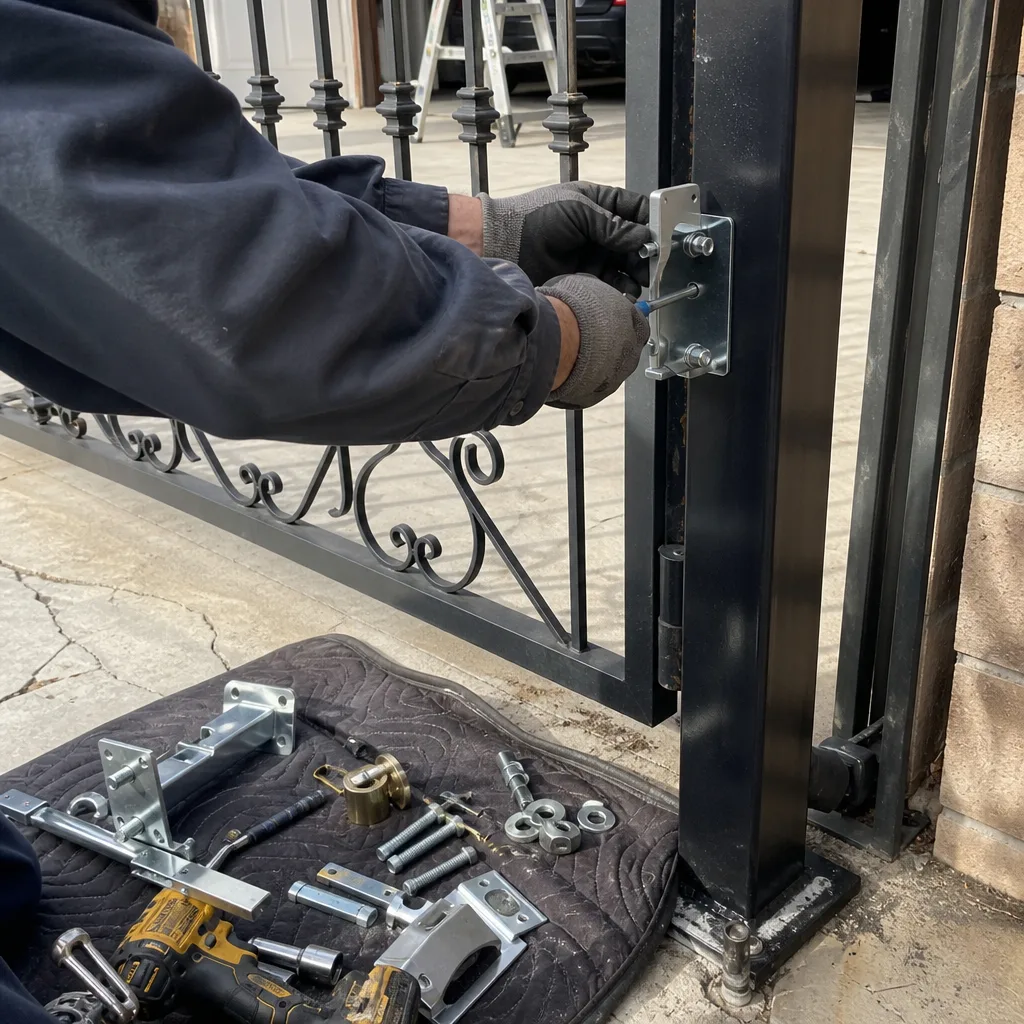
Not every discrepancy on a gate repair quote is padding. There are real variables that legitimately move the price. The skill is knowing which are which.
Legitimate cost variables
- After-hours rate. A 2 a.m. gate failure that leaves a car trapped in the driveway is an emergency call. The labor rate for a 24/7 response runs 1.5 to 2 times the daytime rate. That’s fair, and it’s what keeps a live person answering the phone at 2 a.m. in the first place. Vance Gate Repair has a live person answering calls 24 hours a day, seven days a week, no voicemail loop, no callback queue. The emergency labor rate is disclosed before dispatch.
- Access difficulty. Some Canoga Park driveways are tight. Older homes along Sherman Way and in the neighborhoods east of Topanga Canyon Boulevard often have narrow side yards, gates set on slopes, or planter beds that block ladder access to the operator arm. If a job requires two technicians or a lift, the labor component increases. The quote should say so.
- Concrete or post work. A sagging gate is often a failing post, not a failing hinge. Resetting a post in concrete adds material and curing time. A quote that discovers the post problem must be updated in writing before the concrete work starts. The written price changes because the scope changed, not because the contractor “found something.”
- Permit fees. Most gate repairs do not require a permit in Los Angeles County. Gate installations that include new electrical runs or changes to the driveway approach may. If a permit is required, the fee is a pass-through cost and should appear as a separate line item with the permit number on the final invoice.
Padding items that should make you pause
- “Shop supplies” at 10% of the total. A gate repair truck does not consume $85 in rags and zip ties on a two-hour job. A reasonable shop supply charge is under $20 or nonexistent. Ten percent is a margin item wearing a costume.
- “Preventive maintenance” add-ons during a repair visit. Some shops will try to sell you a full PM package while they’re there for a photo-eye fix. A legitimate technician will note items that need attention and quote them separately, not bundle them into urgency while the gate is open on the driveway.
- A separate “programming fee” for remotes. When a control board or receiver is replaced, re-pairing existing remotes is part of the repair. It is not a separate $75 line item. Watch for this.
- Vague “system tune-up” without defined scope. What is being tuned? Which components? What settings are being adjusted, and to what values? If the line item doesn’t say, the work didn’t happen. Ask for the defined scope in writing.
The guiding rule: every line on a quote should correspond to a discrete action or a named part. If a line item is an adjective rather than a noun, it’s padding. “System tune-up” is an adjective wearing a dollar sign. “Reset limit switch and re-tension chain” is a noun. That’s the difference between a quote that protects you and one that exploits the absence of a written scope.
Written-Scope Shops vs. Verbal-Estimate Shops: What the Structure Costs You
The difference between a shop that writes a detailed scope and a shop that gives a verbal estimate is not style; it’s economics. The verbal shop is optimized for speed and volume. The written shop is optimized for repeatability and accountability. The two structures produce different long-term costs for the homeowner, and the math is not obvious until you see it laid out.
| Factor | Verbal Estimate Shop | Written Scope Shop |
|---|---|---|
| Quoted before work starts | Verbal range, often revoked | Written line-item price |
| Diagnostic fee treatment | Sometimes separate, sometimes embedded | Disclosed and itemized |
| Repeat call within 90 days | Often charged as a new service call | Covered under 365-Day Done Right Promise |
| Parts provenance | Not disclosed | Brand and part number in writing |
| Documentation at resale | None | Photo log and written record |
| Typical out-the-door total for same repair | $50-$150 lower initially | Market-visible on paper |
| Cost over 24 months including repeat calls | Often 2 to 3 times the initial quote | Usually the single visit |
The verbal shop isn’t necessarily dishonest. It’s just structured so that the risk of misdiagnosis lands on the homeowner. When a verbal-shop tech guesses wrong on a control board and the gate fails again in three weeks, that’s a new service call, a new trip fee, and a new parts charge. The customer pays three times for one repair. The written-scope shop carries the same risk but has a contractual reason to get it right the first time: the 365-Day Done Right Promise means a misdiagnosis is corrected at no additional charge, and that correction cost comes out of the shop’s margin. The incentive structure is fundamentally different.
In Canoga Park, where gate repair demand is steady year-round and the market has dozens of providers, the observable difference is documentation. A shop that has been operating since 2014 with 22,000+ gates behind it and a written price on every one is running a different operation than a guy with a truck and a magnet sign. Both exist in this market. The documentation is the tell. Adrian Vance built this company on commercial access control standards, where every visit produces wiring diagrams, photo logs, and written findings, because commercial clients demanded it. That standard carries over to every residential gate in Canoga Park.
What a Homeowner Can Safely Check vs. What Should Never Be Attempted
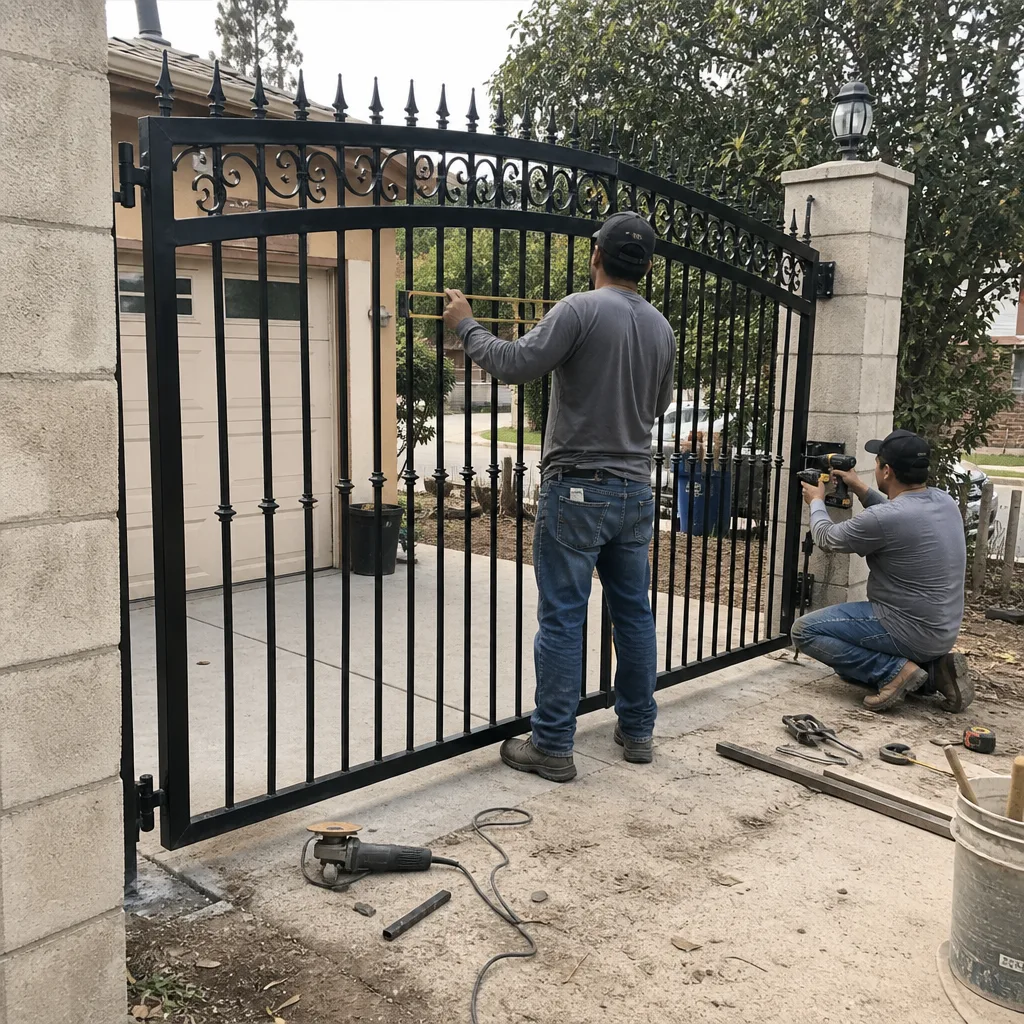
Some gate issues are safe to diagnose visually, and some are genuinely dangerous. The line is not subtle. Here’s where it sits.
Safe to check yourself
- Photo-eye alignment. Look for a solid indicator light on both eyes. If one is blinking or dark, the beam is interrupted or the eye has failed. You can wipe the lens with a dry cloth. You can check that nothing - a potted plant, a trash can, a parked bicycle - has drifted into the beam path. That’s diagnosis, not repair, and it’s safe.
- Track obstruction on a slide gate. Rocks, dirt, and the hard seed pods from the pines and oaks that line Canoga Park’s older streets end up in slide gate tracks constantly. Look for anything sitting on the rail or wedged against the wheels. Clear it and test the gate. This is the most common zero-cost fix in the Valley.
- Remote batteries. A weak remote mirrors a receiver failure. Replace the battery before paying for a service call. One in five “gate won’t open” calls we get in Canoga Park is a dead remote battery.
Never attempt yourself
- Spring and tension mechanism work. Swing gate operators and some manual gates carry tensioned springs and torsion bars. These are under hundreds of pounds of stored force. If a spring is visibly broken or the gate is hanging at an angle, do not touch the hinge plates or the tension components. A released tension bar can break a hand, a wrist, or worse. Call a trained technician. This is not a place for a YouTube tutorial.
- Control board diagnosis or replacement. Gate control boards run line voltage and low voltage side by side. A homeowner probing a FAAC or BFT board without knowing which terminal carries 120V is one slip away from a serious shock. Diagnosing a board requires a multimeter, a schematic, and experience reading capacitor failure and relay chatter. This is a trained-professional repair, full stop.
- Chain or belt replacement on a slide gate. Chain tension on a slide gate is not a “tighten it until it feels right” adjustment. Over-tensioned chain tears out bearings and bends shafts. Under-tensioned chain jumps sprockets and drops the gate. The torque specifications are brand-specific. Viking and Linear operators have different tolerances.
- Loop detector installation. Cutting into a concrete driveway to install a safety loop is a job involving a saw, conduit, and sealant, and the detector sensitivity has to be dialed to the loop geometry. Get it wrong and the gate closes on a car, or doesn’t open at all.
We’re not trying to scare anyone away from owning a gate. We’re trying to keep a homeowner from opening a FAAC operator housing and finding 120V with a screwdriver. The diagnostic checks are safe. The repair work has a risk profile. The gate doesn’t care that you watched a video.
Canoga Park-Specific Factors: Heat, Dust, and Driveway Geometry
Canoga Park has three environmental factors that show up in our repair work more than any client expects. They’re regional, they’re consistent, and they move prices.
Heat. Summer surface temperatures on a dark metal gate in west Valley full sun regularly exceed 140 degrees. Control boards and capacitors degrade faster in sustained heat than in coastal communities. The electrolytic capacitors on a 10-year-old FAAC board are more likely to fail here than in Santa Monica. Heat also causes metal gate frames to expand and warp subtly, which throws hinge alignment out and puts load on the operator arm. A gate that runs fine in January and binds in August is a heat problem, not an operator problem.
Dust. The fine particulate that blows west of Topanga Canyon Boulevard settles into every gap, every gear, and every optical lens. Photo-eye lenses cloud over within months. Chain drives gum up. Slide gate tracks fill with a powder-fine silt that packs hard when the morning dew hits it. A slide gate in Canoga Park needs track cleaning more often than the same gate in a coastal community. It’s part of the ownership cost.
Driveway geometry. Canoga Park’s older neighborhoods have narrow side yards and driveways that slope hard to the street. A gate on a 15-degree slope puts constant gravity load on the operator, which accelerates wear on the drive mechanism and the limit switches. A gate that’s been installed on a slope without a proper cradle or stop is a repeat service customer until the geometry is fixed. The fix costs more than the band-aid, and the honest quote prices the fix.
None of this is exotic. It’s just the reality of running an automatic gate at 101 degrees in a valley basin that gets dust storms and hard afternoon sun. A good Canoga Park gate technician sees these patterns daily. We do. The Gate Repair in Canoga Park page details our repair process, but the short version is this: we diagnose, we write the price, we photograph the findings, and we fix it once.
Common Mistakes to Avoid
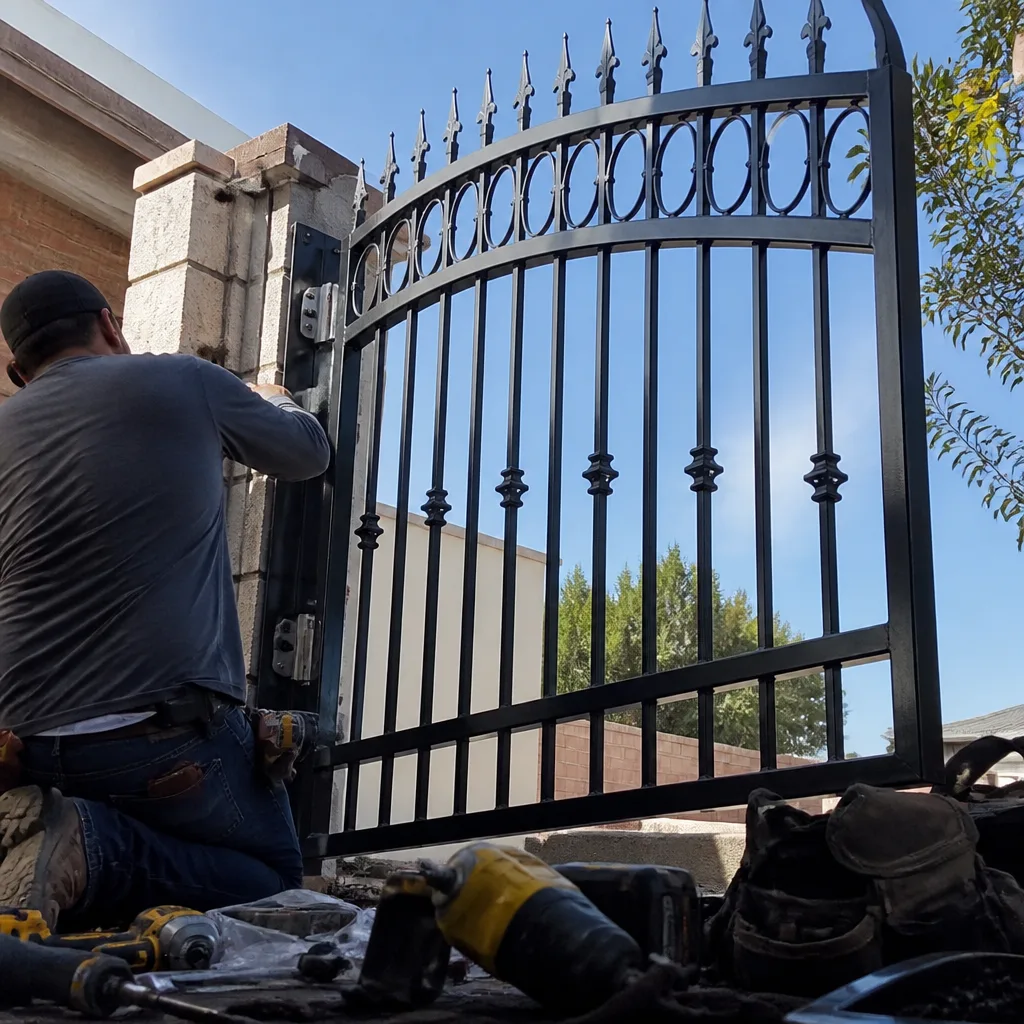
- Approving a bundled quote without requesting the line items. “Gate repair: $850” is not a quote. It’s a number. Get the labor rate, the hours, the part brand, and the part number. The refusal to provide them is the answer to a question you didn’t think to ask.
- Paying the diagnostic fee and then full price without credit. Ask explicitly whether the fee is credited toward the repair. In Canoga Park, some shops apply it and some double-count it. The difference is $65 to $99 out of your pocket.
- Replacing the remote batteries last instead of first. One in five “gate won’t open” calls is a dead battery in the remote. Spend $6 before you spend $200.
- Letting a technician leave without written documentation. If you don’t have a written record of what was found and what was replaced, the next technician starts from zero, and you pay to rediscover the same problem. Photographic and written records protect your investment over the life of the gate.
- Buying an aftermarket control board for an OEM system without asking about compatibility. Aftermarket retrofits can work, but they sometimes lack the safety edge inputs or the fail-safe behavior of the OEM board. The $200 you save on a generic board can become the $600 repair when the safety circuit doesn’t function properly.
- Ignoring a gate that’s 5% slower or noisier than last month. In Canoga Park’s heat, a slowing operator is often a warning sign of a failing capacitor or degrading hinge. Catching it at the warning stage costs less than the failure stage. A gate that’s changing behavior is telling you something.
When to Call a Professional
Call when the gate’s behavior changes and you don’t know why: it reverses midway, it slows, it grinds, it won’t close, it closes on the car. Call when something structural moves: a gate hanging at an angle, a post leaning, a hinge pulling away. Call when you hear a snap and then the gate moves wrong. These are not diagnostic puzzles for the homeowner; they’re symptoms of specific mechanical or electrical failures. A trained technician with a multimeter and the right parts can usually diagnose the problem in the first visit. Vance Gate Repair Canoga Park offers free estimates in Canoga Park, and every one is written, line-item priced, and documented before the work starts. Call (805) 210-8672 and a live person will answer, at any hour, any day. No voicemail loop, no automated attendant. That’s the way we’ve run it since Adrian Vance started the company in 2014.
Frequently Asked Questions
Most gate repairs in Canoga Park run between $185 and $1,100 as of 2026. Photo-eye realignment and limit-switch adjustments are usually under $250. Control board replacements on brands like FAAC, BFT, LiftMaster, and Viking are the most common big-ticket repairs, landing between $450 and $900 with OEM parts. The total depends on the parts brand, the labor hours, and whether the quote is itemized or bundled. Call (805) 210-8672 for an exact written quote, free of charge.
Yes, most repairs can be completed same-day when the parts are on the truck. Vance Gate Repair dispatches background-checked, uniformed technicians with a stocked inventory across Canoga Park, and the common parts, photo eyes, limit switches, chains, receiver boards, are carried on every truck. Brand-specific OEM boards sometimes require a parts run or next-day delivery, and we’ll tell you that upfront in writing before any work starts. Call (805) 210-8672 to get a technician scheduled.
A complete gate installation in Canoga Park, including the gate, operator, safety edges, photo eyes, and electrical work, typically runs from $3,800 to $9,500 depending on gate size, material, automation brand, and site conditions like slope and concrete work. Gate Installation in Canoga Park is a full scope, measured and priced in writing before we order anything. The install includes the power run, the safety edges, and programming, and the written scope is Clause 1 of our Haven Standard. Free measure and written price on every install.
Yes, and most motor repairs don’t require replacing the gate. The operator, the motor, the control board, and the remote system are separate components, and a failing motor doesn’t mean you need a new gate. Gate Motor & Opener in Canoga Park covers motor replacement, board swaps, and drive mechanism repairs on nine brands including FAAC, BFT, Linear, and Viking. If the gate structure is sound, we repair the motor and leave the gate in place. Call (805) 210-8672 for an assessment.
The decision is usually based on three factors: the age of the operator, the cost of the repair versus the cost of replacement, and the structural condition of the gate. A 15-year-old operator with a fried control board and a tired motor is often a replacement candidate. A 5-year-old operator with a failed photo eye is a repair. The honest answer requires a diagnostic visit with written findings. We provide exactly that. No pressure toward replacement when repair serves the customer better.
We service nine major automation brands including FAAC, BFT, Linear, Viking, LiftMaster, Ghost Controls, DoorKing, Elite, and Mighty Mule. If your gate runs something else, we’ll assess it. The point is not to steer you toward a brand we carry more of; the point is to fix the gate that’s already on your property. Vance Gate Repair Canoga Park home lists the full brand coverage and the service standards.
The Bottom Line
Gate repair in Canoga Park costs what it costs because of specific parts, specific labor hours, and specific environmental factors. None of it should be a mystery. The parts have wholesale prices. The labor has market rates. The hours are estimable. A homeowner with this reference can read any quote and find the margin in five minutes. What separates a fair quote from a padded one is not the total on the last line; it’s the line items above it. Ask for the breakdown. Get it in writing. If a shop won’t itemize, that’s the only answer you need. Vance Gate Repair has written every price before the work starts since 2014, across 22,000+ gates, and photographed every job when it’s done. That’s the Haven Standard, and it’s why a Vance customer never pays twice to rediscover the same problem. Call (805) 210-8672 for a free written estimate in Canoga Park, and you’ll have the number on paper before anyone touches a tool.
Written by Adrian Vance, Owner at Vance Gate Repair Canoga Park, serving Canoga Park since 2014.