
Last updated September 20, 2026
Free on-site gate assessment - hinges, posts, and your LiftMaster or Nice gate operator checked before anything is quoted
The assessment is free and the quote is the invoice.
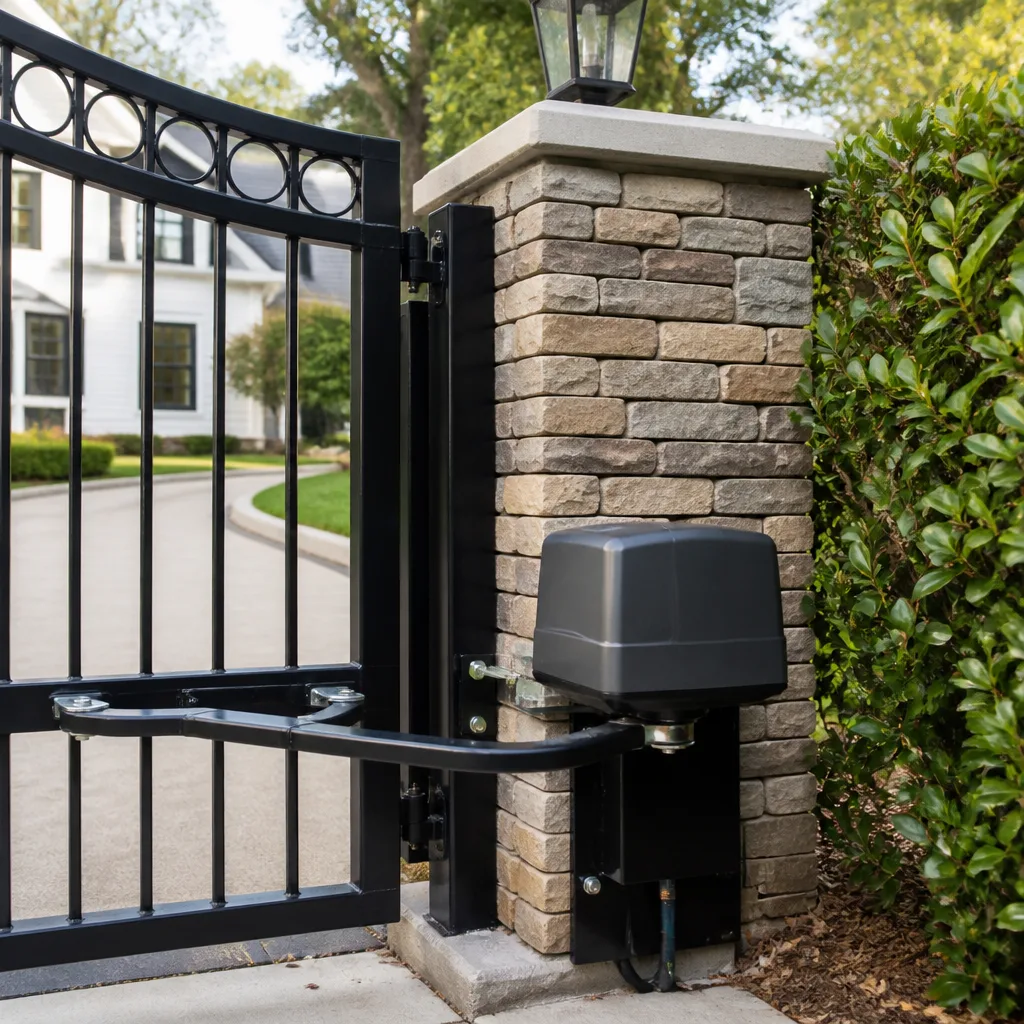
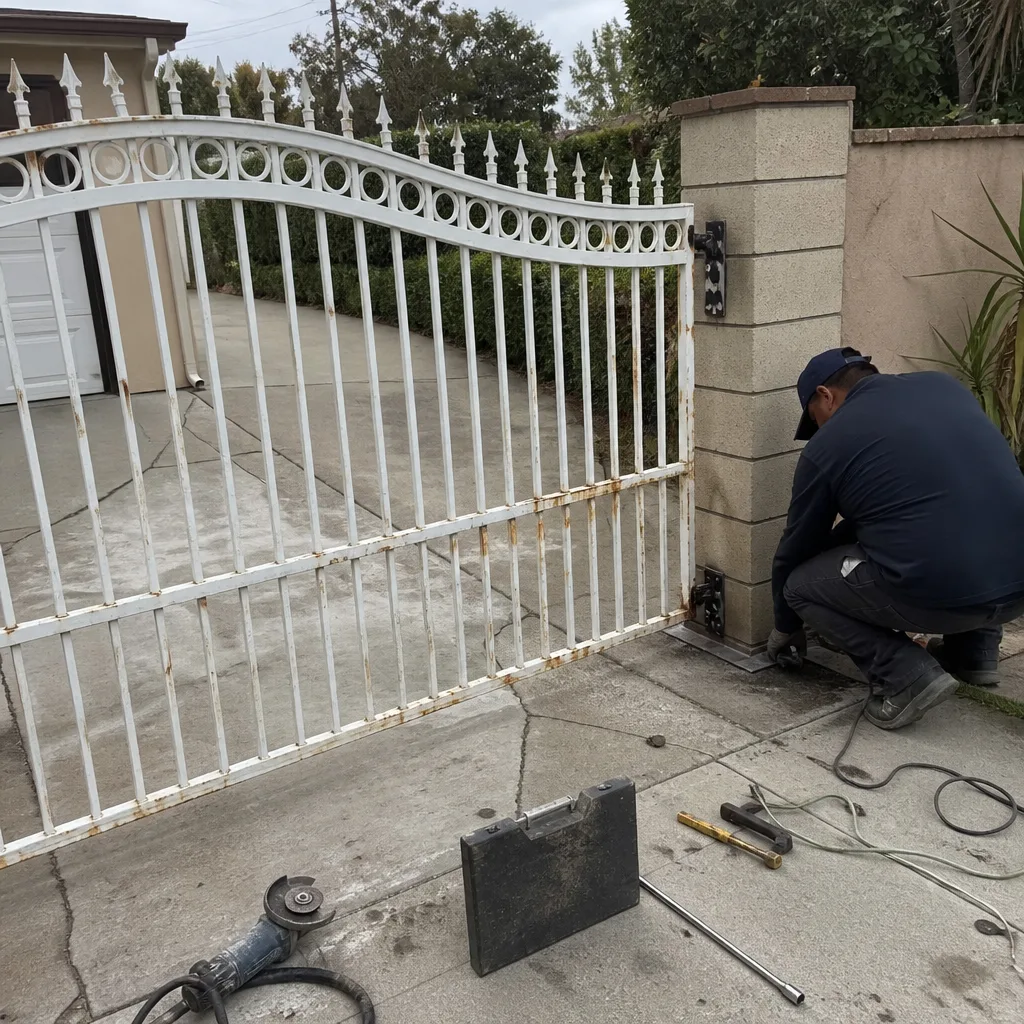 Before
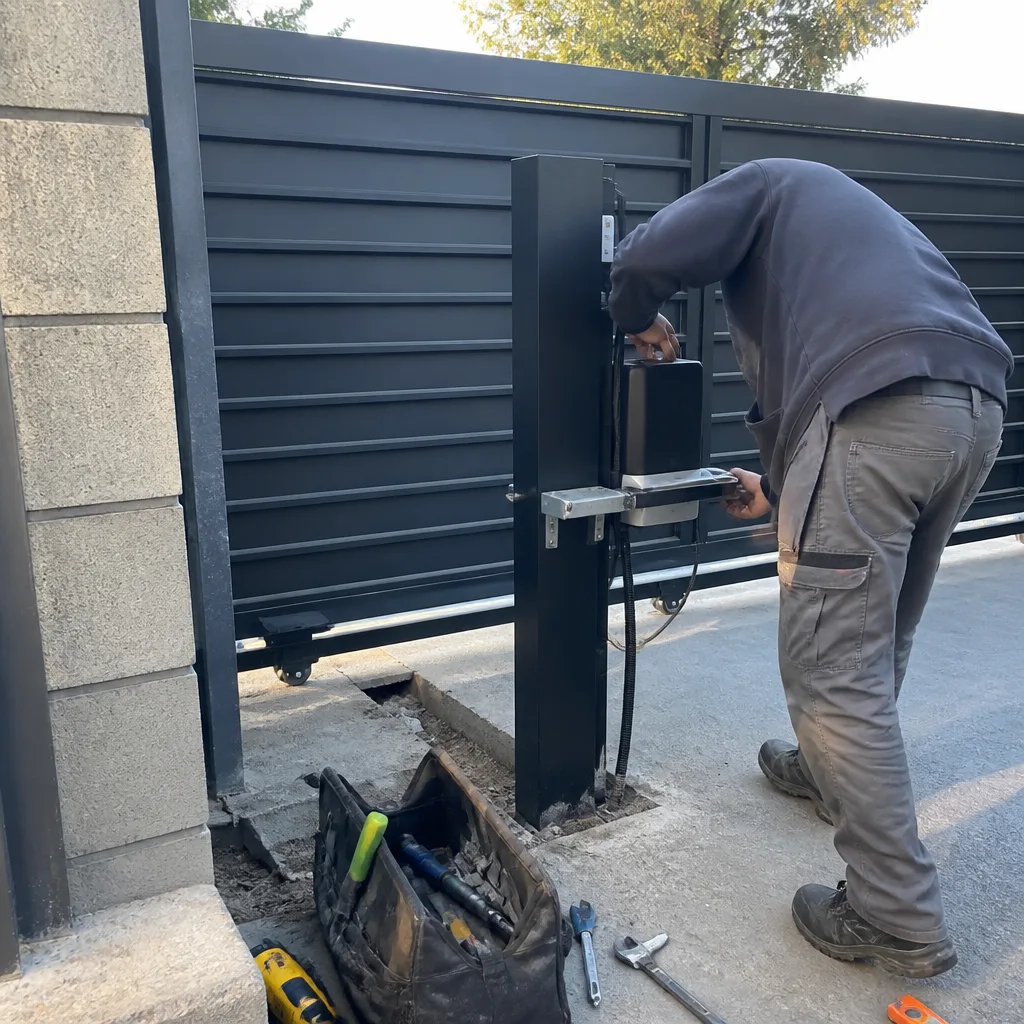 After
After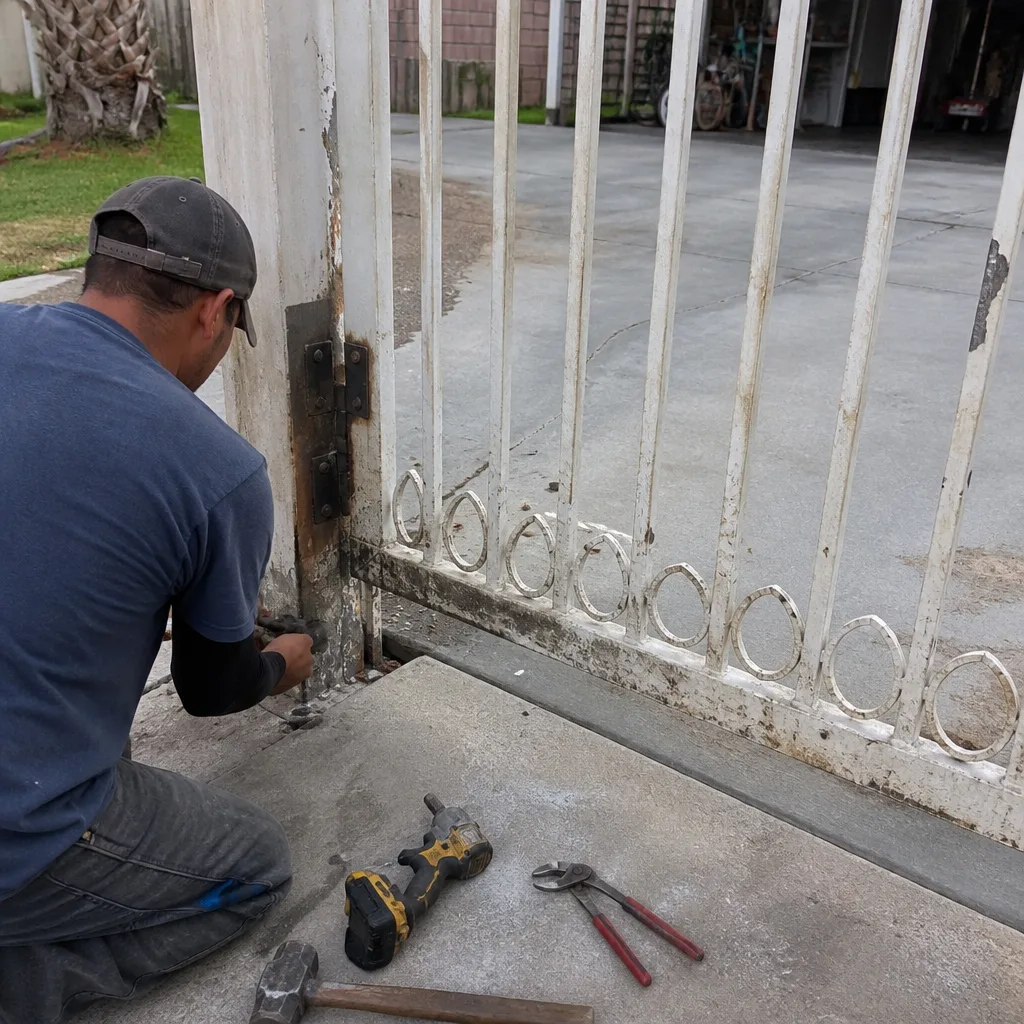 Before
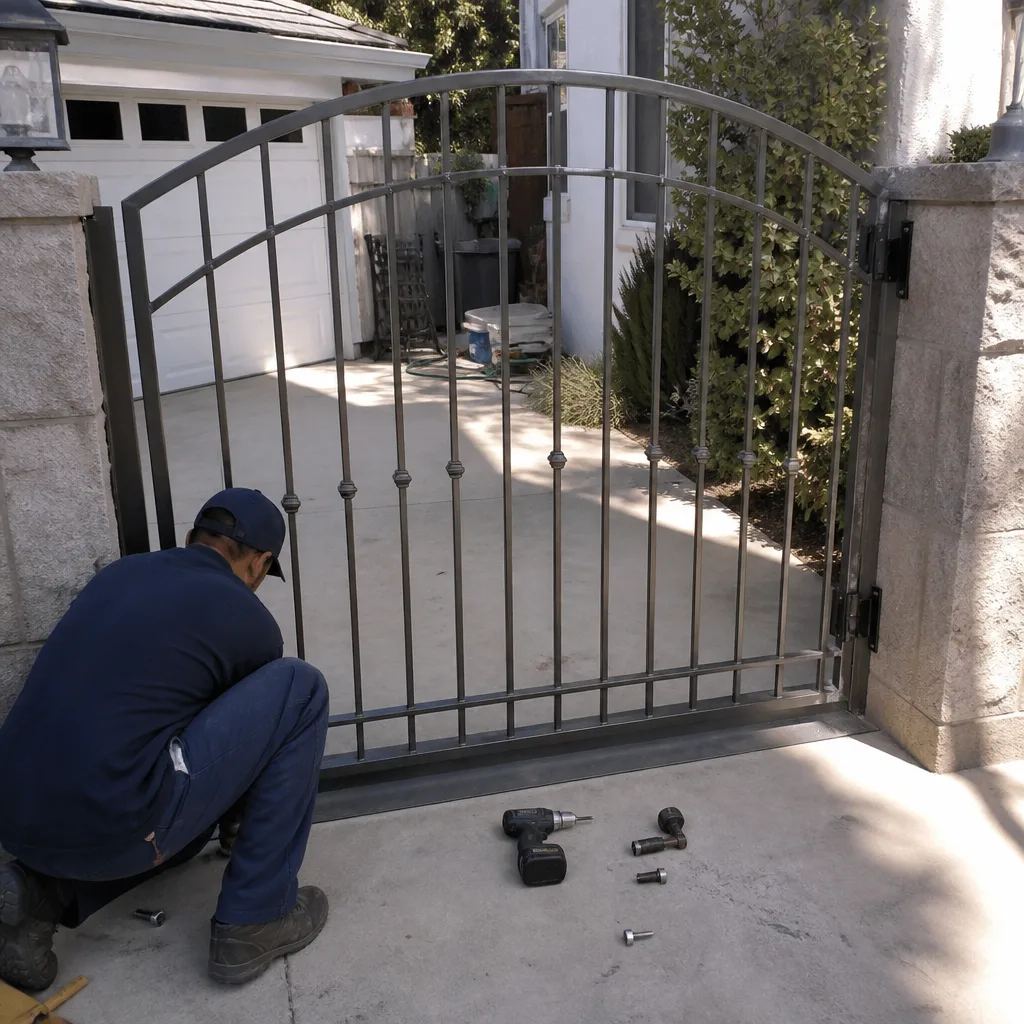 After
After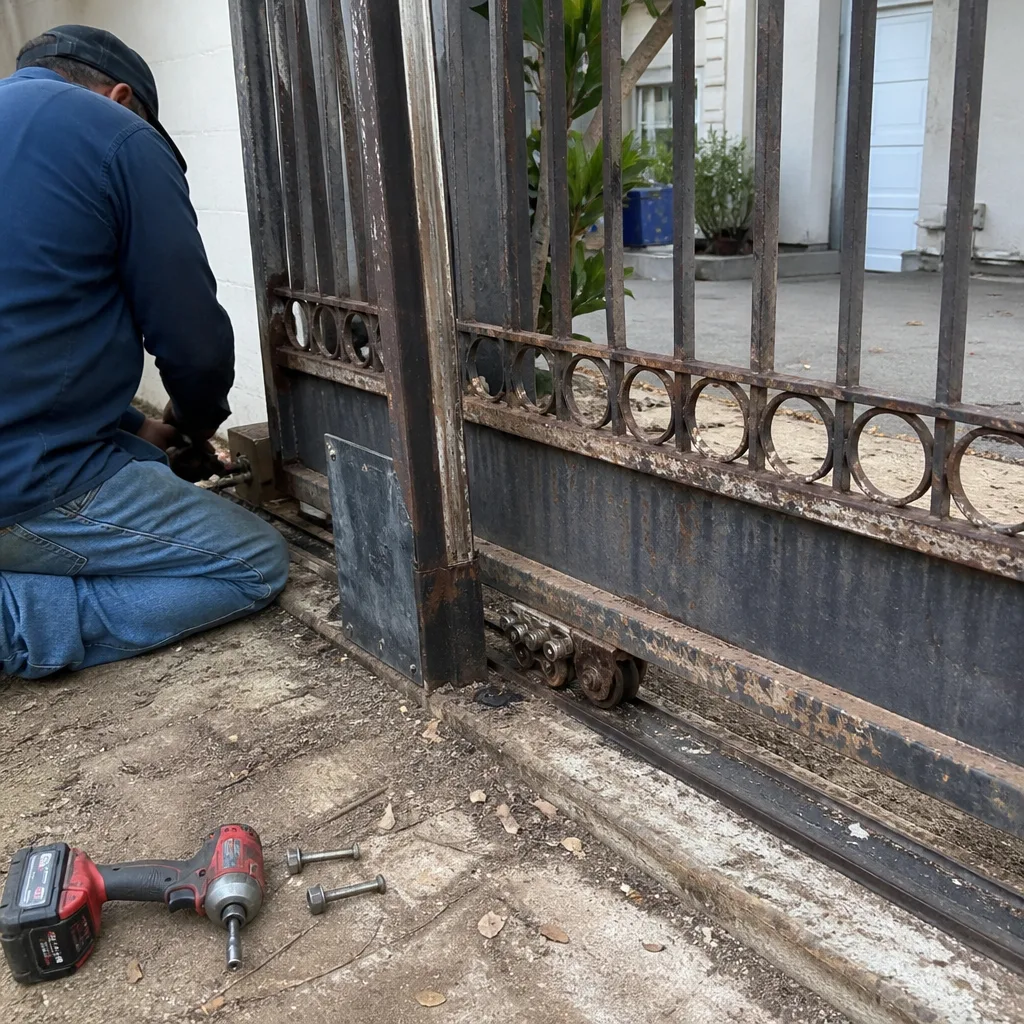 Before
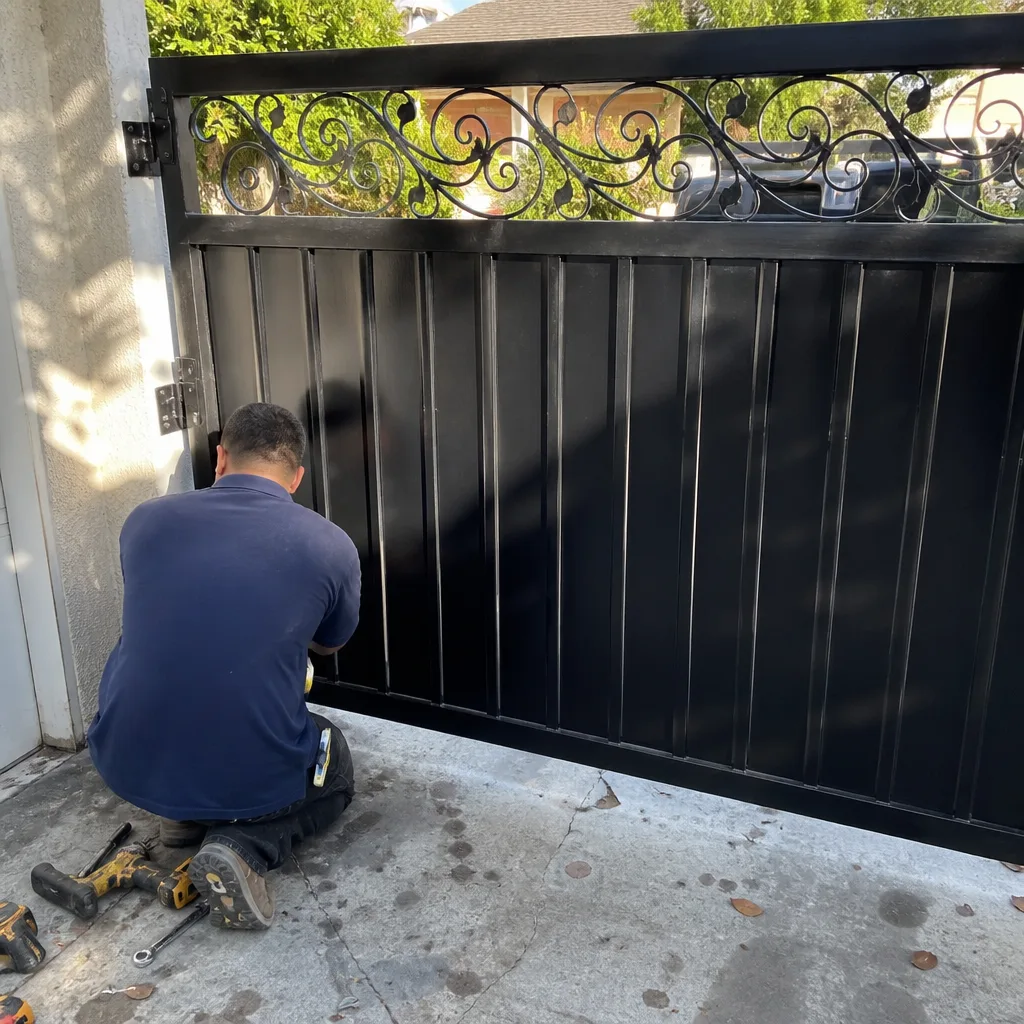 After
AfterGate Repair Warning Signs: A Canoga Park Homeowner’s Reference Guide
A gate that hesitates on the open cycle by two seconds is not “getting old.” It is producing a measurable symptom with a short list of causes, most of which cost under $200 to fix and all of which cost more if the motor burns out first. This guide assigns urgency tiers to the warning signs we see repeatedly on driveway gates across Canoga Park, so you can tell the difference between a Gate Repair service that needs attention within 48 hours and an adjustment that can wait two weeks. You will learn what each symptom points to, how to photograph it properly, and which Canoga Park-specific conditions get misread as failures.
Quick Answer
The most urgent gate repair warning signs are grinding under load, a gate that reverses without an obstacle present, and sparking at the motor terminal: these three indicate mechanical or electrical failure that can destroy the motor within days if ignored. Slower symptoms like a gradually lengthening cycle time, intermittent remote response, and surface rust at hinge bases typically give you a two-week window before they escalate. You can photograph all of these symptoms with a phone camera in under five minutes, and those photos let a technician assess the problem remotely and arrive with the right parts instead of doing a diagnostic-only visit.
Table of Contents
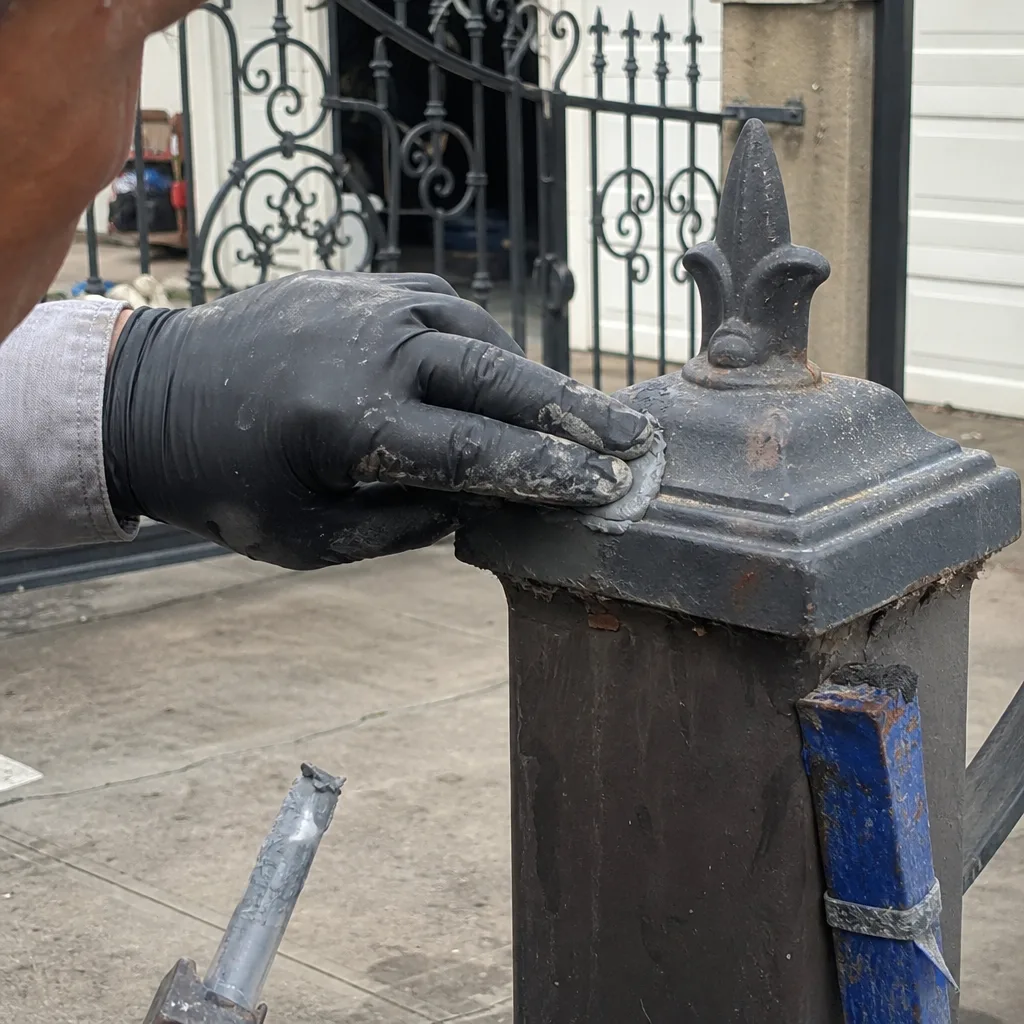
- Tier 1: Act Within 48 Hours
- Tier 2: Schedule Within Two Weeks
- Tier 3: Track and Re-Check in 30 Days
- How to Photograph and Measure Each Symptom
- Canoga Park Symptoms That Get Misread
- What These Repairs Typically Cost in Canoga Park
- Common Mistakes to Avoid
- When to Call a Professional
- Frequently Asked Questions
- The Bottom Line
BeforeAfterTier 1: Act Within 48 Hours
Some symptoms are not warnings. They are failures in progress. We classify these as Tier 1 because the window between “noticeable” and “motor destroyed” is often measured in days, not weeks. Here is what each one points to.
Grinding Under Load
When a sliding gate makes a grinding sound specifically while moving under load (usually the middle third of its travel, where the gate’s full weight bears on the track), the cause is almost always mechanical: worn roller bearings, a failing drive gear, or a bent track section forcing the gate to fight its own path. The sound is the gate telling you that metal is contacting metal where it should not. Left alone, the motor keeps pushing against the resistance until the gear strips or the motor windings overheat. We have pulled motors off Canoga Park gates where the drive gear was worn to smooth nubs because the grinding was ignored for a month.
What to do: Stop running the gate on automatic. You can still open and close it manually in most cases (look for the release mechanism on the operator, usually a red handle or a keyed release). Photograph the track and the rollers, then call a technician. This is a same-day or next-day repair.
Gate Reversing Without an Obstacle
A gate that starts to open, then reverses direction mid-travel with nothing in the path, is producing a safety-circuit fault. The two usual causes are a misaligned photo-eye (the infrared beam that stops the gate if something crosses the path) or a pressure-sensitivity setting that has drifted out of calibration. On LiftMaster and Elite operators, we also see this when the limit switch has moved slightly, making the control board think the gate has traveled farther than it has. The danger here is not just inconvenience: the reversal is the safety system firing when it should not, which means it may not fire when it should.
What to do: Check for anything near the photo-eye lenses, including spider webs (a common Canoga Park issue in warmer months). If the lenses are clear and the problem persists, call a technician. The repair is usually under $150, but the failure mode left unaddressed can become a safety liability.
Sparking at the Motor Terminal
If you ever see visible sparking at the motor terminal block or hear an electrical crackle when the gate runs, that is a Tier 1 problem, no exceptions. Sparking means a loose connection, a corroded terminal, or a failing capacitor. It is the one symptom on this list that you should treat as an immediate stop-use condition. Power down the gate at the breaker or disconnect switch and leave it off until a technician arrives. Electrical issues in gate operators do not self-resolve; they escalate, and the escalation path runs through your control board, which is the single most expensive component to replace.
What to do: Kill power to the operator. Take a photo of the terminal area if you can do so safely without touching anything. Call for repair. This is a same-day call in most cases.
Tier 1 Summary Table
| Symptom | Likely Cause | Typical Repair Window |
|---|---|---|
| Grinding under load | Worn rollers, drive gear, or bent track | Same day to 48 hours |
| Reversing without obstacle | Misaligned photo-eye, drifted limits, pressure setting | Same day to 48 hours |
| Sparking at motor terminal | Loose connection, corrosion, failing capacitor | Same day, stop use immediately |
On a Tier 1 call in Canoga Park, we send a technician with the common failure parts for your gate’s brand already on the truck. If you have a DoorKing operator, that means photo-eye assemblies, limit switches, and a spare drive gear. If it is an Elite, we bring the same plus a capacitor. That is the difference between a one-visit repair and a diagnostic trip followed by a parts-order delay. Our gate repair in Canoga Park service operates on the principle that a written diagnosis with photos is worthless if the parts are not in the truck.
Tier 2: Schedule Within Two Weeks
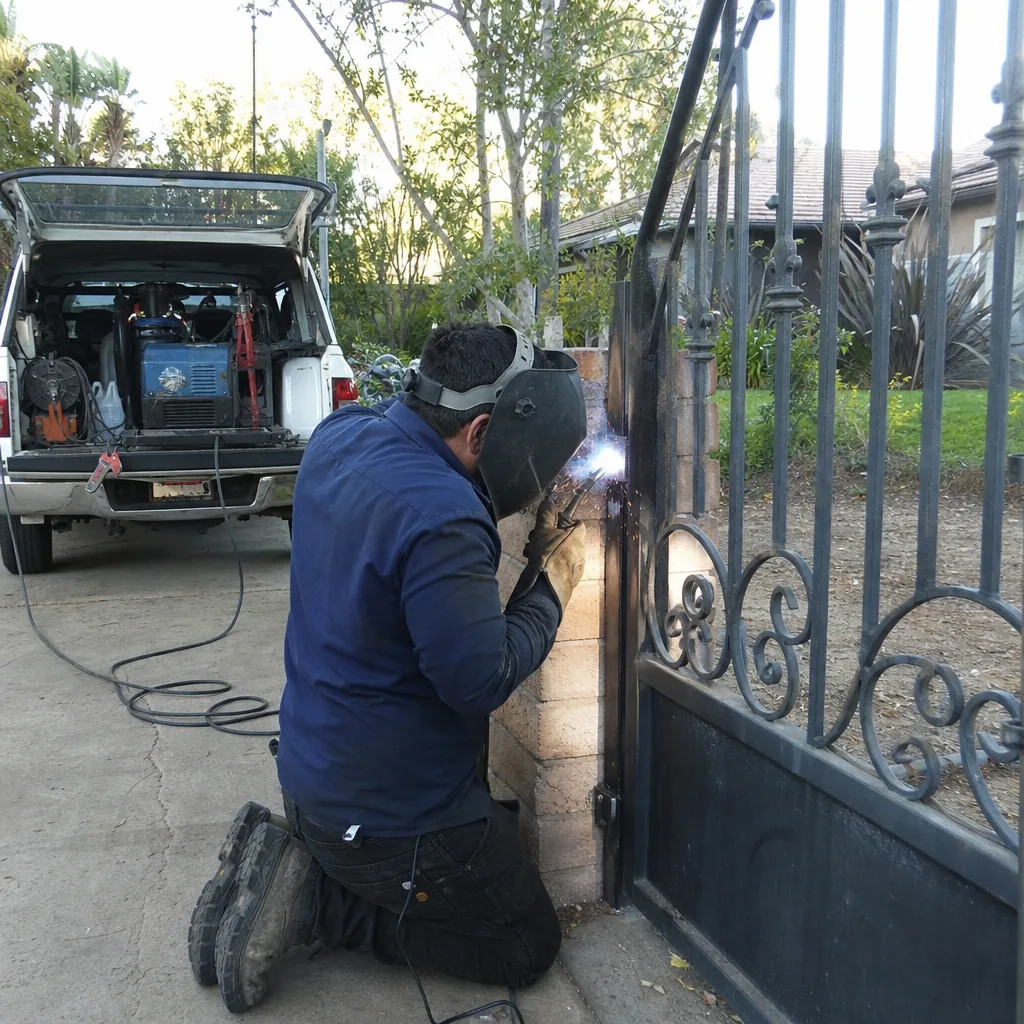
Tier 2 symptoms are the ones most homeowners dismiss for too long. They do not stop the gate today, but each one has a measurable escalation path, and the repair cost does not stay flat while you wait.
Slow Cycle Time Increase
A gate that used to open in 12 seconds and now takes 15 is not a personality quirk. The cycle time is a diagnostic reading. When it increases, the gate is working harder than it was, and the usual causes are: low fluid in a hydraulic operator (if your system is hydraulic), a stiffening drive chain, or a motor that is losing torque from worn brushes or capacitor degradation. On Mighty Mule and Ghost Controls residential operators, which are DC-motor designs, slow cycle time often means the battery is aging and the motor is pulling more current to compensate. Measure it: record a video with your phone, time the full open cycle, and write the number down. Two weeks later, time it again. If the number is still climbing, the repair is now Tier 1.
The window: You have roughly two weeks before the underlying cause starts damaging adjacent components. A stiff chain left alone will burn out the motor trying to pull it. A weak battery will kill the control board through voltage sag. Schedule the repair before the window closes.
Intermittent Remote Response
When the remote works at 20 feet one day and only at 5 feet the next, the problem is almost never the remote itself. It is usually the receiver antenna, the receiver board, or radio interference. Canoga Park has dense residential blocks with a lot of competing 318MHz and 390MHz signals from other gates, garage doors, and security systems. A receiver that is losing sensitivity will respond intermittently before it stops responding entirely. The fix is often a receiver board replacement or an antenna reposition. The cost is modest. The cost of ignoring it is a gate that will not open from the street on the day you are already late.
The window: Two weeks is comfortable. The symptom is annoying, not yet destructive, but the failure mode is progressive.
Visible Rust at Hinge Base
Steel gates in Canoga Park live in a dry climate for most of the year, which means rust moves slower than it does in coastal zones, but it never stops moving. Rust at the hinge base is a structural symptom, not a cosmetic one. The hinge base is where the gate’s entire weight transfers to the post, and corrosion there compromises the weld. Check it by tapping the rusted area lightly with a screwdriver handle. If flakes come off, the section is losing material. If the tap sounds hollow, the loss is significant. We photograph hinge bases on every visit. A photo from six months ago compared to a photo today tells us exactly how fast the rust is progressing.
The window: Two weeks is safe, but do not push it to two months. The threshold for moving to Tier 1 is any visible crack in the surrounding metal or any movement in the hinge pin when the gate swings.
Tier 3: Track and Re-Check in 30 Days
Tier 3 symptoms are real, but they are not emergencies. They are conditions to document, measure, and re-check on a calendar, not ignore.
Cosmetic Surface Rust
Surface rust is orange, sits on top of the metal, and does not flake off in layers when you scrape it with a fingernail. It is common on steel gates in Canoga Park, especially on the bottom rail where irrigation overspray hits. You can treat this yourself with a wire brush and a rust-inhibiting primer, or have it addressed during the next scheduled service; see our Seasonal Gate Repair Care for Canoga Park: Year-Round Homeowner’s Guide for timing. The threshold that moves it to Tier 2: rust that has penetrated the coating and is flaking, rust at any weld joint, or rust on the hinge or latch hardware. Those are structural, not cosmetic.
Slight Post Lean Under 2 Degrees
A post that leans slightly, less than 2 degrees off vertical, is often not a post failure at all. In Canoga Park, we see seasonal movement from clay soil. The soil expands when wet and contracts when dry, and over a few years a post can shift a degree or two without the footer failing. Measure it with a level or a phone level app against the post face. Write down the number and the date. Re-check in 30 days. If the number is unchanged, the post is stable and the lean is soil movement, not structural failure. If the lean has increased by half a degree or more in a month, move it to Tier 2 and schedule a technician to assess the footer.
Battery Backup Not Charging
Many Canoga Park gates have battery backup systems so the gate works during a power outage. If your battery backup indicator shows a fault or does not hold a charge when tested, you have time, but not infinite time. The battery is aging, and a battery that will not hold a charge will eventually draw down the operator’s transformer trying to charge it, which stresses the control board. Test yours by switching to battery power and running the gate once. If it moves at normal speed, the battery is functional. If it moves slowly or not at all, note the date and re-test in 30 days. No change means the battery is stable but aging; schedule it with your next maintenance. Faster degradation moves it to Tier 2.
How to Photograph and Measure Each Symptom
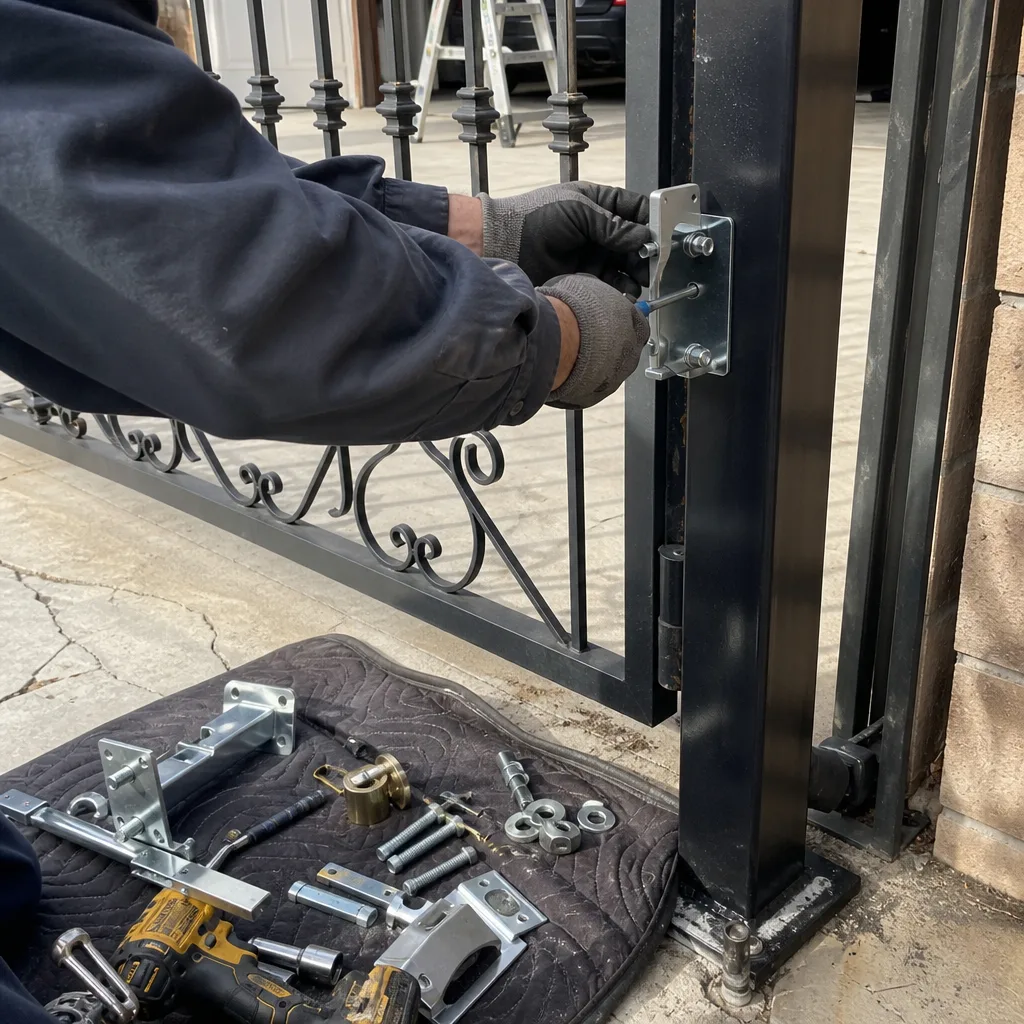
Your phone camera is the single most useful diagnostic tool you have before a technician arrives. A technician who sees good photos in advance can arrive with the right parts, and for a gate that has an intermittent fault, your photos may capture what the technician cannot reproduce on site. Here is how to document each symptom properly.
- Take wide shots first. Stand back and photograph the entire gate from three angles: from the street looking at the front, from the driveway looking at the back, and from the side showing the operator post. These give the technician context for where the specific fault sits.
- Then take close-ups of the specific symptom. For noise issues, photograph the rollers, the track, the chain, and the drive gear. For reversing issues, photograph the photo-eye lenses from both sides and the limit switch if visible. For rust, photograph the affected area from 12 inches away with the flash on.
- Record video of the gate in motion. A 15-second clip of the gate opening and closing is worth more than any verbal description. It captures cycle time, hesitation, jerkiness, and noise all at once. Hold the phone landscape and keep the entire gate in frame.
- Measure the cycle time. Start a stopwatch when the gate begins moving and stop when it fully stops. Note the direction (open or close) and the time. Repeat once every few days if the symptom is intermittent, and write down every number.
- Use a level app for post lean. Place the phone against the post and screenshot the reading. Photograph the same post from the same angle each time you re-check, so the comparison is meaningful.
- Photograph the operator label plate. The brand, model number, and serial number are printed on a plate or sticker on the operator housing. A clear photo of that plate lets the technician verify what is installed and bring matching components.
We designed our intake process around this exact documentation habit. Under the Haven Standard, every visit to a Canoga Park home includes a documented photo record: what was found, what was adjusted, what was replaced. The photos you send before the visit become part of that record. Our gate motor and opener service in Canoga Park runs on the principle that nobody should pay twice to rediscover the same problem, and the way you prevent that is with photographic evidence on both sides of the visit.
Canoga Park Symptoms That Get Misread
Two local conditions produce symptoms that look like failures but are not, and homeowners who do not know the difference sometimes pay for repairs they did not need.
Clay Soil Seasonal Movement
Canoga Park sits on clay-dominant soil that expands when wet and contracts when dry. After a rainy season, the soil swells and can push a gate post a degree or two off vertical. After a long dry stretch, the soil shrinks and the post can settle slightly. This is not post failure. We have measured the same post at 1.8 degrees off vertical in March and 1.2 degrees in August, with no structural change. The mistake homeowners make is calling for a post replacement on a post that is simply riding the soil cycle. The fix is often nothing: measure, record, and watch. If the gate binds because of the movement, a hinge or latch adjustment resolves it. If you are unsure, get the measurement and the photos first, then have a technician look at the evidence before anyone quotes you a footer excavation.
Summer Motor Slow-Down (Thermal, Not Mechanical)
Canoga Park summer temperatures routinely pass 95 degrees, and in direct sun an operator housing can reach 140 degrees or more. Thermal slow-down happens when the motor’s windings heat up and the resistance increases, which reduces available torque. The gate moves slower, but the cause is heat, not mechanical drag. This gets misread as a failing motor or a stiff chain, and we have seen homeowners quoted full motor replacements when the actual fix was improved ventilation or a shade screen over the operator. The way to distinguish thermal slow-down from mechanical slow-down is simple: test the gate in the early morning before the sun hits the operator. If it runs at normal speed when cool and slows down only in the afternoon heat, the issue is thermal. A technician can add louvers or a shade barrier for far less than a motor replacement costs.
If you are in Canoga Park and not sure which condition you are looking at, photograph the symptom and the time of day, then note the outside temperature. That data point narrows the diagnosis immediately. For a full gate installation in Canoga Park, we account for both clay soil and summer heat in the footer design and the operator ventilation plan, because ignoring either one guarantees a callback.
What These Repairs Typically Cost in Canoga Park
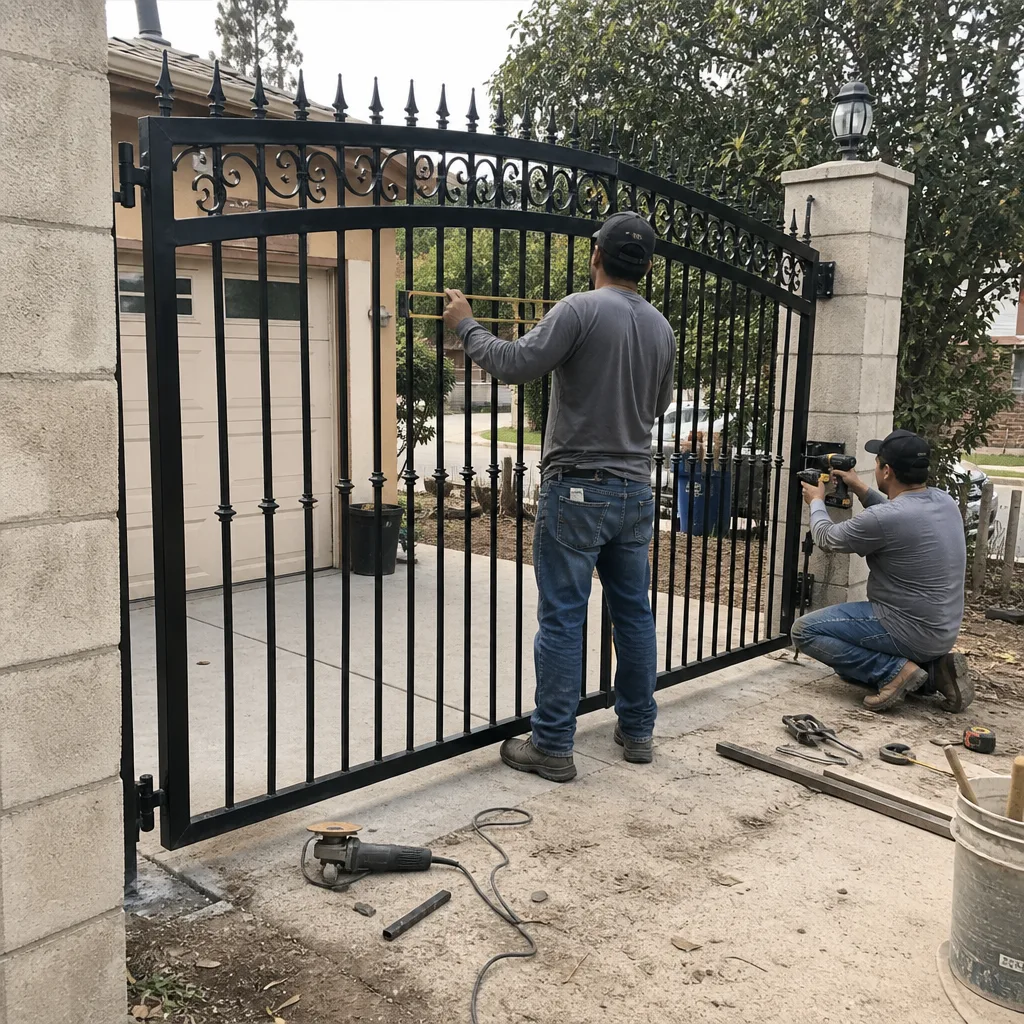
You should know the price range before you pick up the phone. Here are the repair costs we see in Canoga Park for the symptoms described above. These are typical ranges for the repair work itself, excluding any replacement gate or operator.
| Repair | Typical Range | Time on Site |
|---|---|---|
| Photo-eye alignment or replacement | $95-$185 | 45-90 minutes |
| Limit switch adjustment or replacement | $80-$160 | 30-60 minutes |
| Roller or bearing replacement (sliding gate) | $150-$350 | 1-2 hours |
| Drive gear replacement | $180-$420 | 1-2 hours |
| Receiver board replacement | $120-$280 | 45-75 minutes |
| Hinge base weld repair | $200-$500 | 1.5-3 hours |
| Capacitor replacement | $90-$180 | 30-45 minutes |
| Battery backup replacement | $150-$320 | 45-90 minutes |
| Control board replacement | $350-$800 | 1-2 hours |
These numbers are ranges because the final price depends on the gate’s brand, the condition of surrounding components, and whether parts are in stock locally. But here is the key difference in how we work: the price is written down and handed to you before any work starts. That is Clause 1 of the Haven Standard. You will not get a verbal estimate and then a larger invoice at the end. You will get a flat price for the repair, agreed in advance, on paper. If a second opinion would help you decide, bring us any written estimate from another company and we will review it with you at no cost. Call (805) 210-8672 and we can walk you through what your specific symptom typically costs to resolve in Canoga Park.
Common Mistakes to Avoid
- Lubricating a noisy gate without diagnosing the noise first. Spray lubricant on a worn roller or a stripped gear makes the sound quieter for a few days and makes the actual diagnosis harder after that. Photograph and identify the noise source before you lubricate anything.
- Replacing the remote before checking the receiver. A new remote paired to a failing receiver board will not fix the problem, and now you have spent money on a remote you did not need. Test the gate from the wall button or keypad. If the gate runs fine from those, the problem is in the remote or receiver path, not the operator.
- Ignoring a gate that reverses occasionally because it “still works.” The safety circuit firing when it should not is a calibrated system drifting out of calibration. Each time you ignore it, the drift continues until the gate either will not close or, worse, will not stop when something is in the path.
- Painting over rust without removing it. Paint over active rust traps moisture against the metal and accelerates the corrosion underneath. In Canoga Park’s dry climate, it takes longer to become a structural problem, but it becomes one eventually, and then the repair is a weld job instead of a surface treatment.
- Running a grinding gate “just one more week.” That one more week is enough time for the drive gear to strip completely, which turns a $200 gear replacement into a $500 repair that includes replacing the damaged output shaft and re-timing the gate travel.
- Measuring post lean once and calling it failure. A single reading of 1.5 degrees off vertical is data, not a diagnosis. Re-check after 30 days. If it has not moved, the post is likely stable and the lean is soil-related, not structural. We see this false alarm regularly in Canoga Park’s clay soil zones.
When to Call a Professional
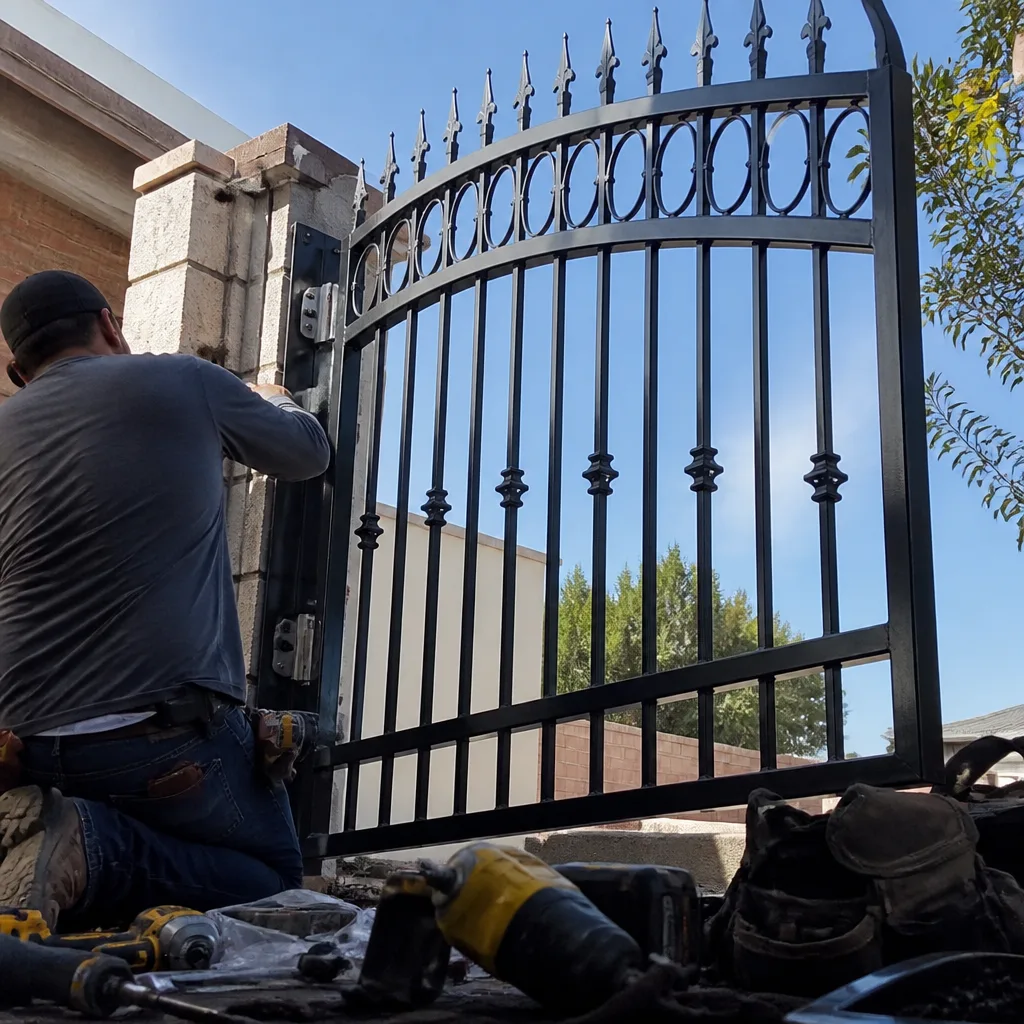
You should call a professional the moment you see a Tier 1 symptom, and you should schedule one within two weeks for a Tier 2 symptom. A Tier 3 symptom can wait 30 days if you document it and re-check on schedule. But there are also times to skip the DIY assessment entirely: if you see sparking or smell burning plastic, kill power and call. If the gate has fallen off its track entirely, do not attempt to lift it back on; sliding gates weigh hundreds of pounds and the lift points are not where they look. If you hear a loud snap and the gate no longer moves, a component has broken under load, and the safe move is to leave the gate where it is and call for repair. Vance Gate Repair Canoga Park offers free estimates and a live person answers the phone 24 hours a day, seven days a week. Call (805) 210-8672 and you will get a human, not a voicemail loop.
Frequently Asked Questions
Your gate repair is urgent if you see grinding under load, reversing without an obstacle, sparking at the motor terminal, or a snapping sound followed by no movement. These symptoms indicate active mechanical or electrical failure that can destroy the motor or control board within days. Slower symptoms like increased cycle time or intermittent remote response are important but give you about two weeks to schedule a repair before they escalate.
In Canoga Park’s summer heat, gate operators in direct sun can reach 140 degrees internally, and the motor windings produce less torque when hot, so the gate moves slower. If your gate runs normal speed in the early morning and slows down in the afternoon, the slowdown is thermal, not mechanical, and the fix is usually ventilation or shade rather than a motor replacement.
Gate motors contain high-tension springs, capacitors that hold a charge even when power is off, and heavy moving parts, and a mistake can cause serious injury. The safe approach is to photograph the symptom, record video of the gate running, and send that to a technician who can diagnose from the evidence. Adjustment-level work is sometimes straightforward, but we recommend a trained professional for anything involving the electrical components or the gate’s weight-bearing parts.
Most gate repairs in Canoga Park run between $95 and $500 depending on the component and the brand. Photo-eye alignment is at the low end around $95 to $185; drive gear replacement runs $180 to $420; control board replacement is the high end at $350 to $800. Every repair we do includes a written flat price before any work starts, so the number you approve is the number you pay. Call (805) 210-8672 for a quote on your specific gate.
Photograph the entire gate from three angles, then take close-ups of the specific symptom: rollers and track for noise, photo-eye lenses for reversing issues, rust areas for corrosion, and the operator label plate showing brand and model. Record a 15-second video of the gate running through a full open and close cycle. These photos let the technician arrive with the right parts and avoid a diagnostic-only first visit.
We service LiftMaster, DoorKing, Elite, Mighty Mule, FAAC, BFT, Linear, Viking, Ghost Controls, and others, so we can work on whatever motor is already on your property rather than steering you toward a replacement. Our gate motor and opener service in Canoga Park covers all major brands, and we bring the matching parts with us when you share a photo of the operator label plate before the visit.
The Bottom Line
Most gate failures in Canoga Park announce themselves weeks before the gate stops moving. The grinding gear, the slower cycle time, the intermittent remote: these are measurable symptoms with known causes and known repair costs. The homeowners who pay the least are the ones who photograph the symptom early, measure the change, and call before a $150 adjustment becomes a $600 component replacement. You do not need to diagnose the gate yourself. You need to observe it, document it, and get the evidence in front of someone who can. For more guides & resources, visit our blog. That is what we do at Vance Gate Repair Canoga Park, and the written price you get before any work starts is the same price you pay when the gate is running right again.
Written by Adrian Vance, Owner at Vance Gate Repair Canoga Park, serving Canoga Park since 2014.