
Last updated September 20, 2026
Free on-site gate assessment - hinges, posts, and your LiftMaster or Nice gate operator checked before anything is quoted
The assessment is free and the quote is the invoice.
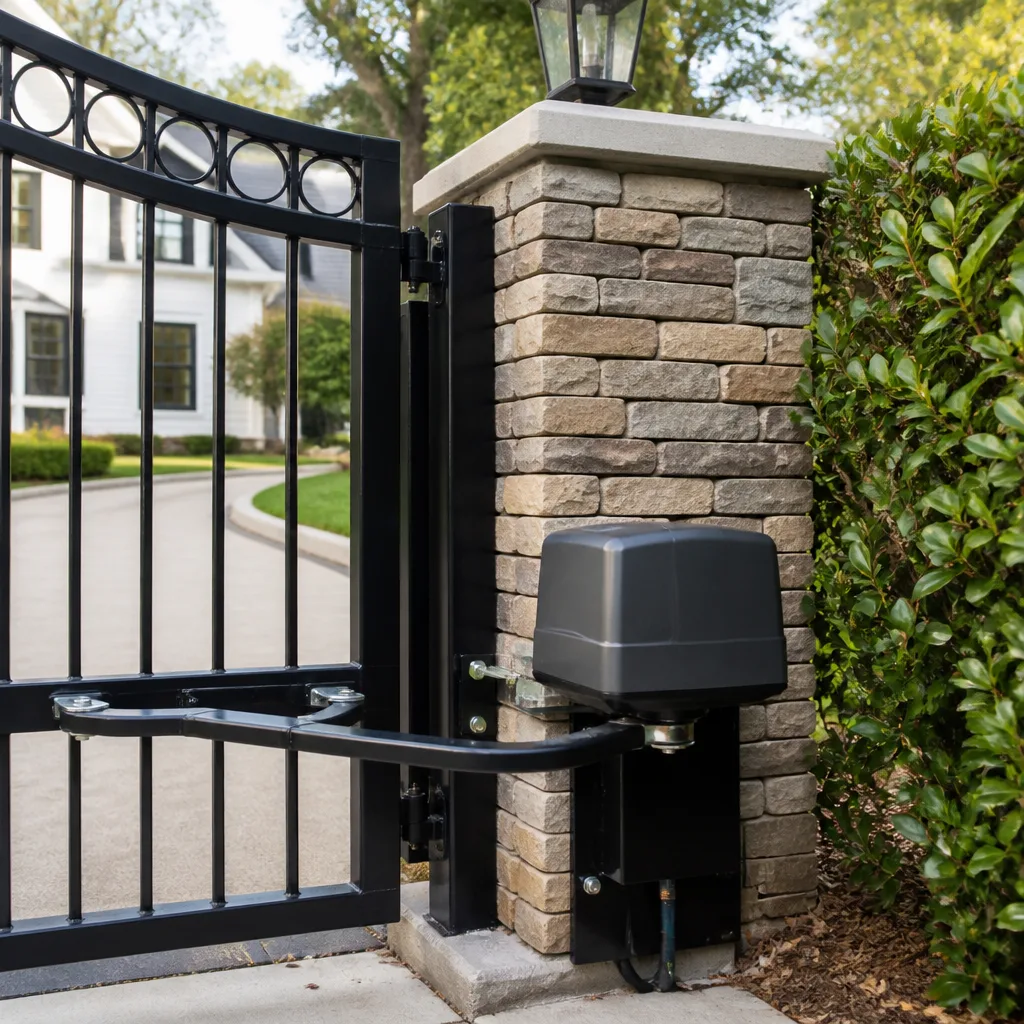
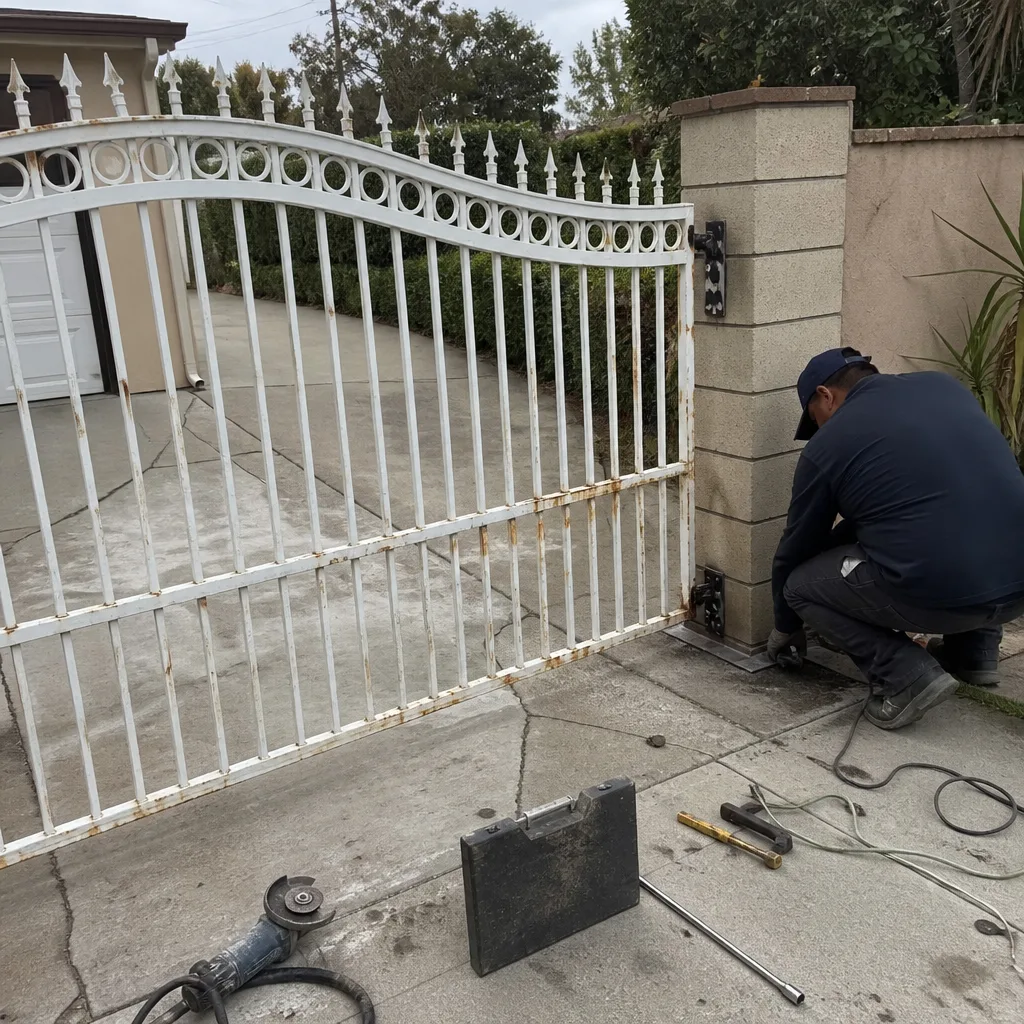 Before
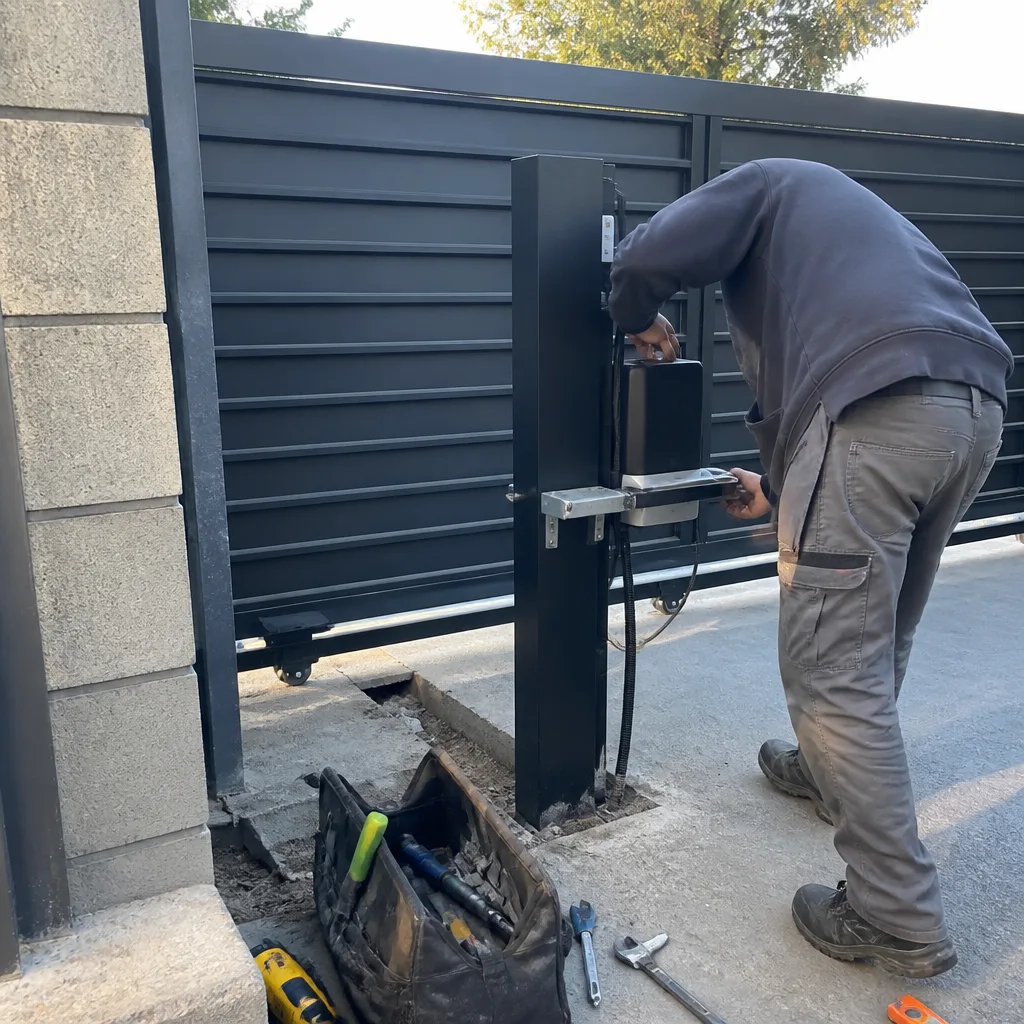 After
After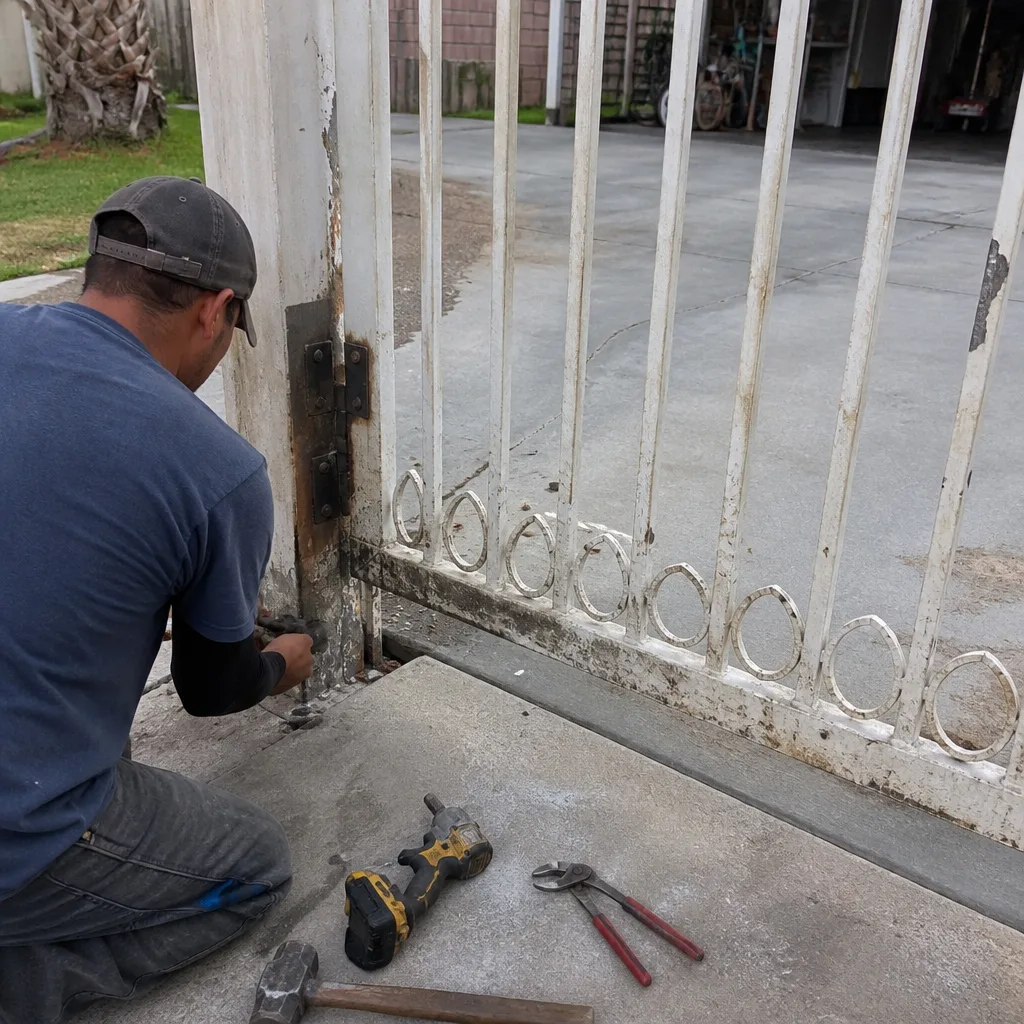 Before
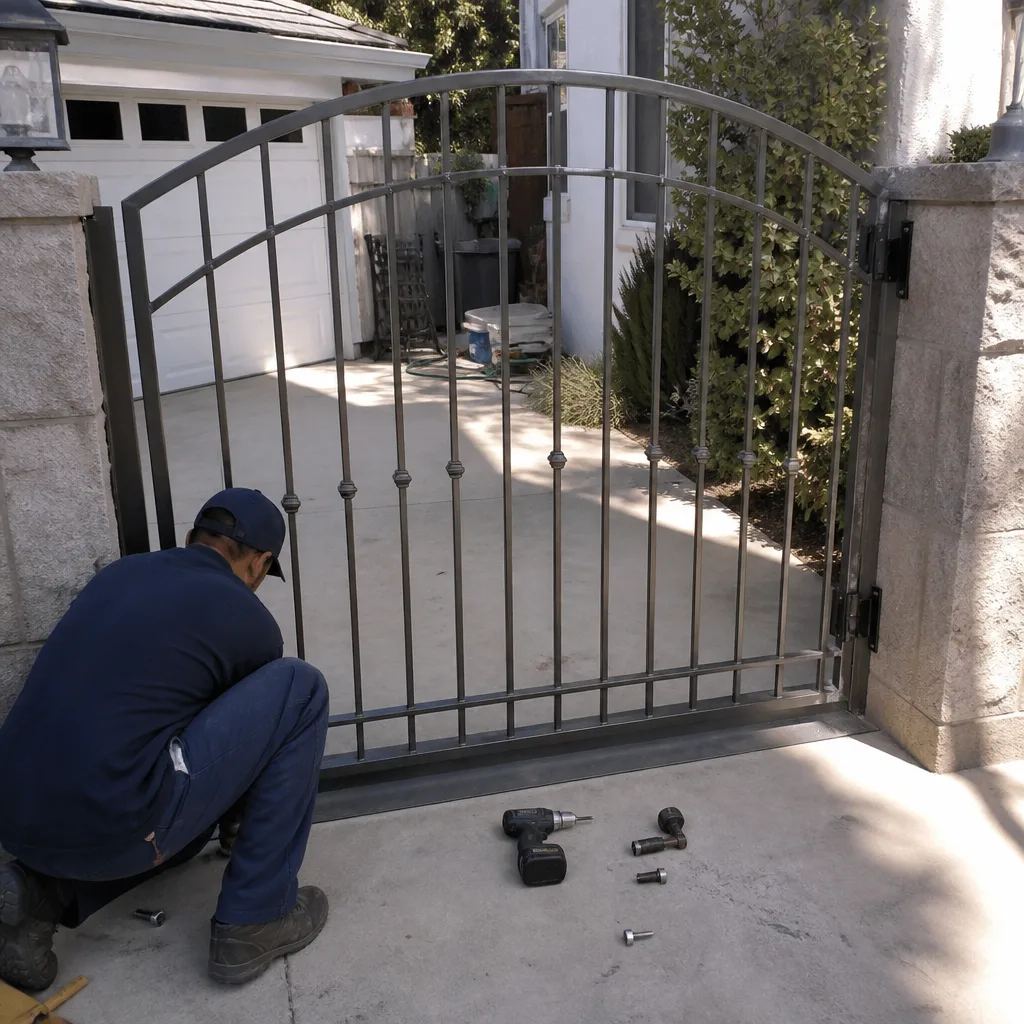 After
After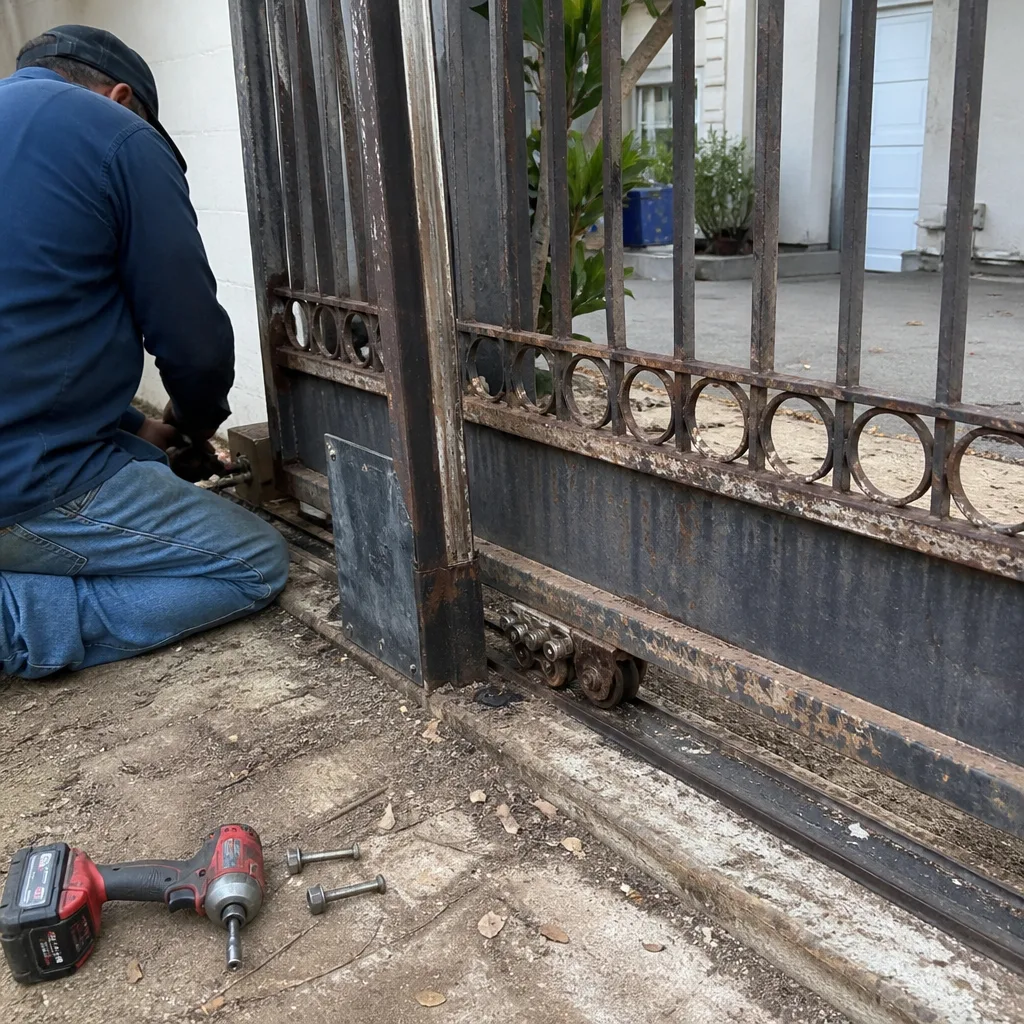 Before
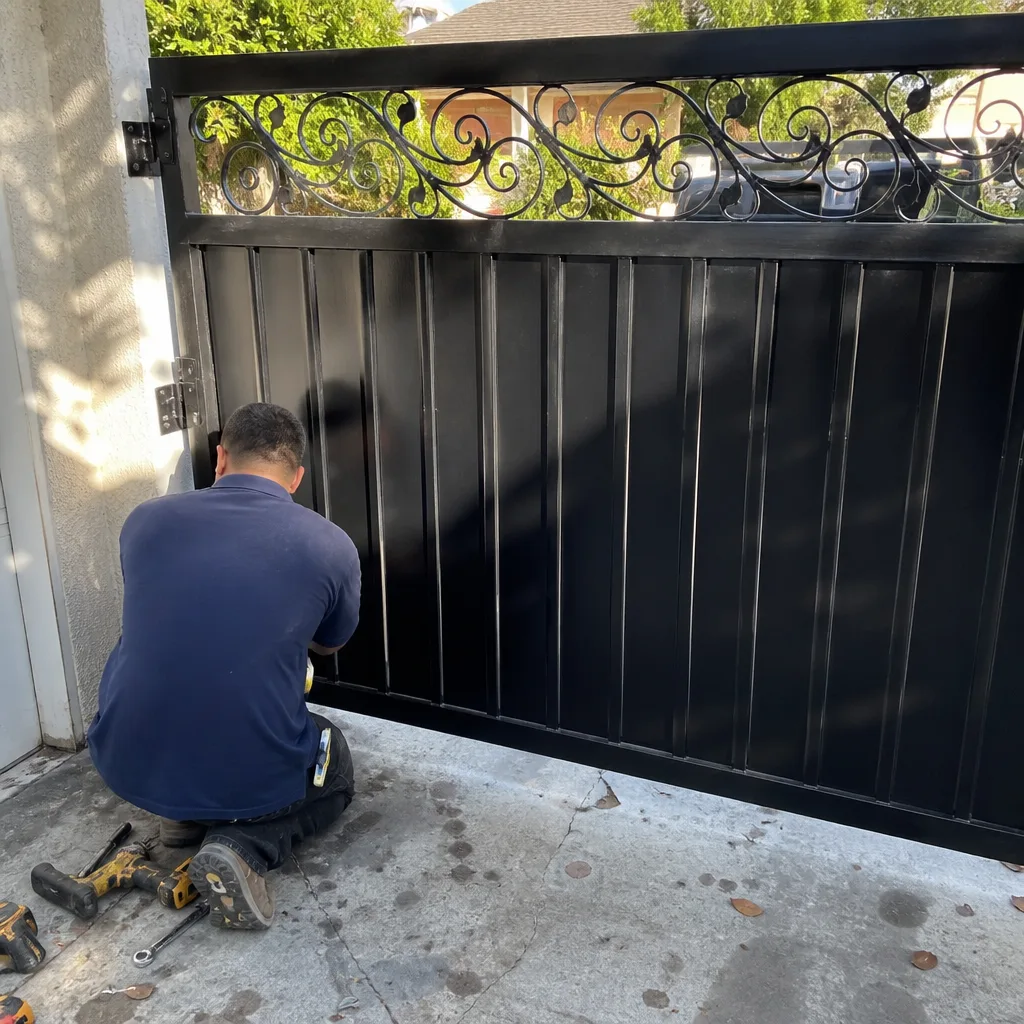 After
AfterThe Complete Guide to Gate Repair in Canoga Park
Most repeat gate service calls across the West Valley share one root cause: the original installer treated a residential driveway like a commercial parking structure, then left no documentation when the system failed. Canoga Park’s housing stock, built largely between the 1950s and 1980s, predates automatic gate openers. Nearly every motorized gate in these neighborhoods is a retrofit, and retrofits on aging tract-home electrical systems produce predictable, specific failures that a generic gate repair guide never addresses. This guide maps those local failure patterns, from clay soil heave under gate posts to sun-damaged operator arms, and serves as a companion to our Gate Repair Cost Breakdown: The Canoga Park Homeowner’s Reference for 2026, explaining exactly what a repair should cost, include, and leave behind.
Quick Answer
Gate repair in Canoga Park typically costs between $185 and $650 for most mechanical or electrical fixes, with common repairs like limit-switch recalibration or photo-eye realignment running $185 to $285, and motor replacements landing between $450 and $900 depending on brand and horsepower. Most residential gate repairs in this area are completed same-day when the technician carries the right parts, and a written estimate should always be provided before work begins.
Table of Contents
- Why Canoga Park Gates Fail Differently
- Clay Soil, Post Lean, and the Footing Question
- The Retrofit Opener Problem: Undersized Circuits and 1980s Driveways
- What Southern California Sun Does to Gate Materials
- What a Complete Repair Record Should Contain
- How to Read a Gate’s Service History Before Agreeing to Work
- What Gate Repairs Cost in Canoga Park
- Common Mistakes to Avoid
- When to Call a Professional
- Frequently Asked Questions
- The Bottom Line
BeforeAfterWhy Canoga Park Gates Fail Differently
The San Fernando Valley has a specific climate profile that stresses gate hardware in ways a coastal city like Santa Monica never will. Canoga Park routinely sees summer temperatures above 100 degrees for consecutive days, with low humidity and intense UV exposure. That heat-cold cycling, combined with the valley’s notoriously expansive clay soil, creates three recurring failure categories that dominate our service calls.
First, the soil. Canoga Park sits on sedimentary basin fill with high clay content. Clay expands when wet and contracts when dry, which means gate posts installed without deep concrete footings gradually shift. A post that was plumb in 1995 can be two inches out of vertical by 2025. That misalignment transfers stress to the gate hinges and the operator arm, which is why so many motor failures we see are secondary failures, not primary ones.
Second, the retrofit reality. Most homes in the neighborhoods south of Sherman Way and east of Topanga Canyon Boulevard were built before automatic gates were common. The electrical panels were sized for the appliances of the era, not for a ½-horsepower operator drawing surge current every time it starts. We’ll get into the specific symptoms this causes in a later section.
Third, the sun. Aluminum gate frames fade and weaken, vinyl panels become brittle, and wrought iron, which handles heat well, still suffers at the weld points where paint fails first. Canoga Park’s unshaded south-facing driveways accelerate all of it.
If you’re looking for a broader overview of gate services, our Vance Gate Repair Canoga Park home page covers the full scope of what we do.
Clay Soil, Post Lean, and the Footing Question
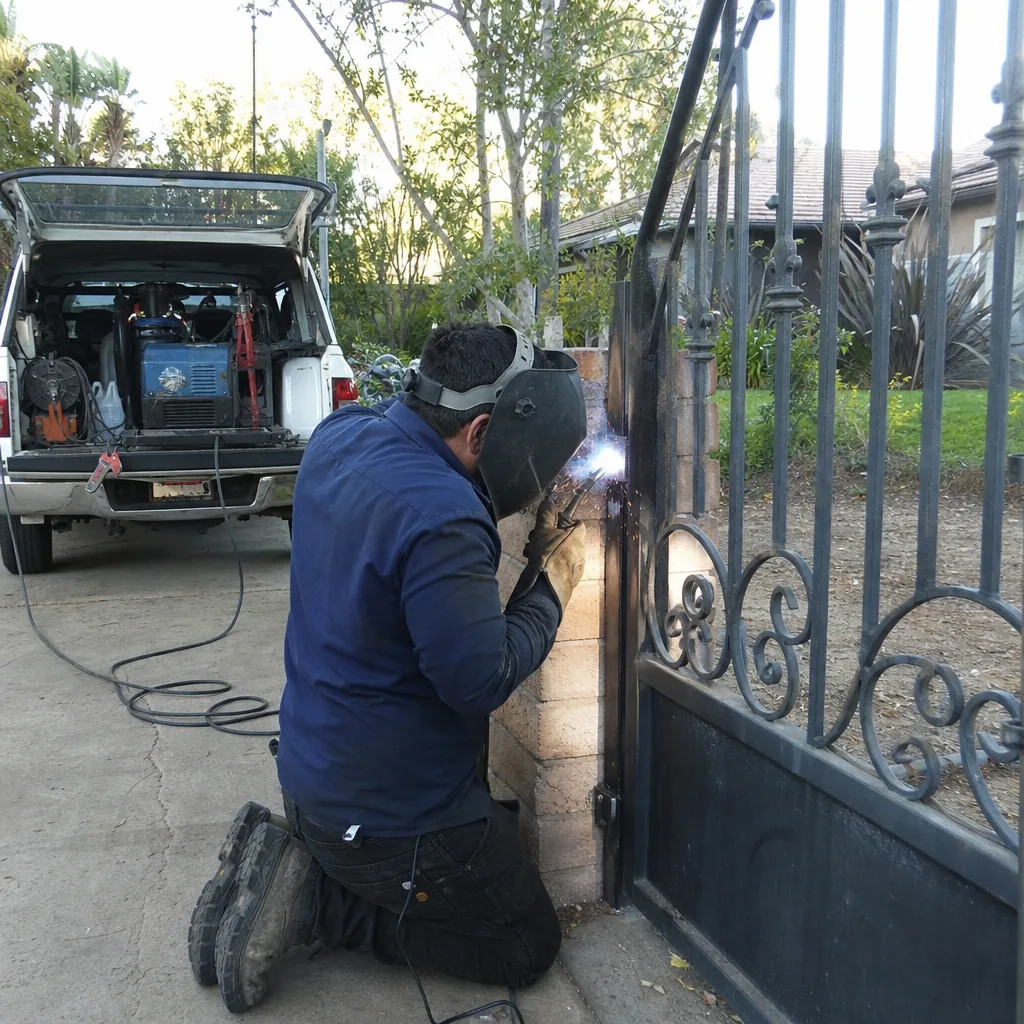
A leaning gate post in Canoga Park is rarely just a leaning post. The question is whether the footing has failed or whether the post itself has shifted within a sound footing. Distinguishing between the two determines whether you spend $300 on a post re-set or $1,200 on a new concrete footing with a gate rebuild.
Here’s how to tell the difference before you spend money on a new motor:
- Check the gate’s swing path. If the gate still swings freely and the gap at the latch side is uniform top to bottom, the lean is likely cosmetic. A post can be out of plumb by a degree or two and still function fine. You do not need emergency repair for this.
- Look at the base of the post. Hairline cracks radiating outward from the post base, or a visible gap between the concrete and the post itself, indicate the footing has begun to fail. This will worsen with each rainy season.
- Test the post movement. With the gate open, push firmly against the top of the post. Movement of more than a quarter-inch means the post is no longer adequately anchored. That is a structural problem, not a cosmetic one.
- Check the operator stress. If the gate motor groans or labors when opening, the post lean may be placing side-load pressure on the operator arm. Replacing the motor without addressing the post will put you right back in the same position within a year.
In Canoga Park, we recommend concrete footings extend at least 30 to 36 inches below grade for any gate post supporting an automatic opener. The valley’s clay expansion cycle demands deeper anchoring than coastal sandy soils. If your gate post was installed by a general contractor without gate-specific experience, there’s a good chance the footing is only 18 to 24 inches deep and is living on borrowed time.
The Retrofit Opener Problem: Undersized Circuits and 1980s Driveways
Here’s a scenario we encounter often in Canoga Park’s older tracts near Lanark Park and along Saticoy Street. A homeowner buys a modern gate operator, often a LiftMaster or DoorKing unit, and has it installed on a single-car driveway that originally had a manual gate. The operator works fine for a few months, then starts tripping the breaker, or the motor overheats on hot afternoons, or the battery backup drains within hours instead of days.
The cause is almost always the same: the operator is pulling from a circuit that was never designed for a continuous motor load. Many 1970s and 1980s Canoga Park homes have 15-amp circuits shared between garage outlets, outdoor lights, and the gate opener. A gate motor’s surge current at start can be 3 to 4 times its running current. On a shared 15-amp circuit with existing loads, that surge trips breakers intermittently, which confuses homeowners because the problem isn’t consistent.
Symptoms of an undersized circuit include:
- Breaker trips that happen more often in summer, when the garage circuit is already running a refrigerator or freezer
- A gate that slows down noticeably mid-cycle, then speeds up again
- Battery backup units that fail prematurely because the charger never gets enough consistent input voltage
- Operator error codes that come and go with no pattern, which is the motor registering low-voltage conditions
The fix may be as simple as moving the gate circuit to its own dedicated breaker, or as involved as running a new home run from the panel. Either way, this is a diagnosis that requires a technician who checks voltage at the operator, not someone who swaps the motor and calls it done. A proper repair checks the circuit before condemning the operator, because the operator is often not the problem.
Our Gate Motor & Opener in Canoga Park page covers operator-specific diagnosis in depth.
What Southern California Sun Does to Gate Materials
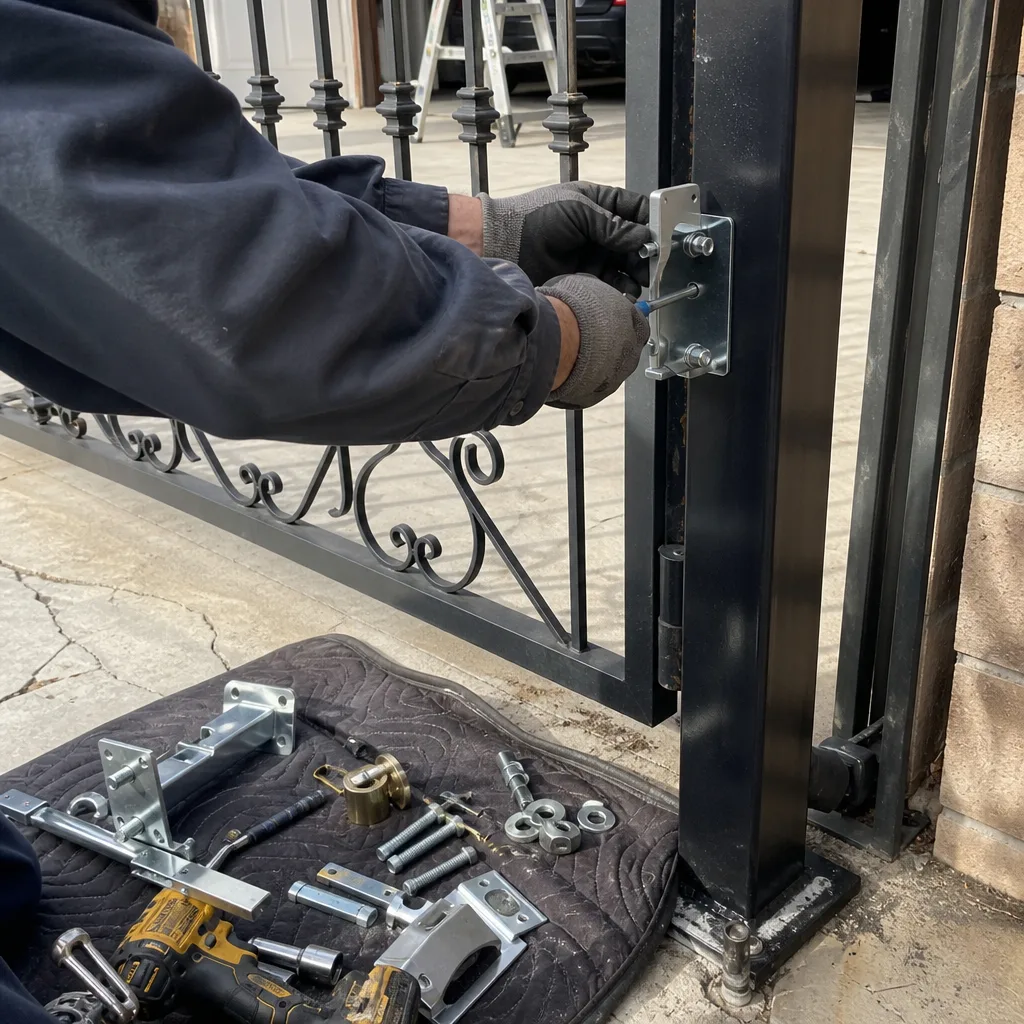
Canoga Park’s sun exposure is punishing on gate materials. Here is a component-by-component failure frequency list based on what we see across the West Valley, ordered from most frequent to least.
Vinyl gate panels: Vinyl holds up well to moisture but degrades fastest under UV. In Canoga Park, an unshaded vinyl gate panel typically begins showing brittleness and stress cracking around year 6 or 7. By year 10, panels crack at the corners and along the mid-rails. Hardware mounting points become weak, and screws pull through. Vinyl is a 10-year material in this climate, not the 20-year product the marketing suggests.
Aluminum gates: Aluminum doesn’t rust, but it does corrode at dissimilar-metal contact points, which is most gate hardware. The bigger issue is heat expansion. A 12-foot aluminum gate can expand enough on a 105-degree Canoga Park afternoon to bind against the latch post. Gates that work perfectly in the morning and struggle at 3 p.m. are usually aluminum expansion problems, often fixable by adjusting clearances rather than replacing anything.
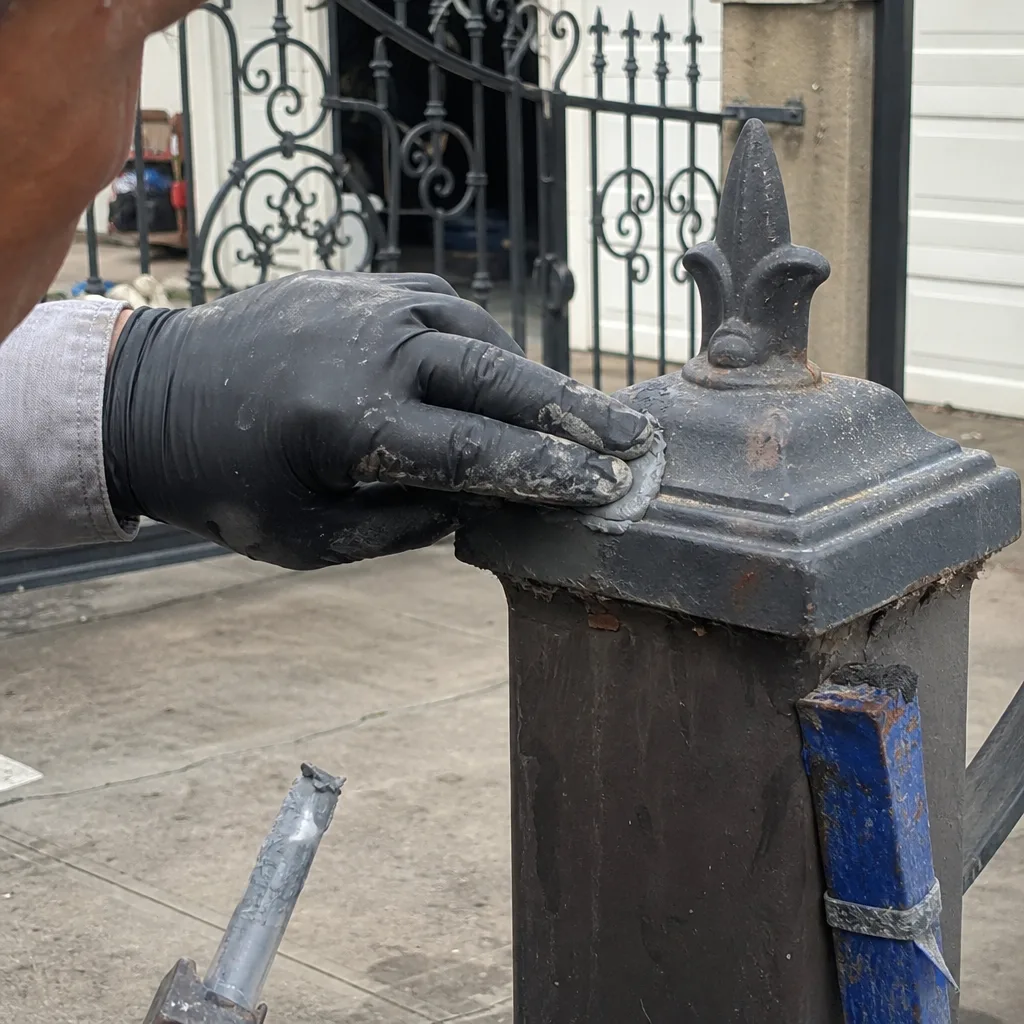
Wrought iron: Wrought iron, when properly primed and painted, handles heat well. The failure point is always the same: welds where moisture gets under chipped paint and rusts the joint from inside. In Canoga Park’s dry climate, this is less aggressive than coastal rust, but it still happens. The key is addressing paint chips early. A $150 touch-up job prevents a $700 weld repair.
Operators and control boards: Electronics in direct sun, especially south-facing operators mounted without a sun shield, can see internal temperatures above 160 degrees. Control boards fail early, capacitors swell, and plastic gear housings warp. A simple sheet-metal sun shield, which costs about $40 in materials, extends operator life by years in Canoga Park.
What a Complete Repair Record Should Contain
Here’s the single most useful thing a homeowner can do to reduce long-term gate repair costs: require a documented repair record from every technician who touches the gate. Most gate companies in the Valley leave behind a verbal explanation and maybe a receipt with a part number. That is not documentation. When the gate fails again six months later, the next technician has to start from scratch, testing every component to figure out what the last guy did. That re-diagnosis time is billed to you.
A complete gate repair record should include:
- A written description of the symptom as reported. “Gate stops mid-travel and reverses” is useful. “Doesn’t work” is not.
- Exact measurements taken before and after. Limit switch positions in degrees, force settings in pounds, current draw at the motor in amps. We record these because two years from now, a technician can see what was set and compare it to what’s happening now.
- A wiring diagram of any electrical work performed. Even a simple photo of the control board with labels is better than nothing. On older Canoga Park homes with non-standard wiring runs, this matters more, because the wiring itself is often part of the diagnostic challenge.
- A photo log of every component touched. Before and after photos of the operator, the hinge area, the control board, and the gate’s travel limits. A photo record means the next technician can see what the gate looked like when it was working properly.
- The part numbers installed, with manufacturer names. “Replaced the control board” is not enough. “Replaced LiftMaster board 41A5021” is.
- The technician’s name and the date. Ideally with contact information for the company.
- Look for the operator’s manufacturer date. Most operators have a date sticker or a date code in the serial number. An operator more than 12 years old in Canoga Park’s heat is on borrowed time, even if it’s currently working. If a repair quote on a 15-year-old operator exceeds half the cost of a new unit, replacement is usually the better financial decision.
- Check for paint mismatches on the gate frame. Visible repair welds or areas where the paint doesn’t quite match tell you the gate has been repaired before. That’s not a problem in itself, but it’s information. A gate that has needed structural welding twice in five years has a design weakness, not just bad luck.
- Test the manual release. Every automatic gate should have a mechanical disconnect that lets you open the gate by hand during a power outage. If there isn’t one, any electrical failure locks you out of your own driveway. That’s a red flag about the quality of the original installation.
- Count the remotes and keypads. A functional gate system should always leave the homeowner with at least two working remotes. If you bought a house with one remote, expect to add remotes as part of the next service call.
- Ask your realtor or the seller’s agent for any gate documentation. You’d be surprised how often a manila folder with gate invoices exists but was never passed along because nobody asked.
- Photo-eye alignment or replacement: $115 to $185. The photo-eye is the infrared beam that stops the gate if anything crosses its path. In Canoga Park, dust, spider webs, and heat-related bracket warping are common causes of misalignment.
- Limit switch recalibration: $135 to $225. The limit switch tells the motor where to stop. A gate that bangs at the open or closed position, or stops short, often just needs recalibration rather than parts.
- Hinge replacement: $185 to $350 per hinge, depending on gate weight and whether welding is required. Solar radiation doesn’t directly damage hinges, but clay-soil post movement misaligns them until the bearing surfaces fail.
- Control board replacement: $250 to $550 installed, depending on brand. Elite and DoorKing boards tend toward the higher end. Mighty Mule boards are typically at the lower end, but we see Mighty Mule boards fail more often in Canoga Park’s summer heat.
- Operator replacement, swing gate: $450 to $900 installed, depending on horsepower, brand, and whether the existing arm bracket is reusable. A LiftMaster or DoorKing operator properly sized for a 12-foot gate will land near the top of that range. The lower end assumes a direct swap with no bracket modification.
- Full gate replacement, standard driveway: $1,800 to $5,000 depending on material, size, and whether the existing posts can be reused. This is a separate conversation from repair, but it’s useful to know the numbers before deciding whether to repair or replace.
- Replacing the operator before checking the circuit. When a Canoga Park home’s gate motor is acting erratic, the breaker panel is often the real problem. A new operator on an undersized circuit will fail just like the old one.
- Ignoring a leaning post because the gate still opens. Post lean is a slow failure. By the time the gate stops working, the footing may have cracked to the point where the entire post needs excavation and re-setting at three times the cost of early intervention.
- Buying an operator sized for the gate’s weight, not its wind load. In the West Valley, our afternoon winds and the valley’s Ventura-sourced gusts push against solid gates with surprising force. Undersized operators wear out faster and strain the hinges.
- Accepting a verbal estimate. If the price isn’t written down with a scope of work attached, you are giving the company permission to define “done” however they want. Every reputable company can put the price on paper in five minutes.
- Skipping the sun shield on a south-facing operator. Direct afternoon sun on a black control box in Canoga Park’s summer heat cooks the electronics. A sun shield is one of the cheapest insurance policies in gate repair.
- Using a handyman who doesn’t carry gate-specific parts inventory. Gate operators use brand-specific control boards and limit assemblies. A general handyman who has to order parts after diagnosis will cost you two service calls instead of one.
- Keeping no record of past repairs. Every gate has a history. Without a record, you pay for the same diagnostic work twice, and the diagnostic time is often the larger line item on the invoice.
The absence of this record doesn’t just cost you money later. It costs you leverage. You can’t prove what was done, you can’t hold anyone accountable, and every new technician is working blind. That is why every visit from Gate Repair in Canoga Park through our shop includes a written scope, a written price, and a photo record before we leave.
How to Read a Gate’s Service History Before Agreeing to Work
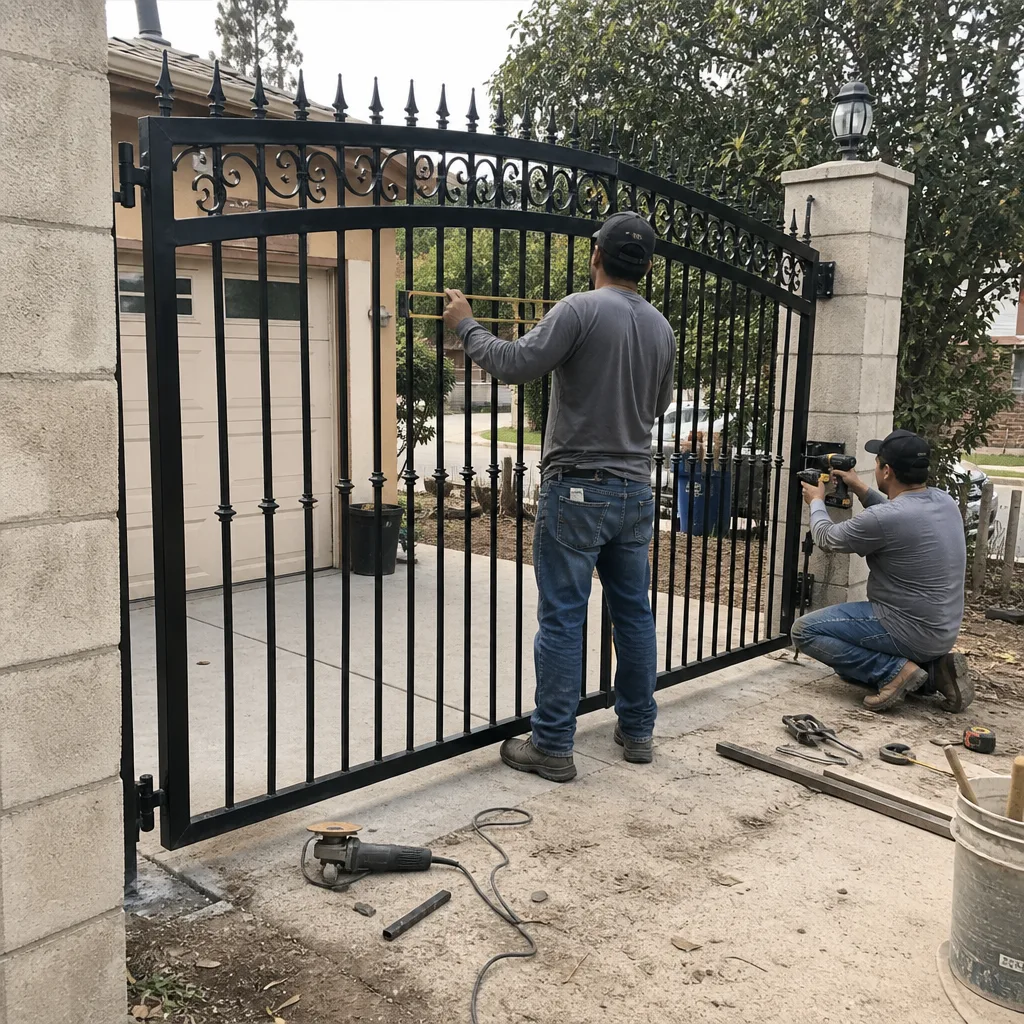
When you buy a home in Canoga Park with an existing automatic gate, you usually inherit zero information about when it was installed, who installed it, or what has been repaired over the years. The gate just exists. Here’s how to read what’s there before you agree to any repair scope.
For anyone considering a new gate rather than repeated repairs, our Gate Installation in Canoga Park page walks through what a proper Canoga Park installation should include, from footing depth to operator selection.
What Gate Repairs Cost in Canoga Park
Here’s a straight answer, because the price should be visible before you call anyone. These ranges reflect what we charge and what we see from reputable competitors in Canoga Park and the surrounding West Valley. They are not the cheapest prices in the Valley, and they are not the highest. They are the numbers from shops that actually document their work.
These numbers are written estimates, always, before work starts. The price you see is the price you approve. No line item should appear on an invoice that wasn’t on the written estimate first. If a technician tells you the price changed mid-job, that’s a process problem on their end, not an obligation on yours.
Common Mistakes to Avoid
When to Call a Professional
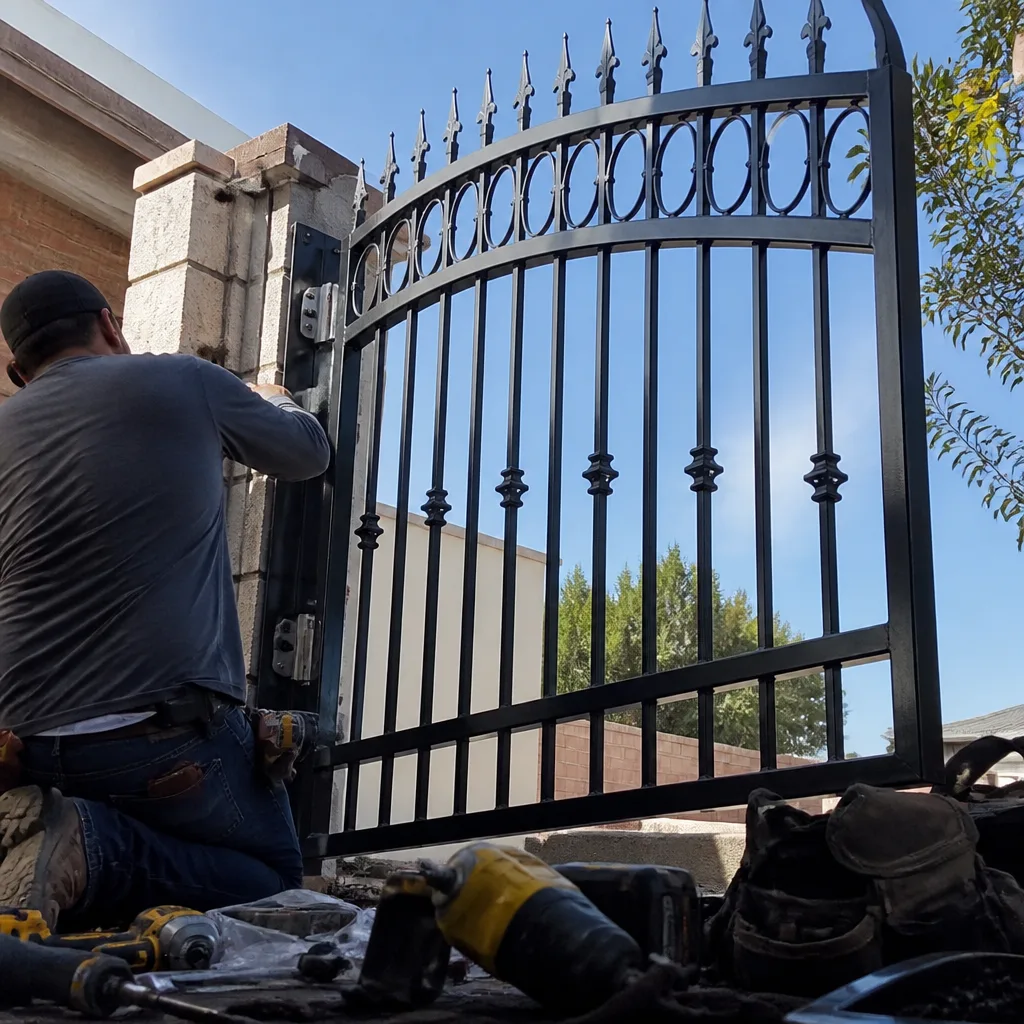
Any problem involving a gate motor’s internal electrical components, spring tension on a heavy gate, or structural welding on a load-bearing post is not a safe DIY project, as explained in our DIY vs Professional Gate Repair: The Canoga Park Homeowner’s Decision Guide. Gates are heavy machinery. A 300-pound swing gate that gets away from someone can seriously injure a person or crumple a car panel. If your gate is not opening smoothly, if you hear grinding from the operator, if you see visible post movement, or if your circuit breaker trips more than twice in a month, call someone who does this work every day. Vance Gate Repair Canoga Park offers free estimates in Canoga Park - call (805) 210-8672 to schedule a visit.
Frequently Asked Questions
Most gate repairs in Canoga Park cost between $185 and $650, with small electrical fixes like photo-eye realignment at the lower end and motor replacements at the higher end. Every repair we quote is written down before work starts, so you never get a surprise invoice after the gate is fixed. Call (805) 210-8672 for an exact written estimate, free.
In most cases, yes. We keep DoorKing, Elite, Mighty Mule, and LiftMaster parts in stock for the most common Canoga Park gate failures, which means the majority of repair calls are completed the same day. Call (805) 210-8672 and describe the symptom; we’ll tell you if same-day service is realistic for your specific gate.
That pattern is usually thermal expansion. In Canoga Park’s afternoon heat, aluminum gate frames expand enough to bind against the latch post, and south-facing operators can overheat. The fix often requires adjusting clearance tolerances and adding a sun shield rather than replacing the motor.
We service nine major automation brands, including LiftMaster, DoorKing, Elite, FAAC, BFT, Linear, Viking, Ghost Controls, and Mighty Mule. We don’t steer you toward a replacement brand because we can work on whatever is already installed at your Canoga Park home.
Yes, wiring is part of every operator installation. That includes checking the existing circuit for adequate capacity, running a dedicated circuit when needed, and testing the installation under load before we call the job done. Many Canoga Park homes need a circuit upgrade before a new operator will run reliably. Call (805) 210-8672 to get a written estimate that includes the electrical scope.
It depends on how much movement is present. A post that is slightly out of plumb but stable with no visible footing cracks may be cosmetic, but a post that moves when you push on it has a failing footing and will only get worse with each rainy season. We check the footing and the operator stress during a free estimate so you know what you’re dealing with before you spend anything.
The Bottom Line
Canoga Park gate failures follow patterns tied to this specific area’s soil, sun, and housing stock. Clay soil heaves posts out of position. Retrofit openers fight undersized circuits in 1970s tract homes. Sun bakes vinyl, aluminum, and control boards until they fail on schedule. Knowing these patterns means you can avoid the most expensive mistake, which is paying to replace a component that was never the actual problem. When your gate needs work, contact our Gate Repair services to get a written price before anyone touches it, demand a photo record when they leave, and never let a technician walk away without documenting what was set, what was replaced, and what the numbers read. That record is the difference between a repair that lasts and a repair you pay for twice.
Written by Adrian Vance, Owner at Vance Gate Repair Canoga Park, serving Canoga Park since 2014. For more guides & resources, visit our blog.