
Free on-site gate assessment - hinges, posts, and your LiftMaster or Nice gate operator checked before anything is quoted
The assessment is free and the quote is the invoice.
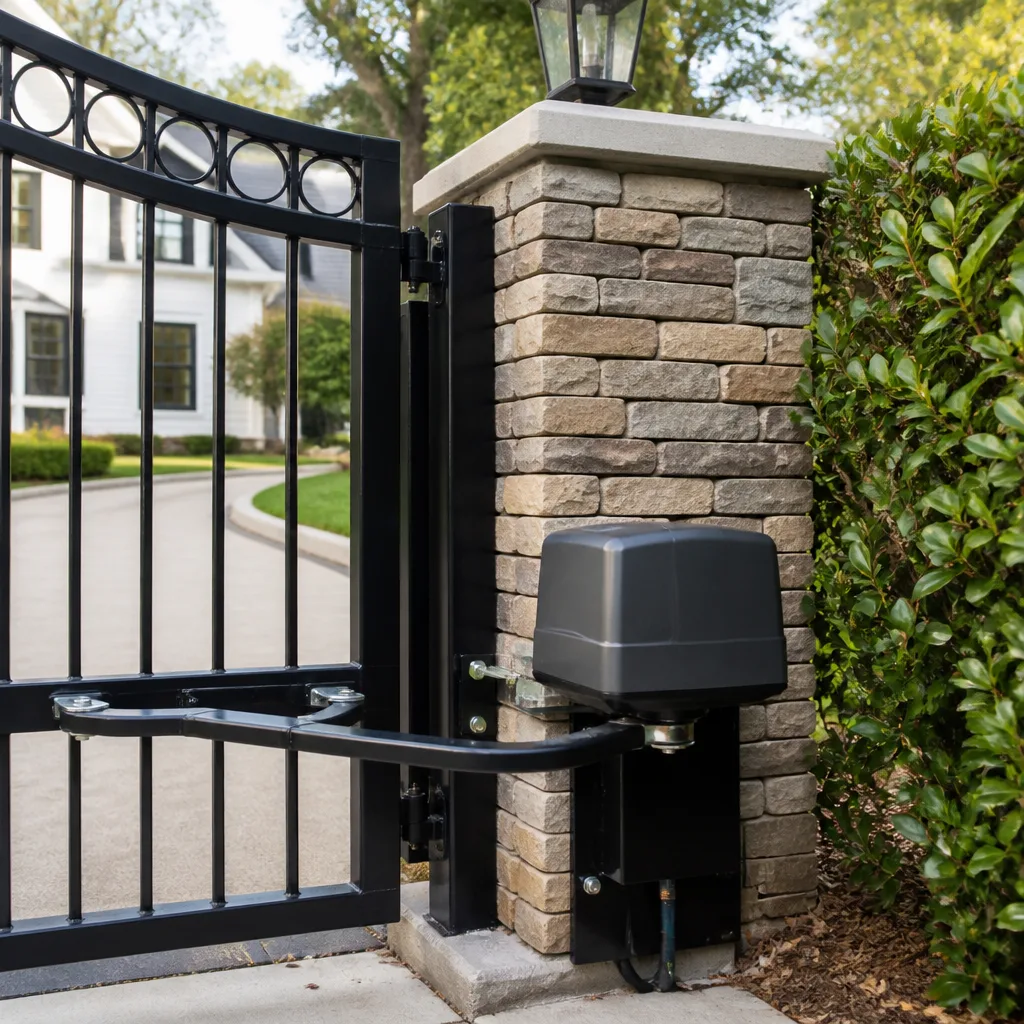
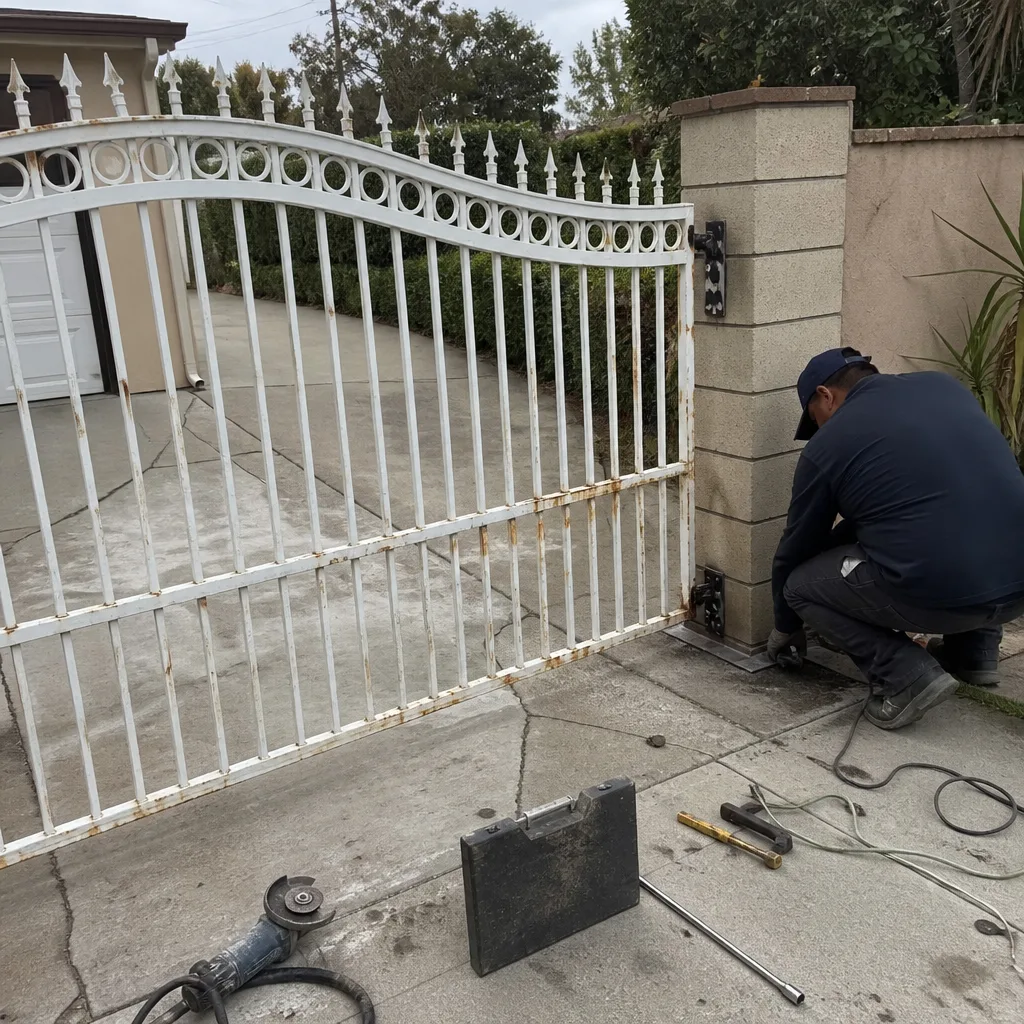 Before
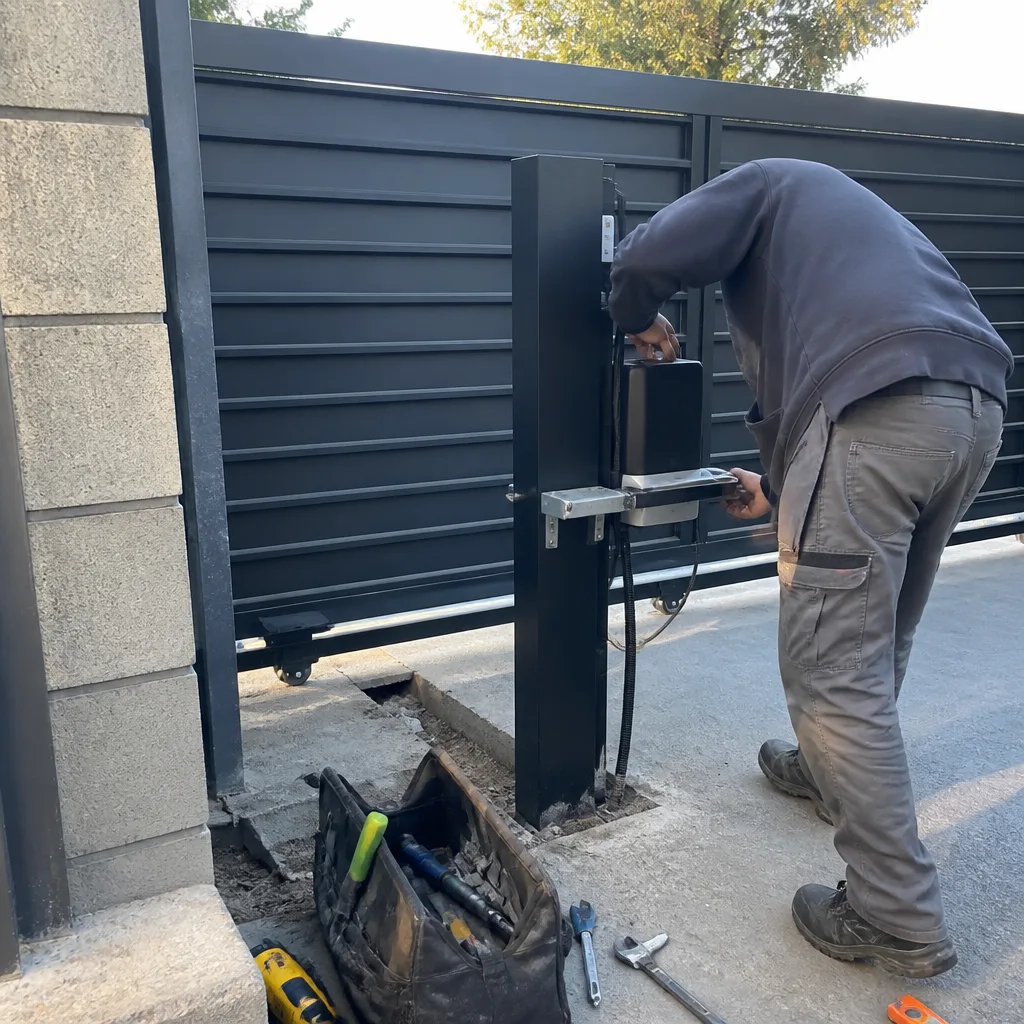 After
After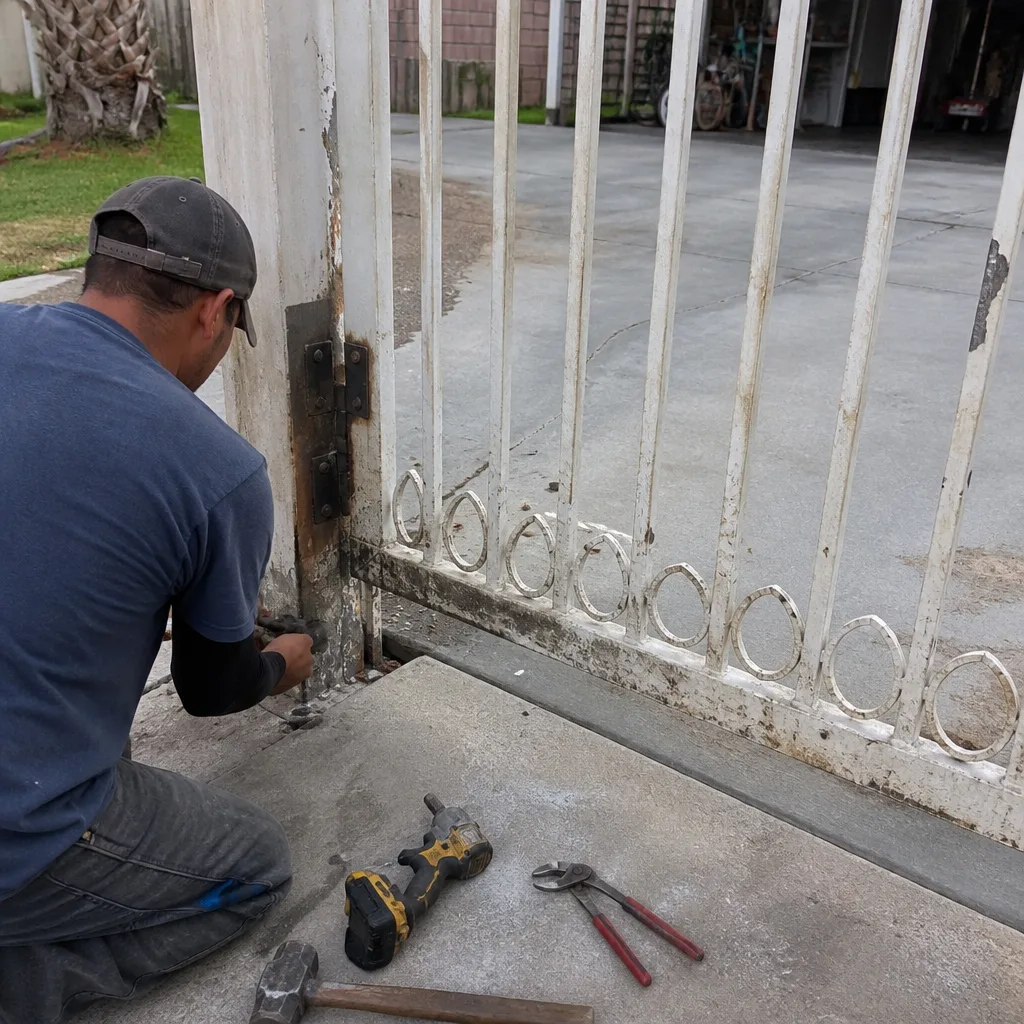 Before
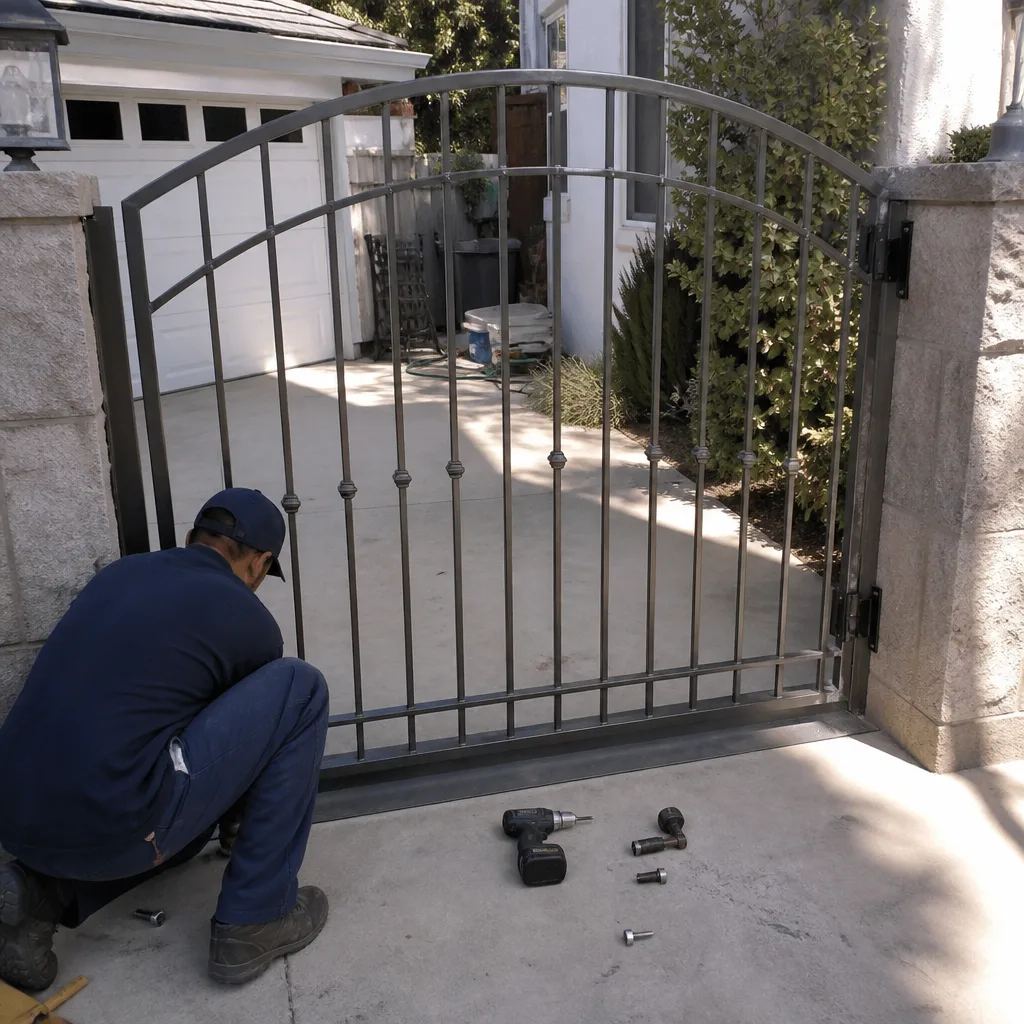 After
After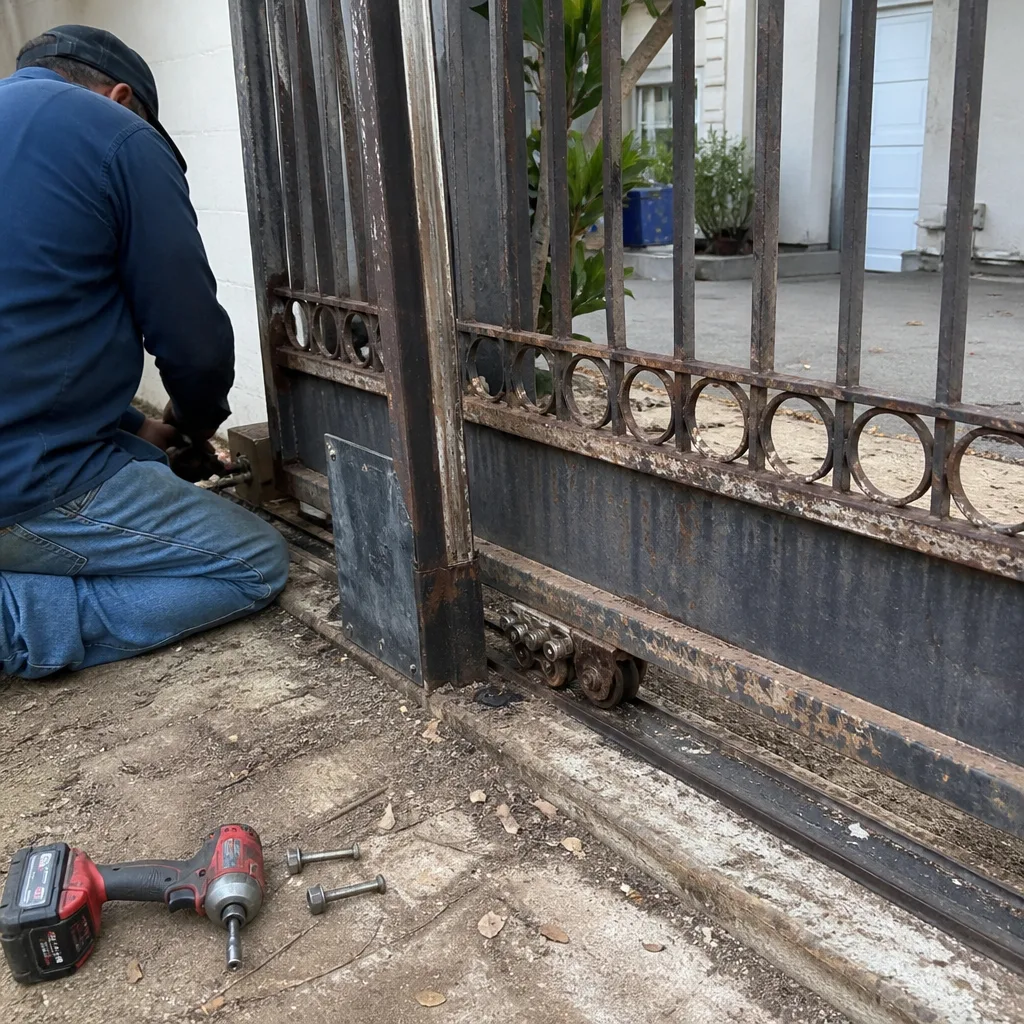 Before
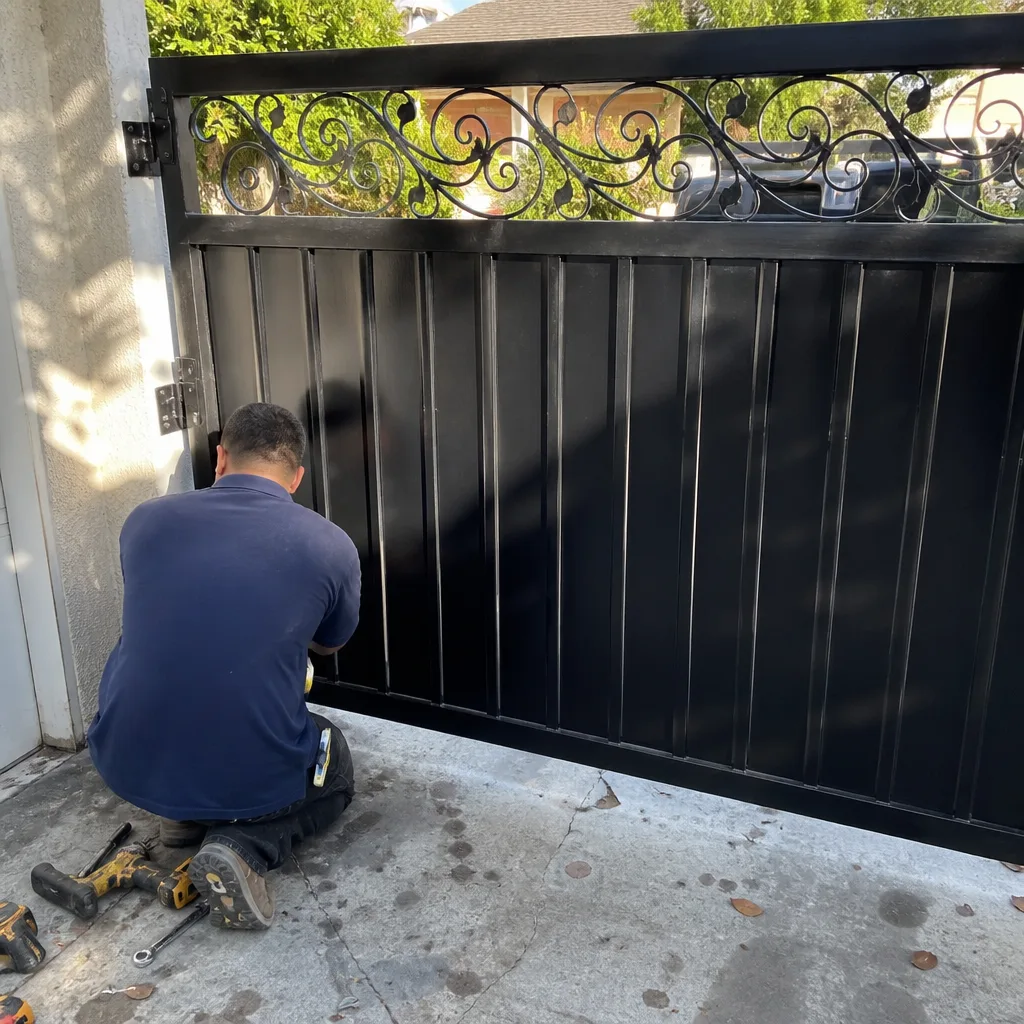 After
AfterFAAC Gate Motor Replacement: The Canoga Park Owner’s Guide
We stock and install FAAC-compatible gate motor replacements throughout Canoga Park, with most swing-gate motor swaps running between $1,100 and $1,900 installed, depending on the FAAC series and whether the mounting bracket survived. Same-day replacement is usually possible on our stock 400, 412, and 770 models when we diagnose the failure before noon. The call usually starts the same way: the gate stopped mid-swing, or it groans and reverses, or it moves but the control board is flashing an error the owner has never seen before.
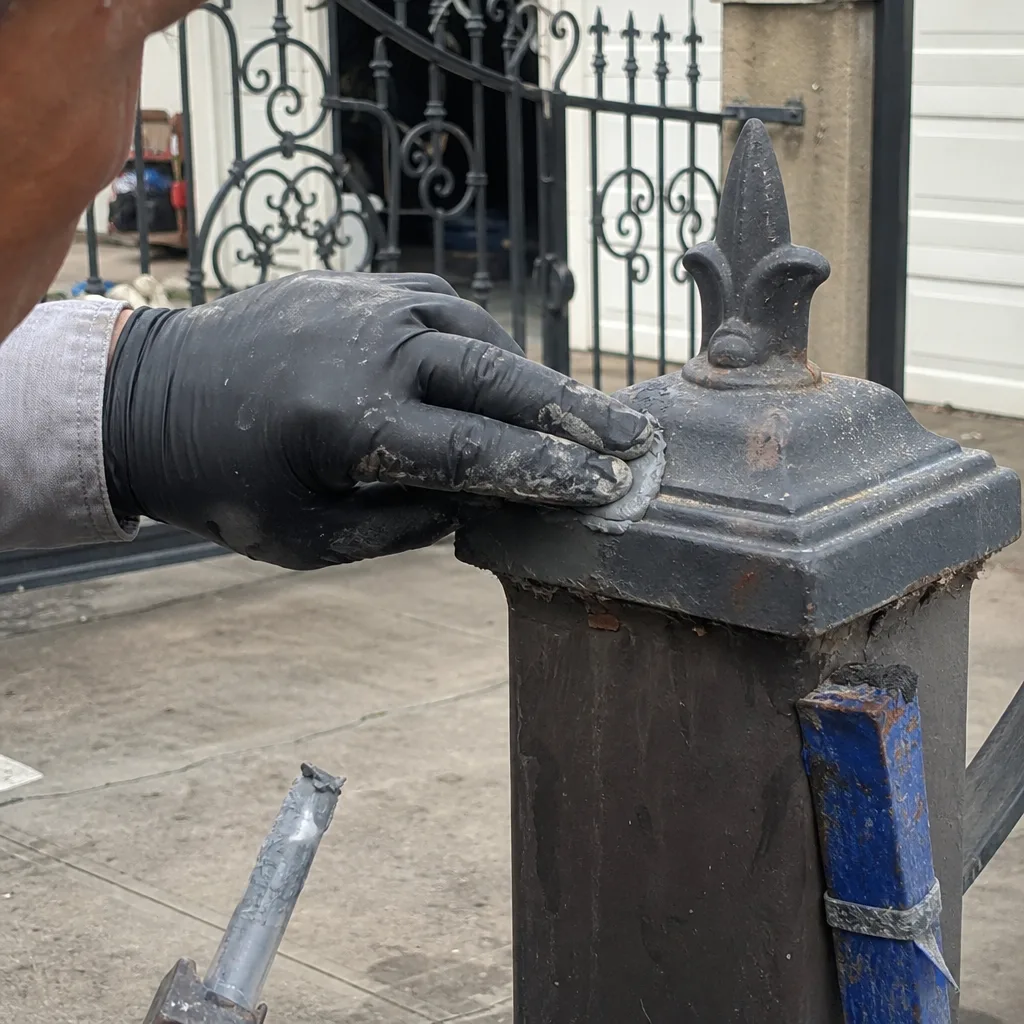
What most Canoga Park homeowners find is that the FAAC operator itself rarely dies all at once. A capacitor goes, or the limit switch loses its setting, or condensation from our marine-layer mornings creeps into a tired board. Adrian Vance has been reading those failure patterns since 2014, and the first question is never “replace or repair” - it’s “what exact part failed, and is the rest of the assembly worth putting money into.” That’s the documentation habit we bring to every job, and it saves you from paying twice for the same problem.
Which FAAC Models This Applies To
FAAC builds swing-gate operators, slide-gate operators, and barrier arms, and each line uses a different motor assembly. The residential swing-gate units we replace most often in Canoga Park are the 400, 412, 415, 770, and the newer C720/C721 series, plus the S800 series for heavier slide gates. Before we quote a replacement, we confirm the model from the serial plate on the operator housing, not from memory. FAAC hides that label under the cover on older 400-series units, and on the C720 it’s on the inside face of the release hatch.
Here’s the compatibility gotcha that catches a lot of owners: the FAAC 412 and 415 look nearly identical from the outside, but the 415 runs on a 24-volt motor with a different capacitor spec. A 412 motor bolted into a 415 system will run hot and burn the control board within a few months. We’ve seen that exact mismatch happen in Canoga Park more than once, usually after a handyman “deal” on a used part. When we quote a replacement, we match OEM or a documented aftermarket equivalent to the specific series and voltage, and we write the part number on your invoice. We’re an independent service provider - not affiliated with FAAC - so we tell you straight when an aftermarket motor is a solid match and when it isn’t.
Signs Your FAAC Gate Motor Replacement Is Failing
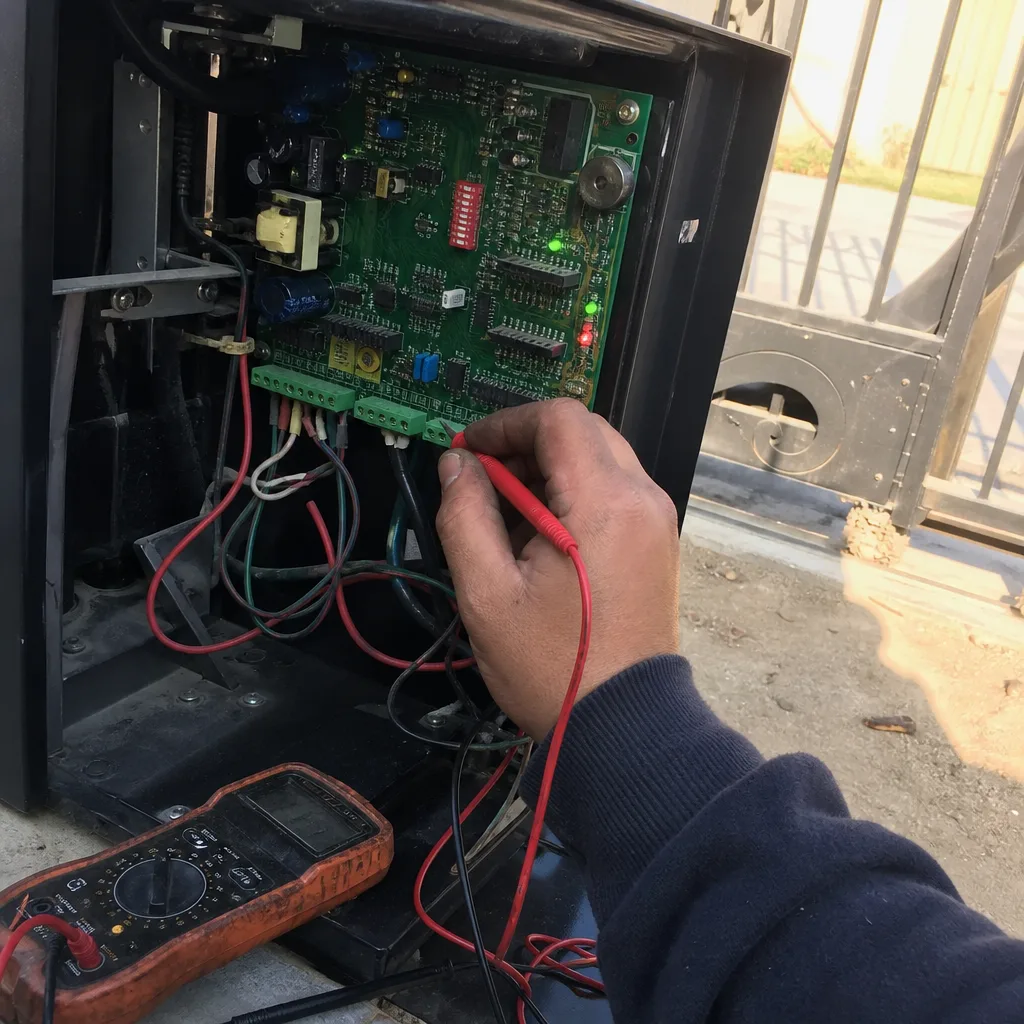
- The gate starts, stops, then reverses halfway through the cycle. This is usually the motor drawing excess current and tripping the obstruction sensor. The motor’s windings are degrading, and the board reads that as resistance on the gate path.
- A loud hum with no movement, or a click followed by nothing. The start capacitor is the common failure here, especially on FAAC 400 and 770 series after five to seven years of Canoga Park sun and temperature swings. A fresh capacitor sometimes buys a year; a capacitor that has failed twice means the motor itself is next.
- The gate drifts open or closed on its own after the cycle finishes. When the motor’s internal brake or the operator’s limit cam loses its hold, gravity wins on a sloped Canoga Park driveway. This is a motor replacement signal if the limit switch adjustment doesn’t correct it.
- Intermittent operation, especially on cooler mornings. Moisture and thermal contraction stress solder joints and windings. A motor that works at 2 p.m. and dead-fails at 6 a.m. typically has an internal winding issue, not a board problem.
- Burning smell from the operator housing after a full cycle. That’s winding insulation failing. It may run for weeks like this, but every cycle is cooking the motor a little more, and the failure tends to land at the worst possible moment.
BeforeAfterReplacement Cost & What’s Included
In Canoga Park, a complete FAAC swing-gate motor replacement runs from $1,100 to $1,900 installed. The range is driven by three things: the FAAC series (a 412 is less expensive than a C721), whether we’re replacing just the motor or the motor plus the control board, and whether the existing mounting plate and arm brackets are intact. If the bracket is bent or the arm geometry is off, the new motor gets installed on a fresh plate rather than being bolted to a problem.
What that price includes: the removal of the failed motor, installation and wiring of the replacement, limit-switch setting, force adjustment, and a full test of the safety edges and photo-eyes. Before any work starts, we hand you a written price - that’s Haven Standard Clause 1, and it applies to every FAAC job we do in Canoga Park. The price you sign is the price you pay. The work is covered by our 365-Day Done Right Promise: if it’s not right, we make it right, no argument and no charge within that window.
DIY or Call Us?
FAAC gate motors run on line voltage (typically 120V, with a step-down transformer on 24V models), and the capacitor inside a 400 or 770 series holds enough charge to hurt you even with power disconnected. We don’t sugarcoat this: opening the operator housing and probing around is not the same as swapping a light fixture. The capacitor and the high-tension arm are the two components we tell every Canoga Park homeowner not to handle without training.
What you can safely do before calling us: check the breaker, confirm the release handle isn’t left in manual mode, and look for an obvious obstruction at the gate’s full travel. If the operator hums, clicks, or starts and reverses, leave the housing closed and call (805) 210-8672. We’ll name the failure, write the price, and show you the photo record of what we found and what we left behind. That’s the whole job, done once.
FAQs
Eight to twelve years is typical for a properly installed FAAC residential operator in the San Fernando Valley climate, though gates near Westfield Topanga see shorter lifespans because stop-and-go traffic cycles put far more wear on the motor than a typical residential driveway. Units closer to the coast may fail earlier from moisture, while inland units fail from heat. If your FAAC motor is past year nine and showing signs, replacement usually beats repeated repairs. Call (805) 210-8672 and we’ll assess it in person.
Sometimes a failing capacitor, worn limit switch, or corroded terminal is the real problem, and repairing that component gives you years more service for a fraction of replacement cost. We always diagnose the specific failure before recommending anything, and we show you the evidence. If the motor windings themselves have failed, repair isn’t practical - rewinding a small residential motor costs more than a new unit. The decision is always yours, with the price in writing first.
Most residential FAAC motor replacements in Canoga Park take two to three hours on-site, including removal, wiring, limit setting, force adjustment, and safety-system testing. If the mounting plate or arm assembly needs replacement, budget another hour. We’ll tell you the expected window when you schedule, and you get a photo log of every step before we leave.
We keep FAAC 400, 412, and 770 series motors and matching capacitors on our trucks, and we can typically source C720 and C721 units same-day from our local supply network. We also stock equivalent motors and parts for LiftMaster, Mighty Mule, and Ghost Controls on the same truck, in case a repair turns into a brand-adjacent fix. If a specific FAAC series has to be ordered, we’ll tell you the exact lead time before you commit to anything.
Written by Adrian Vance, Owner, Vance Gate Repair Canoga Park at Vance Gate Repair Canoga Park, serving Canoga Park and nearby areas.